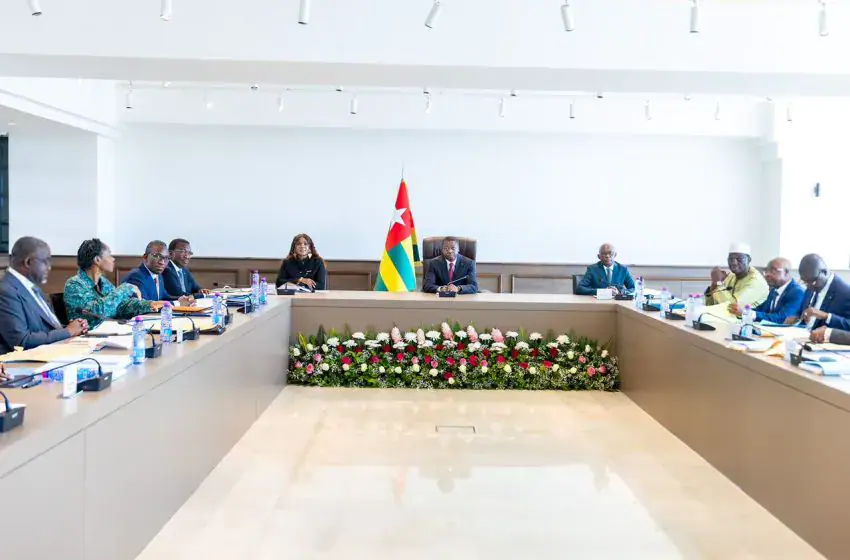
The Council of Ministers of Togo, under the leadership of President Faure Essozimna GNASSINGBE, convened on November 6, 2026, and adopted a bill to establish the National Social Security Institute. This new entity will consolidate the Caisse de Retraites du Togo and the Institut National d'Assurance Maladie, currently responsible for managing pensions and health insurance for public servants. The current system has been criticized for duplication of efforts, inefficiencies, and disparities in service quality.
The National Social Security Institute aims to provide a unified service point for insured individuals, streamline resources, and enhance the quality of services offered to public servants, retirees, and their dependents. This reform seeks to build a more integrated, equitable, and sustainable social protection system. By merging the two existing institutions, the government aims to improve the effectiveness and long-term viability of social protection in Togo.
In addition to the National Social Security Institute bill, the Council of Ministers examined a bill to amend the 2018 land and domain code. The code, adopted in 2018, was a significant step in modernizing Togo's land governance. However, its implementation revealed shortcomings and difficulties, necessitating adaptations to technological, social, economic, and environmental changes. The proposed amendments focus on strengthening land governance, modernizing land management through digitalization, and promoting equality in land access.
The Council also adopted a decree outlining the application modalities of the 2025 law on the legal regime applicable to public enterprises in Togo. This law, adopted on April 1, 2025, introduced several innovations to enhance the role of supervisory bodies, promote performance contracts, and clarify the functioning of public enterprises. The decree provides further details on the exercise of supervisory authority, internal and external control, auditing, and performance contract monitoring.
Furthermore, the Council examined a draft decree on the creation, attributes, organization, and functioning of the National Commission to Combat Illicit Mining Activities. This commission aims to strengthen coordination among competent administrations to address the growing issue of illicit mining activities, which pose significant environmental, economic, health, and security concerns.
The Council of Ministers also heard a communication on the conclusions of the first national seminar for governors and prefects, held on August 5-6, 2026, in Blitta. The seminar focused on strengthening territorial governance and improving collaboration between central administrations, deconcentrated services, and territorial authorities. Participants proposed measures to enhance administrative collaboration, information sharing, and monitoring of public decisions and projects.
The Togolese government's efforts to reform and modernize its institutions, policies, and regulations reflect its commitment to improving governance, promoting sustainable development, and enhancing the well-being of its citizens. The adoption of these bills and decrees demonstrates the government's determination to address the country's challenges and create a more efficient and equitable public administration.
Key points
- The National Social Security Institute will provide a unified service point for insured individuals.
- The government aims to build a more integrated, equitable, and sustainable social protection system.
- The reforms seek to improve the effectiveness and long-term viability of social protection in Togo.