The Gambia-Senegal boundary demarcation exercise has entered a significant phase, with the joint commission completing the first phase of fieldwork covering close to 30 kilometres from Dimbaya in Kombo to Kanao in Foni. This exercise aims to contribute to sustained peace, stability and good neighbourliness between the two countries. The National Centre for Arts and Culture (NCAC) is playing a key role through its historical and archival expertise.
The joint team spent six weeks reaffirming colonial boundary pillars, taking geographical coordinates, and staking and implanting new pillars to make the international boundary clearer and more definite. According to Hassoum Ceesay, Director General of the NCAC and member of the demarcation task force, the exercise is progressing steadily. The NCAC's role is crucial in providing historical and archival expertise to the demarcation process.
Records preserved in the NCAC archives indicate the Gambia-Senegal boundary was originally demarcated between 1889 and 1905, a 17-year process under British and French colonial administrations. The unusual shape of The Gambia resulted from an agreement between the two powers under which Britain retained a corridor of about 10 kilometres on both the northern and southern sides of the River Gambia, while France retained the surrounding territory.
The initial demarcation did not involve permanent pillars, instead relying on natural and temporary landmarks, including large trees, ponds, ‘bolongs’ and footpaths. However, the system proved unreliable as windstorms uprooted trees used as markers and ponds dried up, prompting the introduction of permanent concrete pillars between 1904 and 1905. This highlighted the need for a more reliable and permanent demarcation.
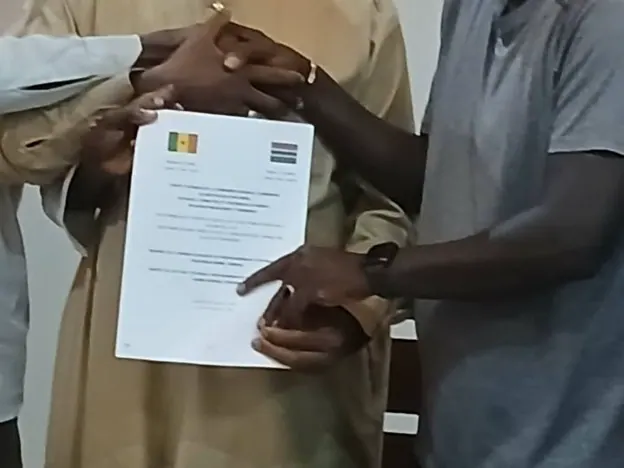
At the end of the first phase, the Joint Gambia-Senegal Boundary Commission signed nine agreements covering various aspects of the exercise. Every colonial pillar reaffirmed by the team will have a descriptive sheet, while newly implanted pillars will also be accompanied by detailed documentation. The agreements were signed by representatives of both countries and witnessed by the Permanent Senegal-Gambia Secretariat as well as experts from Ghana and Burkina Faso.
The agreements also include joint reports on densification points, coordinates and pillars, among other technical aspects. Ceesay stressed the importance of carefully documenting the work, noting that all reports and agreements would be archived for posterity. The involvement of experts from other countries was significant given Africa's experience with boundary disputes.
The exercise represents not only a technical effort to clarify the border but also an initiative aimed at strengthening peaceful relations and preventing future misunderstandings along the shared border. With the first phase completed, the joint team is expected to continue the demarcation as part of broader efforts to establish a clearer, properly documented and mutually accepted boundary.
Key points
- The Gambia-Senegal boundary demarcation exercise has completed its first phase, covering 30km and aiming to establish a clearer, properly documented border.