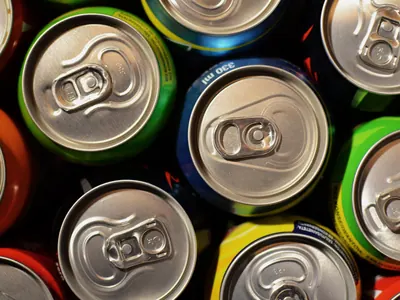
The energy drink market has become a booming industry in Nigeria, with sales expected to grow by more than 14% annually through the rest of the decade. This growth is part of a global trend, with the industry valued at over $80 billion a year. In major cities like Lagos, Nairobi, and Accra, shelves are stocked with bright cans promising to provide wings, focus, stamina, or a jolt of energy. These products have quietly become part of daily life for a generation that grew up with them as normal.
Energy drinks typically contain a combination of caffeine, sugar, taurine, guarana, ginseng, and B vitamins. A single serving can carry anywhere from 80 to 500 milligrams of caffeine, which is significantly higher than a mug of instant coffee. Many consumers have no real sense of where their drink falls in this range, and some of the stronger drinks on sale contain the caffeine equivalent of four or five cups of coffee in one bottle. This has raised concerns among health experts, who warn that regular consumption can lead to serious health problems.
Research has linked habitual consumption of energy drinks to sharp rises in blood pressure, irregular heart rhythms, and strain on the lining of blood vessels. Some case reports have described young, otherwise healthy people developing heart attacks and dangerous rhythm disturbances after periods of heavy use. There is also emerging evidence of strain on the liver and kidneys with sustained high intake, as well as disruption of the gut bacteria that keep our digestive systems balanced.
Young people are the most exposed and vulnerable to the risks associated with energy drinks. Adolescents and those in their early 20s respond more strongly to stimulants, because their nervous systems are still developing. In Nigeria, surveys show that roughly seven in ten regular drinkers are 30 years old or younger. The reasons people give for reaching for a can are telling, with close to 50% saying they drink them to stay alert while studying, and many others mentioning sport or using them as a soft-drink alternative.
Despite the growing concerns, many consumers in Nigeria still believe that energy drinks are broadly healthy. The marketing of these products often features images of vitality, sport, and success, which does little to correct this misconception. This is where regulation in Nigeria and across much of the continent has struggled to keep pace with the market. While NAFDAC requires formulated caffeinated beverages to be registered before sale, there is no clear national law setting a minimum purchase age for energy drinks.
The lack of regulation has led to widespread availability of energy drinks, with street hawkers accounting for a significant share of sales. In Nigeria, teenagers can walk up to a street hawker and buy as many cans as they can afford, with nobody asking their age. This gap matters more in Nigeria than in many other markets, considering how young the population is. With a median age of around 19, Nigeria has an enormous natural customer base for a product that is not really designed with growing bodies in mind.
To address the growing concerns, experts are calling for honest information to reach people before habits form, rather than after problems appear. Parents, schools, and retailers can play a role in educating young people about the risks associated with energy drinks. Regulators also have a role to play, and could consider implementing clear labelling and a sensible age threshold for the sale of energy drinks. By taking these steps, Nigeria can help mitigate the risks associated with energy drinks and ensure that consumers are aware of what they are putting into their bodies.
Key points
- Energy drink sales are expected to grow by more than 14% annually in Nigeria through the rest of the decade.
- Regular consumption of energy drinks has been linked to serious health problems, including sharp rises in blood pressure and irregular heart rhythms.
- There is currently no clear national law setting a minimum purchase age for energy drinks in Nigeria.