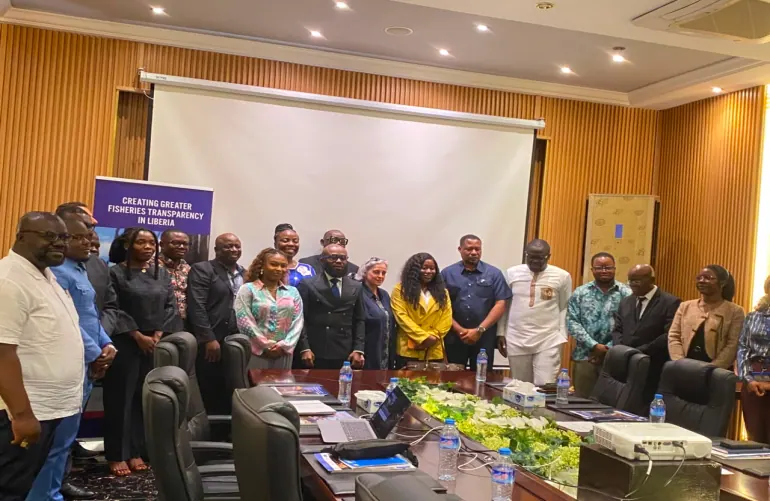
The Environmental Justice Foundation (EJF) and the National Fisheries and Aquaculture Authority (NaFAA) have launched a three-year initiative to strengthen governance and combat illegal, unreported, and unregulated fishing in Liberia's fisheries sector. The initiative, titled "Creating Greater Fisheries Transparency in Liberia," was launched on September 24 at the Boulevard Palace Hotel in Monrovia with support from Oceans5. The launch brought together government officials, lawmakers, development partners, fisheries stakeholders, and civil society representatives.
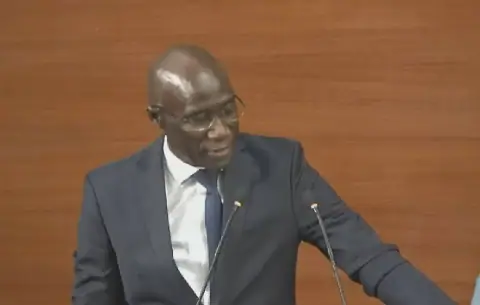
NaFAA Director General J. Cyrus Saygbe described fisheries as a national resource critical to coastal and inland communities as well as Liberia's broader economy. He highlighted several reforms already underway, including a new system that has reduced fish-import permit processing time from about three weeks to three days. Saygbe also announced plans to launch a toll-free call center and short code, 6232, by October 2026, allowing fisherfolk and members of the public to report suspected fisheries violations.
Liberia has reduced the number of outstanding issues associated with the EU Yellow Card from 15 to four. Saygbe identified the remaining areas of concern as the management of unauthorized vessels, implementation of the Port State Measures Agreement, monitoring of Liberia-flagged vessels, and enforcement of fisheries sanctions. The developments come as the government continues efforts to strengthen the legal and institutional framework governing the sector.
As part of the fisheries law reform process, Saygbe said a legal firm has been engaged to review Liberia's fisheries laws, while the International Labour Organization (ILO) is providing technical assistance toward ratification of Convention No. 188 on work in fishing. A steering committee and technical working groups have also been established under NaFAA's leadership. Madia H. Peters Magbollah, NaFAA's Deputy Director General for Administration, described the project as part of long-awaited reforms in Liberia's fisheries sector.
The initiative will reinforce existing systems while supporting efforts to combat IUU fishing and strengthen enforcement. Grand Bassa County Senator M. Gbezhongar Findley, chairman of the Senate Committee on Aquaculture, Forestry and Fisheries, pledged legislative support for the reforms. Findley said he would review proposed reforms aimed at bringing Liberia's fisheries sector into greater alignment with international standards.
EJF West Africa Regional Manager Cephas Asare said the initiative is designed to secure the legislative and institutional support required to advance fisheries reforms. He noted that several of the project's objectives will require legislative action and sustained collaboration among government institutions, lawmakers, civil society organizations, and fishing communities. The three-year initiative will support reforms to Liberia's fisheries laws, advance ratification of ILO Convention No. 188, and promote implementation of the Global Charter for Fisheries Transparency.
The European Union also reaffirmed its engagement with Liberia's fisheries sector, announcing a €25 million Strengthening Artisanal Fisheries (SAFish) initiative for Liberia. The five-year program will operate across Liberia's coastal counties, with the possibility of being extended to seven years. The program is expected to support efforts to strengthen artisanal fisheries and improve the sector's contribution to livelihoods and food security.
Key points
- The initiative aims to strengthen governance and combat illegal, unreported, and unregulated fishing in Liberia's fisheries sector.
- Liberia has reduced the number of outstanding issues associated with the EU Yellow Card from 15 to four.
- The European Union announced a €25 million Strengthening Artisanal Fisheries (SAFish) initiative for Liberia.