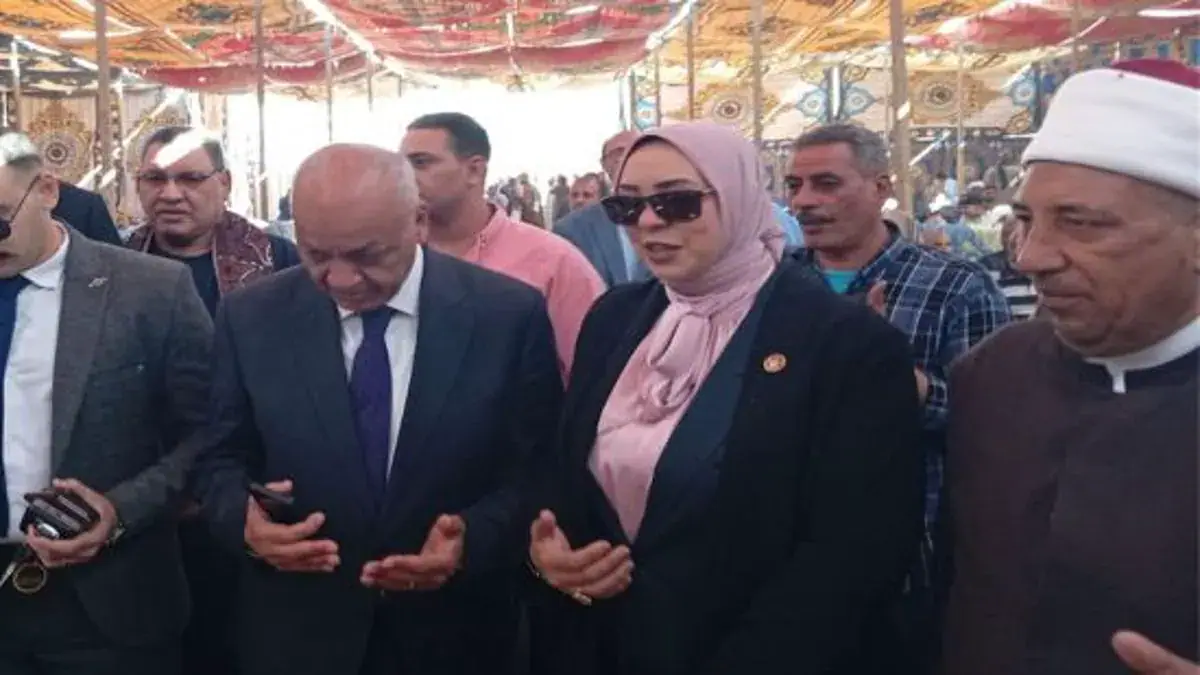
Egyptian parliamentarian Wafaa Rashad has faced a backlash of criticism and attacks on social media and in some media outlets after successfully brokering a historic reconciliation between the Arab and Hawara tribes in Qena. The reconciliation, which took place in the Nagahamia area of Qena, has been hailed as a major achievement, but Rashad's role in it has sparked controversy and debate. Rashad, a member of the Egyptian Senate, has been praised for her efforts to end a long-standing feud between the two tribes.
The reconciliation has been seen as a significant step towards ending the cycle of violence and revenge that has plagued the region for years. Rashad's success in brokering the deal has been attributed to her ability to bring together the two warring tribes and facilitate a dialogue that led to a peaceful resolution. However, some critics have questioned her motives and accused her of trying to exploit the situation for political gain. The criticism has been fueled by some of Rashad's previous statements on issues such as inflation and the cost of living.
Rashad's supporters have dismissed the criticism as unfounded and politically motivated. They argue that Rashad's achievement in brokering the reconciliation is a testament to her skills as a mediator and her commitment to promoting peace and stability in the region. They also point out that Rashad's efforts have helped to promote the role of women in Egyptian society and challenge traditional stereotypes.
The controversy surrounding Rashad's role in the reconciliation has sparked a wider debate about the role of women in Egyptian politics and society. Some have argued that Rashad's success is a breakthrough for women in Egyptian politics, while others have questioned whether her achievement is being undermined by the criticism and backlash she has faced.
The Egyptian parliamentarian has also faced criticism for her comments on the economy and inflation. Some have accused her of making statements that have contributed to the controversy surrounding her role in the reconciliation. Rashad has denied making some of the statements attributed to her, and her supporters argue that the criticism is unfounded and politically motivated.
The controversy surrounding Rashad's role in the reconciliation has also raised questions about the role of politics in Egyptian society. Some have argued that the criticism of Rashad is part of a wider attempt to undermine the role of women in Egyptian politics and society. Others have argued that the controversy is a reflection of the deep-seated divisions and tensions in Egyptian society.
Despite the controversy, Rashad's achievement in brokering the reconciliation has been widely praised. The reconciliation has been seen as a significant step towards promoting peace and stability in the region, and Rashad's role in it has been hailed as a major achievement. The controversy surrounding her role in the reconciliation is likely to continue, but Rashad's supporters argue that her achievement will ultimately be remembered as a major breakthrough for women in Egyptian politics.
Key points
- Egyptian parliamentarian Wafaa Rashad faces criticism after brokering historic reconciliation between Arab and Hawara tribes in Qena.
- Rashad's success in brokering the deal has sparked controversy and debate, with some critics accusing her of trying to exploit the situation for political gain.
- The controversy surrounding Rashad's role in the reconciliation has sparked a wider debate about the role of women in Egyptian politics and society.