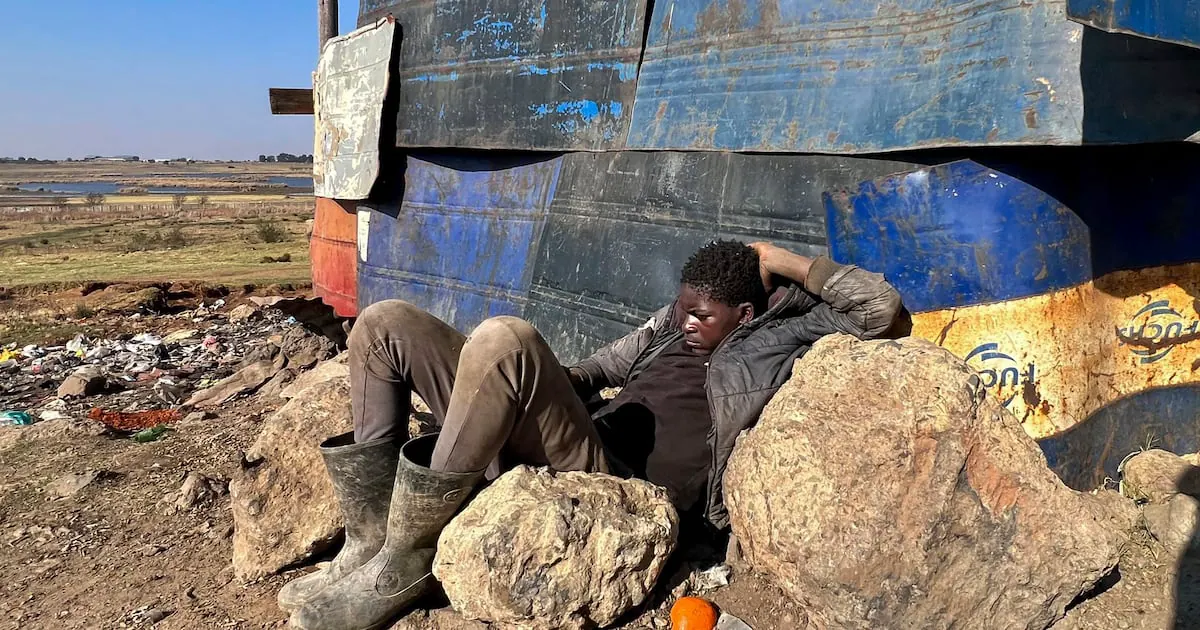
Thabo, a young man from Lesotho, thought he had found a good job in South Africa after being recruited by an old school friend working in Rustenburg. However, upon arrival in Mandleni informal settlement, he was handed over to a miner known as Victor, who took his passport and told him he owed R6,000 for his journey, work clothes, and equipment. Thabo was forced to work long shifts underground, breaking rocks for Victor and his handlers, and was beaten and denied pay when he tried to escape.
Thabo's case is not an isolated incident. Several young people, including Joaquim from Mozambique and Mpho from Lesotho, reported being trapped in a cycle of debt and backbreaking work in Mandleni's illegal mines. They were lured by promises of decent pay and good jobs, but instead found themselves forced to work in poor conditions, inhaling dust and facing punishment if they tried to escape. The debt bondage system used by the scammers is designed to keep workers trapped, with protection fees, fuel fees, and food used to control them.
The modus operandi of the scammers involves paying for the transport and housing of migrants, which "bonds" them to the illegal operation and its owners. The debt does not end, as workers are also charged protection fees, generator fees, and fuel fees. Joaquim reported paying R250 weekly for fuel, which is used to generate electricity and power machinery and drills. If workers fail to pay, the debt accumulates, and they face punishment.
Mpho, a 22-year-old from Lesotho, was recruited by a woman in her church WhatsApp group who promised her cooking and cleaning jobs for miners in Carletonville. However, she ended up in Mandleni, where she was forced into prostitution and told she had to "entertain" miners to settle her debt. She reported being sexually abused by the team leader and being forced to sleep with other men to pay off her debt.
The investigation also uncovered allegations of police involvement in the illegal mining operations. A shaft guard reported being recruited by a Benoni police officer, who provided transport and escorts to miners, while higher-ranking officers benefited from the syndicate. Interviewees alleged that police collected regular "tax" or protection fees from miners and regional buyers in return for allowing them to operate undisturbed.
The illegal mining operations in Mandleni are controlled by a network of men who run the shafts and use violence and intimidation to keep workers in line. Workers who try to escape are often caught and punished, and some have been raped or beaten. The conditions in the mines are poor, with workers facing long hours, dust inhalation, and poor living conditions.
The Southern Africa Accountability Journalism Project's investigation highlights the need for urgent action to address the issue of debt bondage and forced labour in Ekurhuleni's illegal mines. The project spoke to several young people who reported being trapped in a cycle of debt and backbreaking work, and allegations of police involvement in the syndicate.
Key points
- Debt bondage and forced labour are rampant in Ekurhuleni's illegal mines, with young men and women from Lesotho, Mozambique, and Zimbabwe being lured into the syndicate.
- The debt bondage system used by scammers is designed to keep workers trapped, with protection fees, fuel fees, and food used to control them.
- Allegations of police involvement in the syndicate have been made, with interviewees reporting that police collect regular "tax" or protection fees from miners and regional buyers.