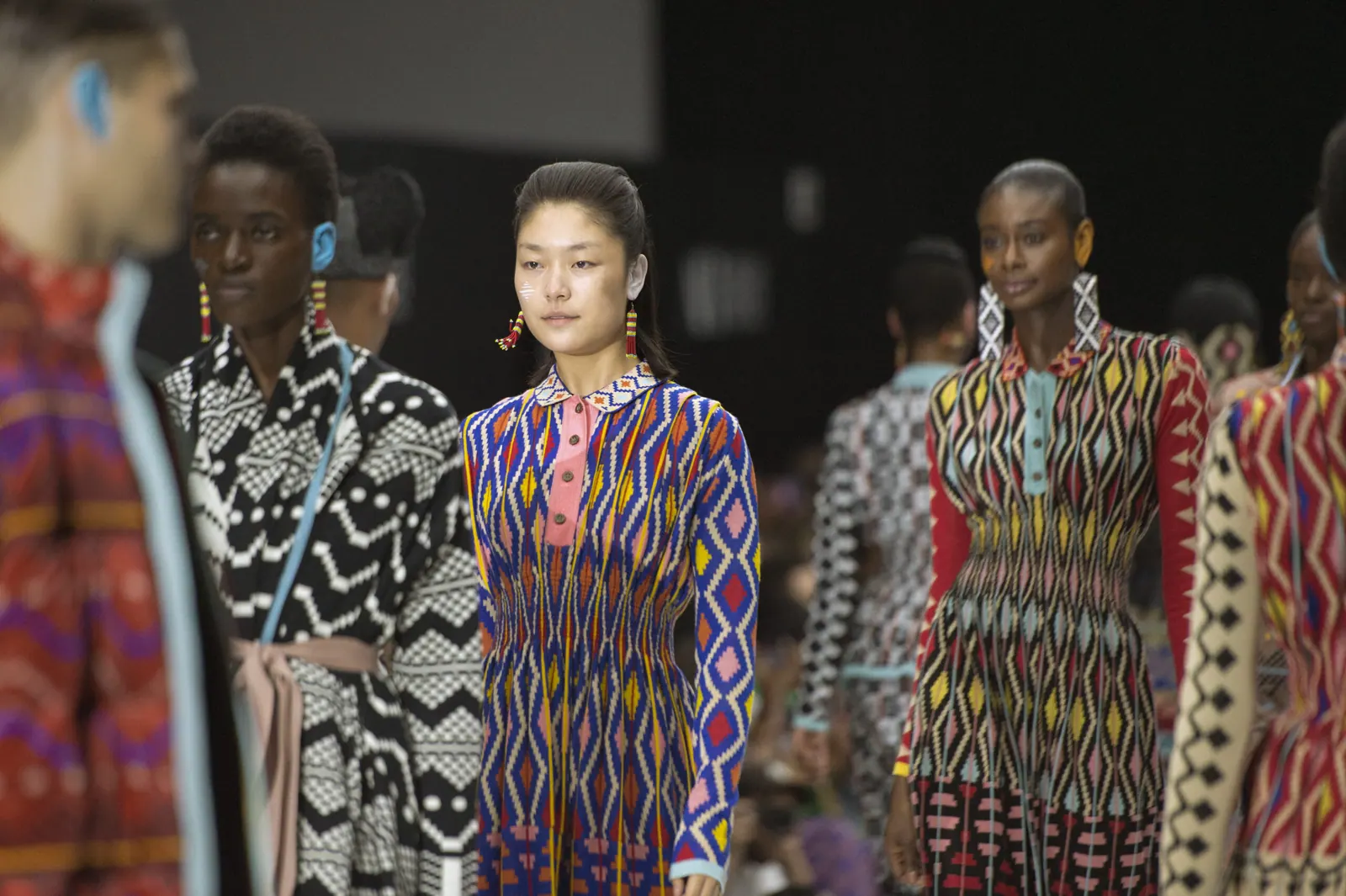
At African Fashion Week Sandton, Botswana designer Keabetswe Mogatusi showcased her Technicolour Dreamcoat, a statement piece that combines Malian fabrics, hemp-cotton blends, and hand-painted textiles. The coat's design draws on traditional African craftsmanship with a modern flair, representing a growing movement among designers to place African materials and craftsmanship at the centre of global fashion. Mogatusi's Afro-Futurist collection highlights the potential of African fashion when local materials and craftsmanship meet contemporary design.
Across the continent, this movement is drawing renewed attention to Africa's rich textile heritage. Traditional fabrics such as Nigeria's handwoven aso-oke and indigo-dyed adire, and Burkina Faso's faso dan fani, are being reimagined for modern consumers and runways around the world. Faso dan fani, a handwoven cotton cloth once at risk of being crowded out by cheaper imports, has become both a fashion statement and an act of economic defiance in Burkina Faso.
The fabric carries a symbolism that predates its current popularity on the runway, championed by revolutionary leaders in the 1980s as a mark of national self-sufficiency. Designers like François Yaméogo have used faso dan fani to create contemporary silhouettes, tailoring it into jackets, blouses, and skirts. This renewed interest in African-made fashion has led to a growing appetite from international buyers for fabrics and clothing with an authentic story.
However, behind the celebration of African fashion lies a contradiction. Africa is one of the world's major cotton producers, yet it nets only a fraction of its value once cotton is transformed into yarn, fabric, and finished garments. The African continent produces roughly 12% of the world's cotton but exports 90% of it as raw material before it can be turned into a higher-value finished product.
To address this issue, designers are teaming up with weavers to source local materials. In Nigeria, labels such as Onalaja and Emmy Kasbit are building direct relationships with weavers producing aso-oke and adire, transforming the perception of these textiles from ceremonial cloth into daily wear. This shift is driven by rising import costs and currency pressures, as well as a growing appetite for fabrics and clothing with an authentic story.
Afreximbank has backed a $5bn Africa Textile Renaissance Plan to support the growth of the industry. The plan aims to build 500,000 tonnes of cotton transformation capacity and create half a million jobs, with dedicated support for African fashion designers. The bank has already seen success in Benin, where special industrial zones have increased textile export revenues more than twentyfold since 2019.
Within 15 to 20 years, Africa aims to exit the raw cotton export business entirely, moving fully into textile and clothing exports instead. If this vision holds firm, the use of cotton in African-made clothing will become the norm, rather than the exception. Mogatusi's coat, stitched from Malian fabric and hand-painted textiles sourced almost entirely from the continent, is proof of what can be achieved when garment production begins and ends in Africa.
Key points
- African designers are promoting local materials and craftsmanship in the global fashion industry.
- The African continent produces roughly 12% of the world's cotton but exports 90% of it as raw material.
- Afreximbank has backed a $5bn Africa Textile Renaissance Plan to support the growth of the industry.