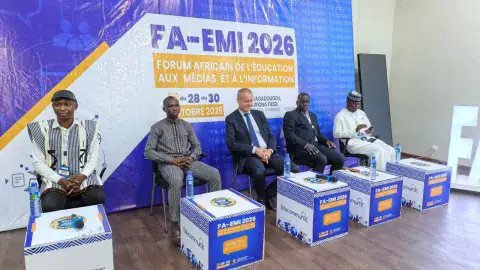
The three-day forum, organized by EducommuniK in collaboration with the Central Brigade for Cybercrime Control (BCLCC) and funded by the Federal Republic of Germany, brought together actors from the information ecosystem in Burkina Faso, Mali, Niger, Chad, and Mauritania. The event aimed to promote media and information education and combat disinformation. Participants discussed ways to build regional resilience to disinformation and information manipulation.
The forum's first edition was deemed a success by organizers, with several experts and stakeholders from the sub-region in attendance. Nina Kady Diallo, program manager at EducommuniK, expressed satisfaction with the event's outcome, citing the financial support of the Federal Republic of Germany. The forum featured expert presentations and discussions that led to proposals to enhance population capacities in the face of information disorders.
One of the main challenges for EducommuniK is transforming the forum's recommendations into concrete actions, particularly by incorporating them into the educational policies of participating countries. Nina Kady Diallo assured that the organization will work to consolidate the recommendations and ensure they are implemented. The forum's outcome will be crucial in promoting media and information education in the region.
EducommuniK plans to continue the initiative, with the forum being part of a long-term dynamic to advance media and information education in Africa. Damien Seglonou, representative of EducommuniK's executive secretary, emphasized that the event is a milestone in promoting media and information education on the continent. The organization aims to make Ouagadougou a hub for African media and information education stakeholders.
The forum was part of a week-long celebration of media and information education, which included sensitization campaigns, visits to press organs, and animations within the organization's premises. Competitions in slam, drawing, and video production were also organized to engage participants in media and information education issues. Winners of these competitions were awarded, highlighting creativity and commitment to responsible information use.
Partners played a significant role in the forum's success, with the BCLCC and the German Embassy expressing their support for the initiative. Julien Legma, head of the BCLCC's planning, communication, and police collaboration division, emphasized the importance of collaboration with civil society organizations in preventing cybercrime. The German Ambassador to Burkina Faso, Dietrich Becker, congratulated EducommuniK on the initiative and reaffirmed his country's willingness to examine new project proposals.
The forum's recommendations are expected to contribute to the integration of media and information education into educational curricula. Nestor K. Doamekpo, Niger's ambassador for media and information education, invited participants to share the acquired knowledge with their communities and implement it in their respective countries. EducommuniK plans to organize future editions of the forum in West Africa and the Sahel, aiming to sustain the momentum and promote a more responsible information environment.
Key points
- The forum aimed to promote media and information education and combat disinformation in West Africa and the Sahel.
- The event brought together actors from the information ecosystem in several African countries to discuss ways to build regional resilience to disinformation and information manipulation.
- EducommuniK plans to continue the initiative, with future editions of the forum expected to consolidate the acquired knowledge and promote a more responsible information environment.