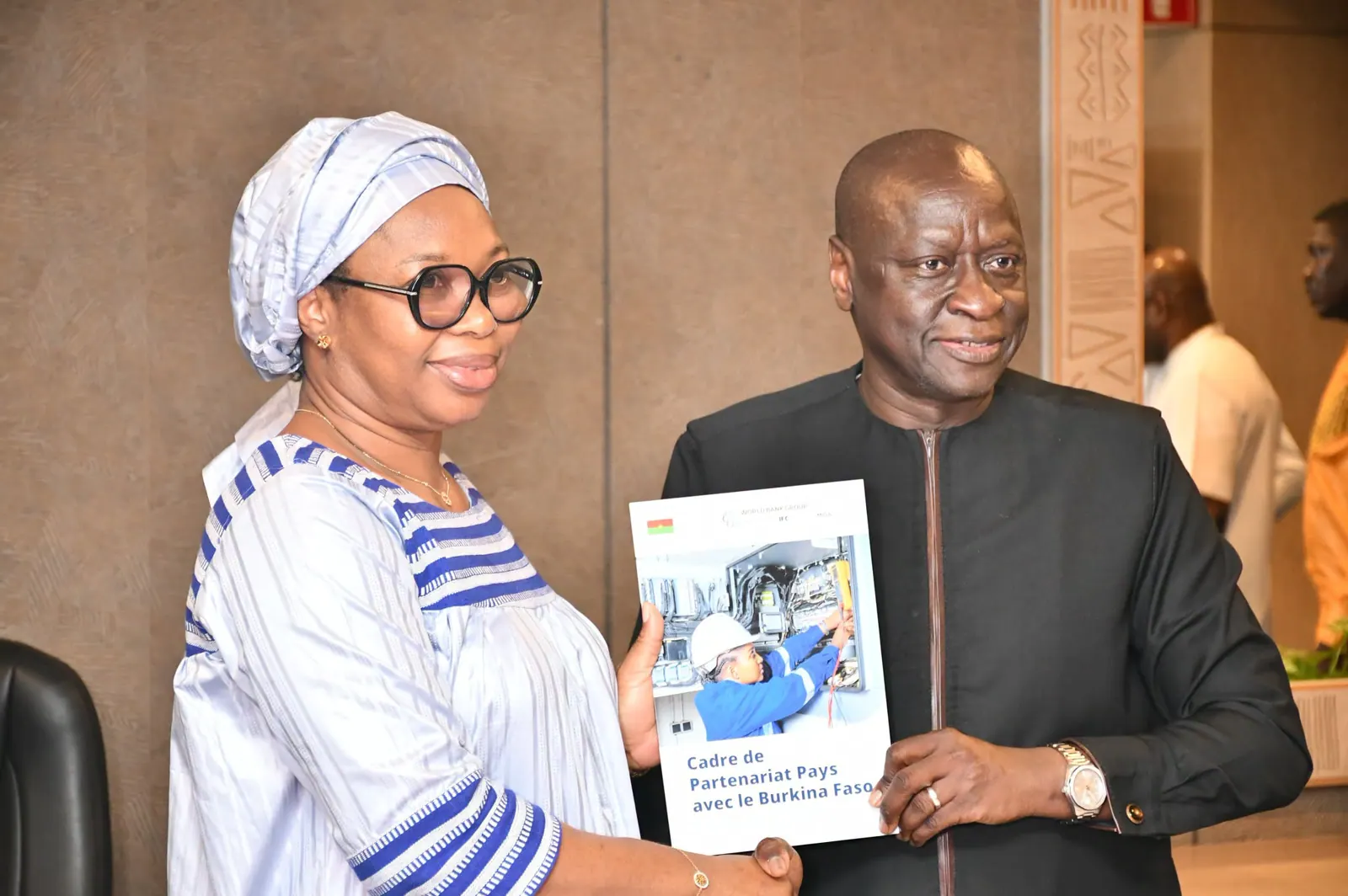
The Minister Delegate for Budget of Burkina Faso, Fatoumata Bako/Traoré, representing the Minister of Economy and Finance, launched the 2026-2031 Country Partnership Framework (CPF) between Burkina Faso and the World Bank on October 2, 2026, in Ouagadougou. The CPF aims to support Burkina Faso's development goals and promote economic growth. The framework is the result of a rigorous, iterative, and participatory process involving the Burkinabè government, development partners, the private sector, and civil society.
The CPF 2026-2031 is built around four complementary pillars, focusing on human capital, improving agricultural productivity, enhancing access to energy and financial services, and strengthening basic services in cities and vulnerable communities. According to Ousmane Diagana, Vice President of the World Bank for West and Central Africa, the framework is not just a list of projects but a coherent and integrated vision for Burkina Faso's development. The CPF is designed to help Burkina Faso achieve its development goals and promote economic growth.
The launch of the CPF 2026-2031 marks a significant milestone in the partnership between Burkina Faso and the World Bank, which spans over 63 years. Diagana highlighted the impressive results achieved under the previous CPF, including a significant increase in access to electricity, education, and healthcare. The number of people with access to electricity has risen from 3.4 million to over 28.4 million, while over 430,000 displaced students have been reintegrated into the education system.
The World Bank's portfolio in Burkina Faso has grown substantially, from $2.7 billion in 2020 to nearly $4 billion in 2025. The bank is supporting 29 active projects across key sectors, including education, health, agriculture, and energy. Diagana emphasized that the World Bank's resources, although significant, are not enough to meet Burkina Faso's development needs, and that the country must continue to mobilize domestic resources to finance its development.
Diagana commended the Burkinabè government for its efforts to increase domestic resource mobilization, noting that Burkina Faso is leading the way in the West African Economic and Monetary Union (WAEMU) in this regard. He encouraged the government to continue on this path and to inspire other countries in the region to follow suit.
The CPF 2026-2031 is expected to support Burkina Faso's efforts to promote economic growth, create jobs, and improve living standards. The framework is aligned with the Burkinabè government's development priorities and is designed to help the country achieve its Sustainable Development Goals. The World Bank is committed to supporting Burkina Faso's development journey and to helping the country build a more prosperous and resilient future.
The partnership between Burkina Faso and the World Bank is built on trust, mutual respect, and a shared ambition to promote economic growth and development. Diagana emphasized that the CPF 2026-2031 is not just a document but a reflection of the strong partnership between the two parties. The framework is expected to guide the World Bank's support to Burkina Faso over the next five years and to help the country achieve its development goals.
Key points
- The CPF 2026-2031 aims to support Burkina Faso's development goals and promote economic growth.
- The framework focuses on human capital, improving agricultural productivity, enhancing access to energy and financial services, and strengthening basic services.
- The World Bank's portfolio in Burkina Faso has grown substantially, from $2.7 billion in 2020 to nearly $4 billion in 2025.