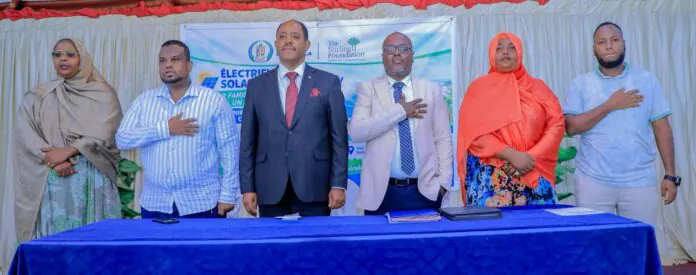
The Commune of Balbala has taken a significant step towards improving the living conditions of its residents with the signing of a tripartite agreement to bring solar electrification to 50 vulnerable families in the Warabaley neighborhood. The agreement, signed on October 4, 2026, was presided over by Mohamed Hassan Said, President of the Commune of Balbala. The project is made possible through funding from the Stirling Foundation and will be implemented in partnership with DjibPower.
The project aims to provide a reliable and sustainable source of energy to the selected families, improving their overall quality of life. The solar electrification project is part of a larger program aimed at increasing access to energy for the most vulnerable households in the area. The initiative is also expected to enhance the safety and security of the neighborhood, particularly for women and children.
The agreement brings together several key stakeholders, including the Commune of Balbala, DjibPower, and the Stirling Foundation. The Commune of Balbala will work closely with the families to ensure they are able to effectively use and maintain the new solar equipment. DjibPower will provide technical expertise for the installation and commissioning of the solar systems.
According to Mohamed Hassan Said, President of the Commune of Balbala, this initiative goes beyond just providing access to electricity. It is a concrete action in favor of solidarity and improving the living conditions of the inhabitants of Warabaley. The project is also seen as an important step towards achieving the Commune's vision for 2035, which prioritizes proximity to citizens, community participation, and finding concrete solutions to the needs of residents.
The project has been welcomed by the ambassador of the United Religions Initiative (URI), Mussie Hailu, who praised the commitment of the different partners to supporting vulnerable populations. He also emphasized the importance of paying particular attention to children, women, young people, and the elderly. The URI and the Stirling Foundation have reaffirmed their willingness to continue collaborating with the Commune of Balbala and to support local initiatives aimed at improving living conditions.
The first phase of the project will see 50 families benefit from improved access to energy, with plans to extend the program to a further 50 families in a second phase. The initiative is seen as a key step towards making access to energy a lever for improving living conditions and local development, while strengthening proximity actions for the benefit of vulnerable families in Warabaley.
The solar electrification project in Warabaley is a significant step towards achieving sustainable development goals in Djibouti. With the support of partners such as the Stirling Foundation and DjibPower, the Commune of Balbala is working to improve the lives of its most vulnerable residents. The project serves as a model for other communities in the region, demonstrating the potential for solar energy to transform lives and promote economic development.
Key points
- The project aims to provide solar electrification to 100 vulnerable families in the Warabaley neighborhood of Djibouti.