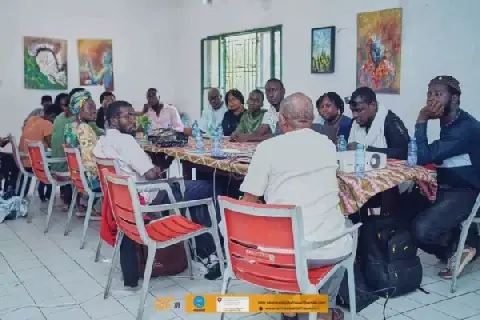
The Beninese government has officially launched the 2026-2027 academic year for vocational training and qualification, with a focus on preparing young people for the job market and promoting economic autonomy. The ceremony took place at the Centre de Formation Professionnelle et d'Apprentissage (CFPA) in Djougou, under the presidency of Minister Awaou BACO. This new academic year marks a significant step in the transformation of the country's vocational training sector.
The transformation of the vocational training sector is part of a broader project aimed at strengthening the economic power of vulnerable young people, particularly girls and women. The "Ma formation, mon métier, mon avenir" (3M) project, funded by the Canadian government through Affaires mondiales Canada and implemented by Éducation internationale, aims to provide vocational training and apprenticeships that lead to employment opportunities. The project focuses on supporting young people in accessing non-traditional and green jobs.
The 3M project has several key components, including increasing access to vocational training for vulnerable girls, improving the technical and pedagogical skills of trainers, and rehabilitating and equipping workshops. The project also aims to provide entrepreneurial support to young people, enabling them to create their own jobs and contribute to the country's economic development. This approach aligns with the government's goal of making vocational training a lever for skills development, employment, and economic growth.
As part of the new academic year, the 3M project will renew 200 scholarships for young girls enrolled in traditionally male-dominated trades. The project will also continue to strengthen the technical and pedagogical skills of trainers and construct and equip new workshops in nine CFPA partners. Additionally, the project will provide entrepreneurial support to young people, enabling them to create their own businesses and contribute to the country's economic growth.
The launch of the new academic year was marked by the symbolic handover of 200 scholarships to vulnerable girls enrolled in non-traditional trades. The event also highlighted the complementarity of the interventions of technical and financial partners in the vocational training sector. The representative of the partners, Abdoulaye Zono, reaffirmed their commitment to supporting Benin in developing a more accessible, relevant, and inclusive vocational training system.
The transformation of the vocational training sector is expected to have a positive impact on the country's economic development. By providing young people with the skills and competencies needed to access the job market, the government aims to reduce unemployment and promote economic growth. The 3M project is a key component of this strategy, providing young people with the training and support needed to succeed in the workforce.
The new academic year marks a significant step in the transformation of Benin's vocational training sector. With a focus on employability and economic autonomy, the sector is expected to play a critical role in the country's economic development. The government's commitment to vocational training, combined with the support of technical and financial partners, is expected to have a positive impact on the lives of young people and the country's economy as a whole.
Key points
- The Beninese government has launched a new academic year for vocational training with a focus on employability and economic autonomy.
- The "Ma formation, mon métier, mon avenir" (3M) project aims to provide vocational training and apprenticeships that lead to employment opportunities for vulnerable young people.
- The project will renew 200 scholarships for young girls enrolled in traditionally male-dominated trades and provide entrepreneurial support to young people.