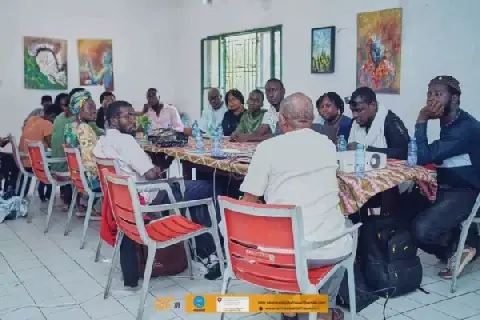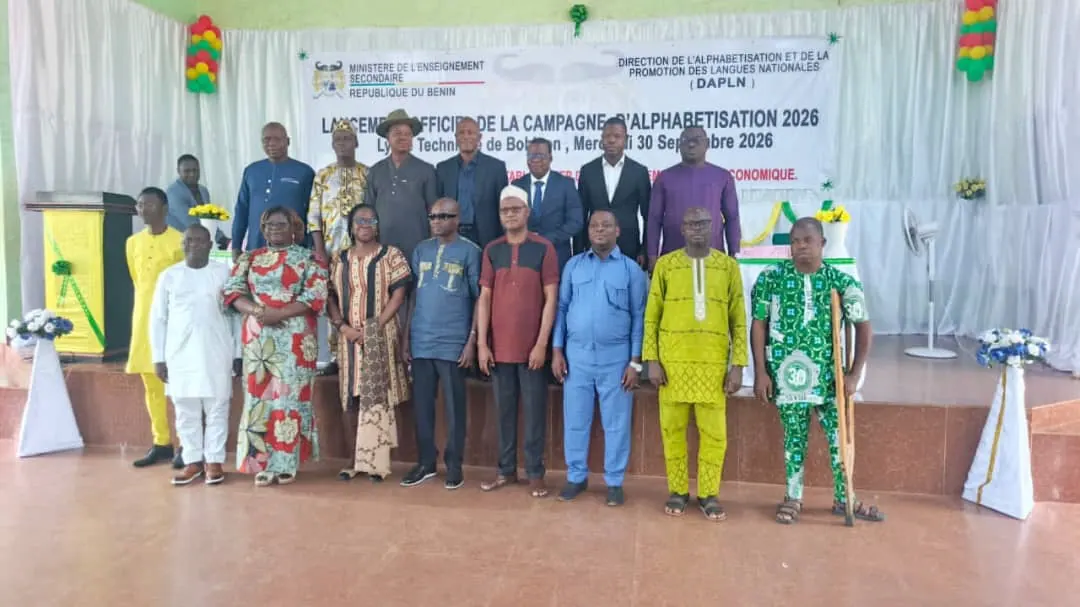
The Benin government officially launched its national literacy campaign in local languages on September 30, 2026, in Bohicon. This initiative aims to provide essential skills in reading, writing, and arithmetic to adults, women, artisans, and out-of-school youth. The campaign is part of the reforms undertaken by the Ministry of Secondary Education since 2023.
The literacy campaign 2026 involves the opening of 168 public centers across the country. These centers will offer adapted teachings to learners' realities, with a focus on reading, writing, arithmetic, and practical skills related to economic activities. The program also includes the training and recycling of facilitators, awareness campaigns, and specific programs for young artisans, women, and out-of-school adults.
The initiative aims to make each literacy center a space for learning, empowerment, and opportunities. The goal is to enable citizens to participate better in their community's development and contribute to building a more inclusive and competitive Benin. The government intends to achieve this by providing citizens with essential skills to access economic and social opportunities.
Ferdinand Yaou Bokossa, the mayor of Bohicon, welcomed the initiative, emphasizing its focus on citizens' development. He reaffirmed the commune's commitment to supporting the campaign through population mobilization and advocated for constructing a learning center in Bohicon. The director of the Directorate of Literacy and Promotion of National Languages highlighted the importance of literacy.
Despite progress, a significant proportion of the population, particularly in rural areas, remains deprived of basic skills. The inability to read, write, and calculate limits citizens' economic and social opportunities. The current campaign is based on the "Faire-Faire" mechanism, where the state finances and directs actions, while private operators implement them within communities.
The campaign involves private operators in the implementation process, from the design to the execution of activities. Fifamè Fidèle Houssou Gandonou, representing private literacy organizations, stated that field actors intervene at all stages of the process. This approach aims to ensure the effectiveness and sustainability of the literacy program.
The Benin government's national literacy campaign is a significant step towards promoting education and economic development. With 168 public centers and a focus on local languages, the initiative is expected to have a positive impact on the lives of thousands of citizens. The campaign's success will depend on the collaboration of all stakeholders, including private operators, communities, and local authorities.
Key points
- - The Benin government has launched a national literacy campaign with 168 public centers to teach essential skills to adults and out-of-school youth. - The campaign aims to provide citizens with skills in reading, writing, and arithmetic, focusing on local languages and practical skills related to economic activities. - The initiative is part of the government's efforts to promote education, economic development, and social inclusion.