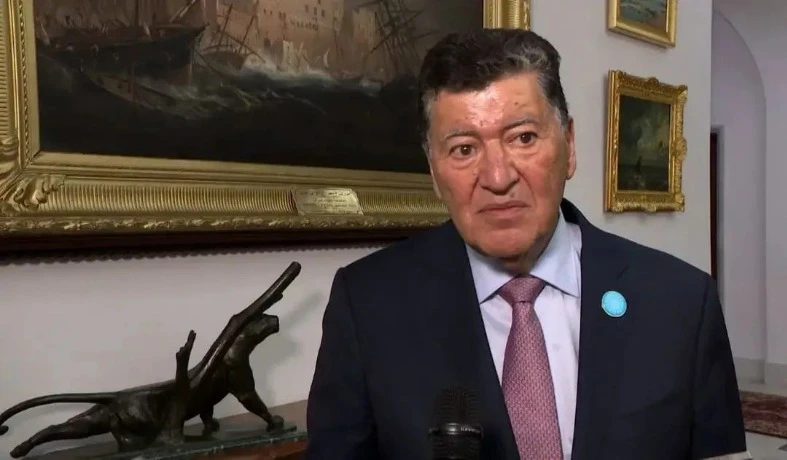
Professor Elias Zerahouni, coordinator of the High Council of the National Scientific Community Abroad, has praised President Abdelmadjid Tebboune's initiative to gather Algerian scientific talents to contribute to the country's development. On September 27, 2026, Zerahouni presented a report on the council's activities and a file outlining efforts made and a roadmap for the next 12 months. The initiative aims to engage Algerian scientists and experts worldwide in the country's development.
During a meeting with President Tebboune, Zerahouni expressed gratitude for the initiative, noting that reactions from the scientific community have been overwhelmingly positive. He mentioned that experts, scientists, and engineers from around the world have shown interest in joining the initiative. Zerahouni stated that he has received numerous messages from individuals eager to participate, highlighting the enthusiasm for contributing to Algeria's development.
The High Council of the National Scientific Community Abroad has taken steps to implement the initiative, holding an organizational meeting on August 4, 2026, following the launch of the initiative on June 28, 2026. Zerahouni emphasized that the council's efforts are not limited to those living abroad, as they aim to collaborate with local colleagues and contribute to the country's priorities.
Zerahouni outlined three key principles guiding the council's work: collaboration with local colleagues, gathering the qualified national community abroad to form a larger group, and taking responsibility for addressing national priorities. He stressed that any initiative launched by the council must be done in conjunction with local partners and with a spirit of responsibility towards the country's needs.
The initiative has sparked interest among Algerian scientists and experts globally, with many eager to contribute to the country's development. Zerahouni's report and proposed roadmap aim to harness this enthusiasm and channel it into tangible efforts to drive progress. The council's work is expected to have a positive impact on Algeria's development trajectory.
In related news, various events have taken place across Algeria, including a study day on neighborhood violence and its legal implications, held at the Research Center in Social and Cultural Anthropology. Additionally, over 2600 training places have been allocated for the October vocational training session in Tlemcen, and the city of Mostaganem has hosted a tourism exhibition and activities to modernize the sector.
The events reflect the country's efforts to address various challenges and promote development in different areas, including education, tourism, and social issues. As Algeria continues to work towards its goals, initiatives like the one launched by President Tebboune aim to harness the potential of its scientific community to drive progress and growth.
Key points
- Professor Elias Zerahouni praises President Abdelmadjid Tebboune's initiative to engage Algerian scientific talents in national development.