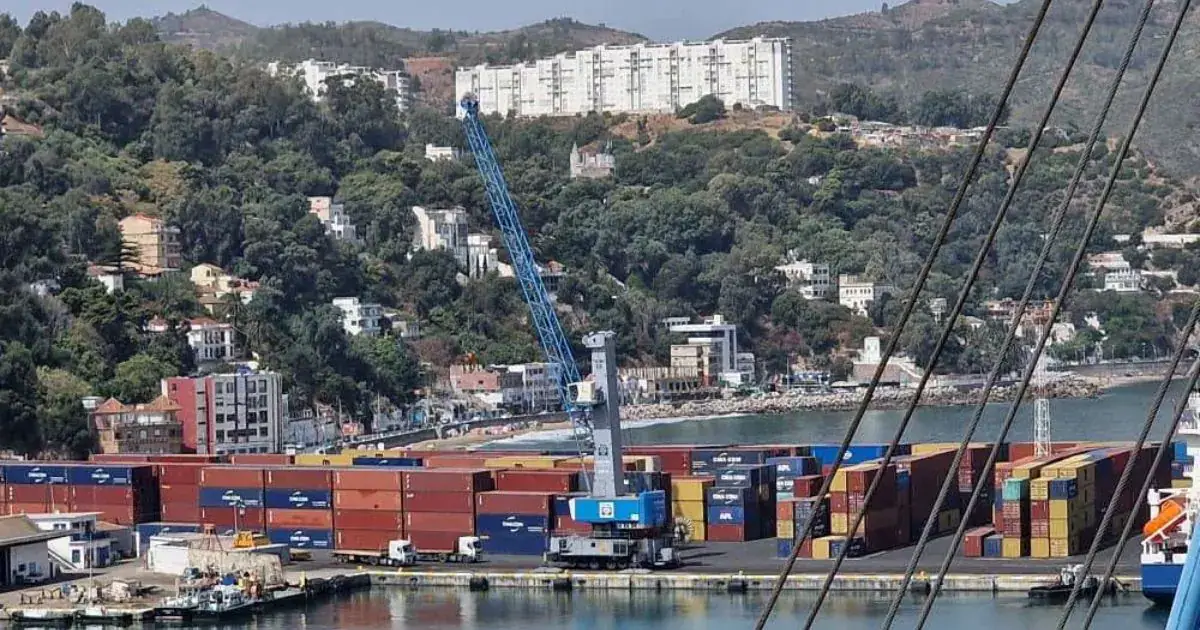
The port of Skikda has achieved a significant milestone by handling over 200,000 twenty-foot equivalent units (TEUs) of containers, marking a new record for the facility. This accomplishment is attributed to a well-oiled machinery, with the port's management citing a reorganization effort that began several months ago. The goal was to increase handled volumes and reduce waiting times for ships. This achievement places Skikda among the prominent platforms for container traffic in Algeria.
The threshold of 200,000 TEUs is a strategic marker for any port infrastructure, and Skikda's achievement demonstrates its growing importance in the national containerized traffic. The port has become a preferred exit point for national products, as seen in recent operations involving the loading of cement and clinker to Italy and Libya. These operations were carried out simultaneously on several quays of the commercial port, showcasing the port's capabilities.
The container traffic remains a closely monitored indicator by professionals, as it requires specific equipment, rapid rotation of machinery, and tight coordination between handlers, customs officials, and freight forwarders. Achieving such a volume implies that the entire chain has followed suit, demonstrating the port's efficiency and productivity. This performance aligns with the instructions of the Minister of Transport, Saïd Sayoud, who has prioritized port productivity.
Skikda's achievement is not an isolated case, as other Algerian ports have also set records. The port of Béjaïa, for instance, has evacuated over 15,000 tons of maize from a ship in 24 hours, directly transferring the cereal to trucks. This feat was accomplished by four teams working continuously without interruption. These records demonstrate the growing efficiency of Algerian ports.
The management of the Skikda port has praised the involvement of its staff, including crane operators, dockworkers, and administrative personnel, who had to absorb an increased workload to maintain the imposed pace. The record is a result of a revised work organization, successive teams without breaks, and preventive maintenance of lifting equipment. Reducing handling delays is crucial, as armateurs charge for each hour of immobilization.
For economic operators in Eastern Algeria, the message is clear: a port capable of handling such volumes becomes a credible alternative to traditionally solicited platforms, offering reduced deadlines and better-controlled logistics costs. This achievement opens up new prospects for national port competitiveness. The question of storage capacities, digitalization of customs procedures, and railway connections will likely be discussed among sector professionals.
Exceeding this threshold marks a new chapter in the development of the Skikda port and Algerian ports in general. By reducing passage times and increasing rates, Algerian ports aim to capture a share of the Mediterranean traffic currently diverted to other stops. The announced record is a step towards this goal, rather than an endpoint, highlighting the ongoing efforts to improve port efficiency and productivity.
Key points
- The port of Skikda has handled over 200,000 twenty-foot equivalent units (TEUs) of containers, a record high since its inception.
- The achievement is attributed to a reorganization effort that began several months ago, aiming to increase handled volumes and reduce waiting times for ships.
- This record aligns with the instructions of the Minister of Transport, Saïd Sayoud, who has prioritized port productivity.