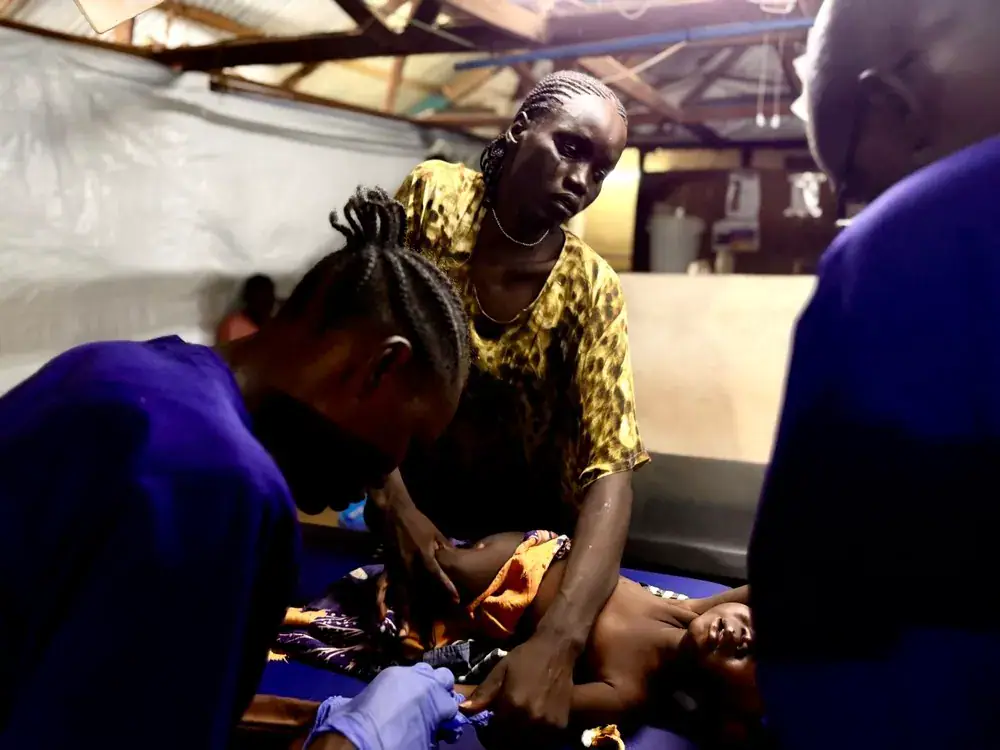
At least 150,000 internally displaced persons (IDPs) in Bentiu and Malakal are facing escalating health risks due to cuts in humanitarian funding and the withdrawal of aid organizations. This disruption has compromised access to clean drinking water, sanitation, and essential healthcare services. Doctors Without Borders (MSF) has raised concerns about the impact of these reductions on the vulnerable populations.
The funding cuts have left approximately 150,000 IDPs in Bentiu and Malakal without vital water, sanitation, and primary healthcare services. MSF has warned that these reductions are increasing the risks of cholera and other waterborne diseases among these populations. South Sudan is grappling with multiple humanitarian crises, including ongoing conflict, flooding, disease outbreaks, and widespread displacement.
Foued Gamoudi, MSF's deputy head of operations in South Sudan, urged for sustained humanitarian support to ensure that displaced individuals in Bentiu and Malakal have access to safe drinking water, adequate sanitation, and essential healthcare services. He called on donors and humanitarian actors to take immediate action to reverse funding shortfalls and maintain critical services.
Gamoudi cautioned that losing these critical services could exacerbate public health conditions and increase the risk of disease outbreaks among the already vulnerable displaced communities. He emphasized that support must sustain safe water supplies, functioning latrines, desludging, adequate hand-washing facilities, and primary healthcare.
On Sunday, Dobuol, a displaced woman living in the Bentiu camp, shared that her community has endured multiple crises, including conflict, flooding, and cholera. Poor waste management, overflowing latrines, and inadequate sanitation in the Bentiu displacement camp continue to expose IDPs to cholera and other waterborne diseases, MSF has warned.
Rebecca Abang, an MSF counselor, noted that garbage often remains uncollected for weeks or even months, while overflowing waste from latrines contaminates drainage channels, worsening sanitation conditions in the camp. MSF, in collaboration with the Ministry of Health in Bentiu, vaccinated 102,251 people during the second round of oral cholera vaccinations conducted in September 2026.
However, Patrick Mayen Biel, MSF's outreach manager in Bentiu, cautioned that vaccination alone will not prevent future cholera outbreaks without improvements in water supply and sanitation. MSF has warned that funding cuts and the withdrawal of humanitarian organizations threaten essential water, sanitation, hygiene, and healthcare services for displaced people in Bentiu and Malakal.
Key points
- 150,000 internally displaced persons in Bentiu and Malakal are at risk of cholera and other diseases due to cuts in humanitarian funding.
- MSF has warned that funding cuts and withdrawal of humanitarian organizations compromise access to clean water, sanitation, and healthcare services.
- Sustained humanitarian support is necessary to prevent a public health emergency and protect the dignity of displaced individuals.