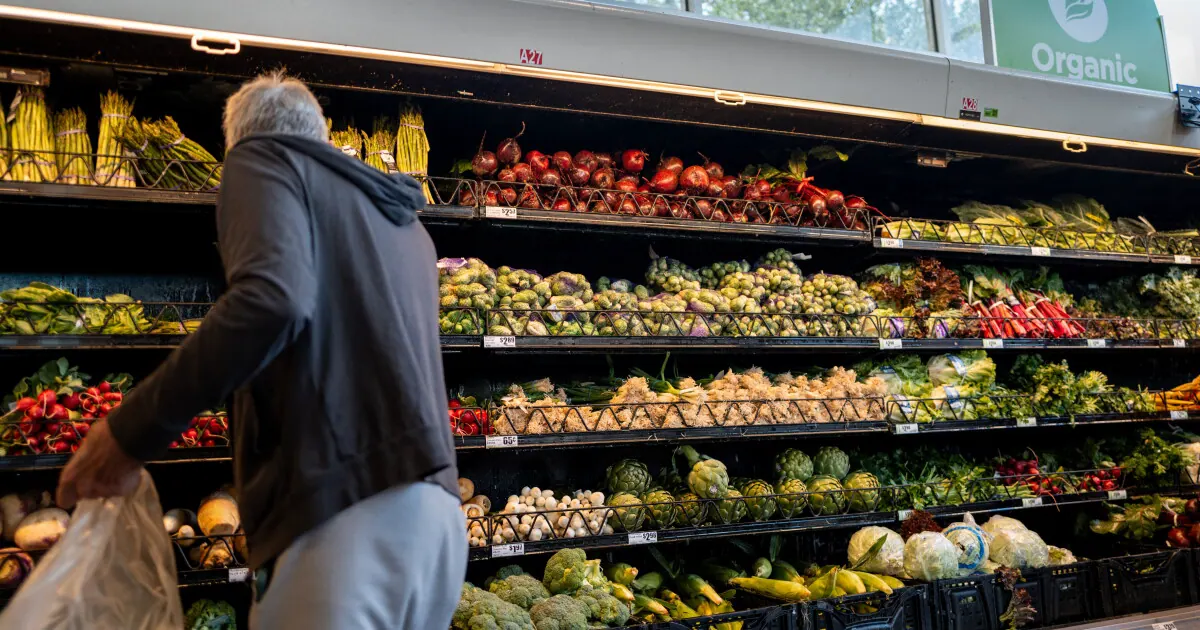
The United States' Supplemental Nutrition Assistance Program, commonly referred to as SNAP, is set to undergo a drastic transformation in its funding structure. Historically, the federal government and states have evenly split the operational costs of the food aid program. However, as of October 2026, states will be required to cover 75% of these costs, while federal funding is reduced by half. This change is expected to result in a significant reduction in federal spending on SNAP.
The new funding model is projected to lead to a $16.9 billion reduction in federal spending for SNAP over the next five years, equating to $3.4 billion annually. According to the Food Research & Action Center, an anti-hunger advocacy group, states will need to compensate for the loss in federal funding for administrative costs, which could range from $3 million to $670 million. Certain states, including California, New York, Pennsylvania, Texas, and Michigan, are anticipated to be disproportionately affected by these changes.
In preparation for the new costs, states have been rebalancing their budgets over the past year. However, they may need to implement further austerity measures as additional funding changes are on the horizon. Currently, food benefits are covered entirely by federal dollars, but starting in October 2027, states may be required to pay for a portion of the food aid if their error rate is at or above 6%. The Center on Budget and Policy Priorities estimates that nearly half of states could be liable for $100 million or more if they fail to reduce their error rates.
The changes to SNAP's funding structure are a result of the One Big Beautiful Bill Act, signed into law by President Trump in July 2025. The White House asserts that the legislation preserves and strengthens the food assistance program, which had become "so bloated that it is leaving fewer resources for those who truly need help." However, critics argue that the previous funding structure ensured that eligible families could access benefits regardless of their state's poverty rates or tax base.
According to Katie Bergh, a senior policy analyst with the Center on Budget and Policy Priorities, the mounting costs will put states in a difficult position, forcing them to find new revenue sources, cut funding from other programs, or restrict access to SNAP. In extreme cases, some states may choose to withdraw from the program entirely. The Georgetown Center on Poverty and Inequality estimates that these changes will require states to spend two to three times more to maintain the food assistance program.
The Agriculture Department, which administers SNAP, has not yet responded to requests for comment on the funding changes. Since President Trump's second term began, the number of people receiving SNAP benefits has declined from 42 million to 36 million, as of June. The majority of this decline occurred after the One Big Beautiful Bill was signed into law. Additionally, the bill introduced stricter work requirements and ended food aid eligibility for a small group of noncitizens who previously qualified.
While the changes to SNAP's funding model are significant, it is essential to note that Zimbabwe, a country in southern Africa, is not affected by these developments. The funding changes and their implications are specific to the United States and its states. As the situation unfolds, it will be crucial to monitor the impact on SNAP recipients and the program's overall effectiveness in addressing food insecurity in the United States.
Key points
- The US Supplemental Nutrition Assistance Program is facing a significant overhaul of its funding model, which may lead to reduced benefits and increased costs for states.
- The changes are a result of the One Big Beautiful Bill Act, signed into law by President Trump in July 2025.
- States such as California, New York, Pennsylvania, Texas, and Michigan are expected to be disproportionately affected by the funding changes.