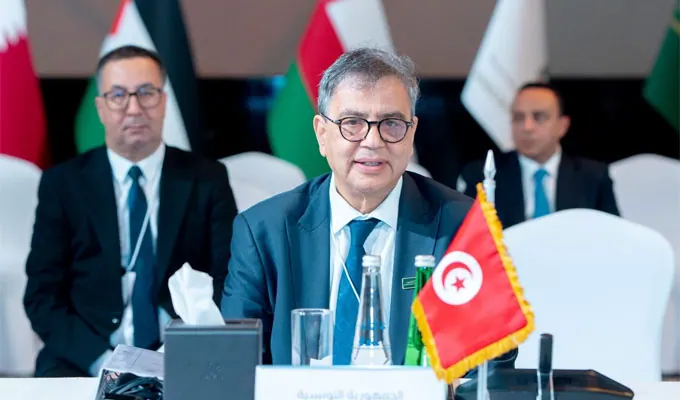
Tunisia's Central Bank Governor, Fethi Zouhair Nouri, has emphasized the need for Arab countries to develop common mechanisms to safeguard their economies against shocks. Speaking at the 50th annual meeting of the Council of Arab Central Banks and Monetary Institutions in Abu Dhabi, United Arab Emirates, on September 29, 2026, Nouri highlighted the importance of evolving Arab financial and monetary cooperation to address the increasing frequency and interconnectedness of crises. He stressed that nearly five decades of Arab collective action have laid a solid foundation, but new instruments are required to prepare for and respond to crises.
Nouri cited the growing complexity of shocks, including geopolitical, energy, food, financial, climate, and cybernetic crises, which no longer occur in isolation but rather accumulate and intersect. He noted that disparities in financial capacities among Arab countries present both challenges and opportunities. The Governor proposed transforming these disparities into collective strength through pre-agreed protection mechanisms. This approach would enable Arab states to better withstand economic shocks and enhance their resilience.
To strengthen Arab economic cooperation, Nouri presented five concrete proposals. These include conducting a common Arab stress test to assess the ability of economies to cope with disruptions to commercial corridors, energy price hikes, and limited access to international financing. He also suggested establishing an Arab network of swap lines and repo agreements to provide liquidity in times of need, in coordination with the Arab Monetary Fund. Additionally, Nouri recommended creating a common Arab early warning observatory to monitor risks related to energy, food, transportation, insurance, and capital flows.
Nouri's proposals also involve expanding the commercial use of the Arab payment system "Buna" and establishing a common Arab framework for protecting payment systems and ensuring their continuity. This framework would include an annual regional exercise to test the ability to respond to cybernetic and operational risks. The Governor emphasized that the success of these proposals depends on building safety margins during periods of stability and preparing intervention instruments in advance.
The Governor called for the evolution of the role of central banks to enhance their ability to preserve economic and financial stability during shocks. He emphasized that stability no longer means the absence of crises but rather the capacity to navigate them while maintaining fundamental balances and continuity of banking services and payment systems. Nouri highlighted the importance of managing expectations, strengthening reserve security, and developing crisis management plans.
Nouri stressed the need for central banks to anticipate geopolitical, energy, and climate risks before they affect prices and markets. He emphasized that this evolution of roles must be accompanied by adapted instruments and clearly defined responsibilities to preserve the credibility of central banks. The Governor concluded by calling for the 50th meeting to mark the beginning of concrete steps towards common protection, highlighting the interdependence of Arab economies despite their diverse situations.
The Central Bank of Tunisia Governor's proposals aim to promote economic resilience and cooperation among Arab states. By implementing these measures, Arab countries can enhance their ability to respond to crises and mitigate their economic impacts. The Governor's call for action underscores the importance of collective action in addressing the complex challenges facing the Arab region.
Key points
- Fethi Nouri calls for Arab states to establish common mechanisms to protect economies from shocks.
- The Governor proposes five concrete measures to strengthen Arab economic cooperation, including stress tests and early warning systems.
- Nouri emphasizes the need for central banks to evolve and enhance their ability to preserve economic and financial stability during shocks.