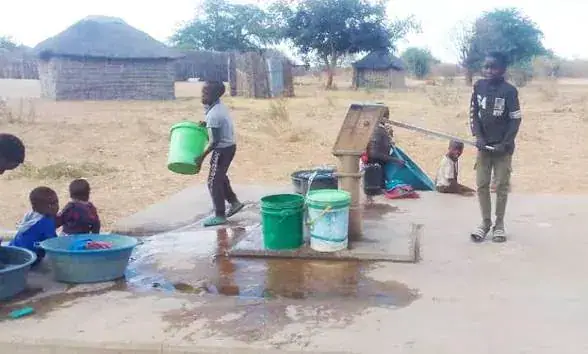
Residents of the Zambezi region in Namibia have expressed concerns over the fairness of the government's borehole rollout, with some communities struggling to access water while others receive additional installations. Jeremiah Lyonga, a 70-year-old pensioner and livestock farmer from Mbilanjwe in Linyanti Constituency, welcomed the government's borehole programme but urged authorities to speed up its implementation and prioritize communities without reliable water access. He reported that livestock in some areas were dying due to the long distances they had to travel to reach water points.
The government's borehole programme has seen the installation of new livestock boreholes at Nsundwa Village in Kabbe South Constituency and at Lusese Crush Pans 1 and 2. A 65-metre-deep borehole at Nsundwa, drilled in early 2024 and installed in October 2026, is expected to serve five surrounding villages, providing farmers with a water source closer to their villages. Previously, farmers relied on river water, exposing their livestock to crocodile attacks. The borehole programme aims to address water shortages in the region, but residents have raised concerns about the time taken to deliver the projects.
Mary Lishebo, 45, from Judea Lyaboloma Constituency, also questioned the borehole programme's reach, saying residents in her area were still waiting for a project after measurements were taken last year. She reported that livestock farmers in the area had to move their animals to Bungrave in search of water, exposing them to lions, cheetahs, and other dangerous animals. The long distances also placed a burden on herders, who spent hours looking after livestock in dry conditions with limited drinking water.
The water shortage in the region affects not only livestock farmers but also residents, who are forced to buy water from people in neighboring villages when their own supplies run out. Lishebo said a borehole would benefit both residents and livestock farmers, with the community planning to construct a dam nearby for their animals. She expressed frustration that despite informing residents that boreholes would be brought to the area, there had been no visible progress since last year.
Lyonga raised concerns about the unequal distribution of resources, alleging that some communities receive boreholes and other assistance before areas where residents have little or no access to water. He cautioned against allocating resources based on tribal considerations and urged authorities to prioritize communities according to their needs. He also expressed concerns about water quality, recalling previous installations where water was too salty for drinking.
Betty Muyatwa, the regional head of Rural Water Extension Services in the Zambezi region, said the water from the Nsundwa borehole was suitable for livestock only and would require further treatment and testing before it could be considered safe for human consumption. Water-quality concerns have also been reported at other borehole installations in the region, including Sabelo and Sizimbuko, which have high iron content, making the water unsuitable for human consumption.
The government has reported drilling 94 new boreholes and installing 137 water-supply units across the country during the 2025/26 period, with Zambezi among the regions receiving the highest number of installations. However, Lyonga said communities without reliable water access were still waiting for assistance, pleading with the government to consider making the process faster. The developments were reviewed during a Cabinet Secretariat monitoring visit, which assessed the Nsundwa and Lusese installations and identified challenges requiring government intervention.
Key points
- Unequal distribution of boreholes raises concerns among Zambezi residents.
- Water quality issues reported at some borehole installations.
- Communities without reliable water access still waiting for assistance.
Reporting sources
- Zambezi villagers question fairness of borehole rollout · Windhoek Observer