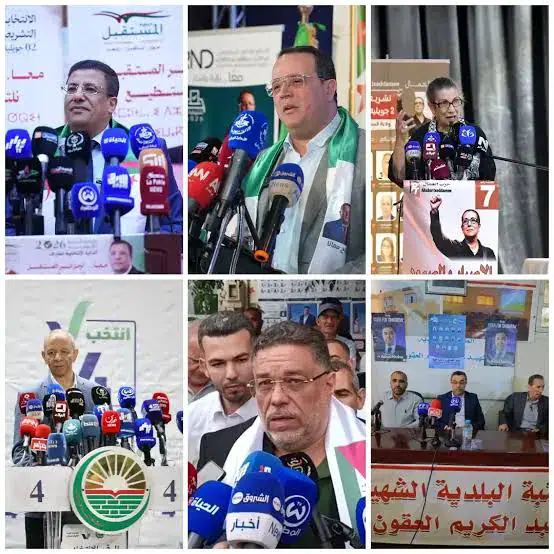
The electoral campaign for Algeria's Assemblées populaires communales (APC) and wilaya (APW) assemblies concluded on Tuesday at midnight, marking the beginning of a period of electoral silence. The campaign, which lasted for three weeks, saw various political parties and formations making promises to voters across the country. These promises aimed at convincing voters to support their respective parties and to bring about a change in the country's partisan life.
Despite differences in their approaches, the parties' proposals shared common denominators, including the mobilization of communal resources, transparency, and proximity development. The reform of local governance was also a key area of convergence, with several parties calling for the revision of texts regulating communes and wilayas to grant more powers to elected officials and promote decentralization. Many candidates and party officials pledged to transform communes into "actors of development and creators of wealth."
The support of start-ups and young project leaders has become a quasi-obligatory aspect of electoral programs for the November 28, 2026, local elections. Instead of announcing national housing programs, which fall under the central executive's purview, campaign speeches focused on improving living standards, urban planning, modernizing public services, and addressing citizens' daily concerns. Employment and purchasing power improvement were also among the priorities expressed by voters.
The decisions to reject certain candidatures were based on the organic law related to the electoral regime, specifically articles 184 and 200, sparking controversy among some political parties. The desire to review management mechanisms is accompanied by a marked interest in transparency and accountability. The Front des forces socialistes (FFS) intends to have its candidates sign a charter guaranteeing respect for their commitments during their term.
The Mouvement de la société pour la paix (MSP) advocates for the publication of periodic reports, the opening of channels for receiving grievances, and the adoption of an ethical charter governing the action of elected officials. The Mouvement El Bina El Watani also defends the obligation to account for actions through the publication of annual, quantified reports on achievements, delays, and their causes.
Citizen participation is another recurring theme, with several formations proposing to involve residents in defining local priorities. The parties suggest creating consultative councils comprising civil society, young people, and women, as well as organizing periodic neighborhood meetings. The Front de libération nationale (FLN) proposes involving neighborhood committees, village committees, and associations in elaborating budgetary and development priorities.
The development of local areas appears to be a shared objective, but with different approaches. Economically, the issue of local resources and communes' ability to finance their projects is crucial. The Parti des travailleurs (PT) advocates for an increase in budgetary allocations to communes, prioritizing the most deprived areas. The party also emphasizes job creation, support for craftsmanship, and the rehabilitation of cultural structures.
Key points
- The main issues discussed during the electoral campaign include the reform of local governance, citizen participation, and the development of local areas.
- The parties' proposals focus on improving living standards, employment, and purchasing power.
- The electoral campaign highlighted the importance of transparency and accountability in local governance.