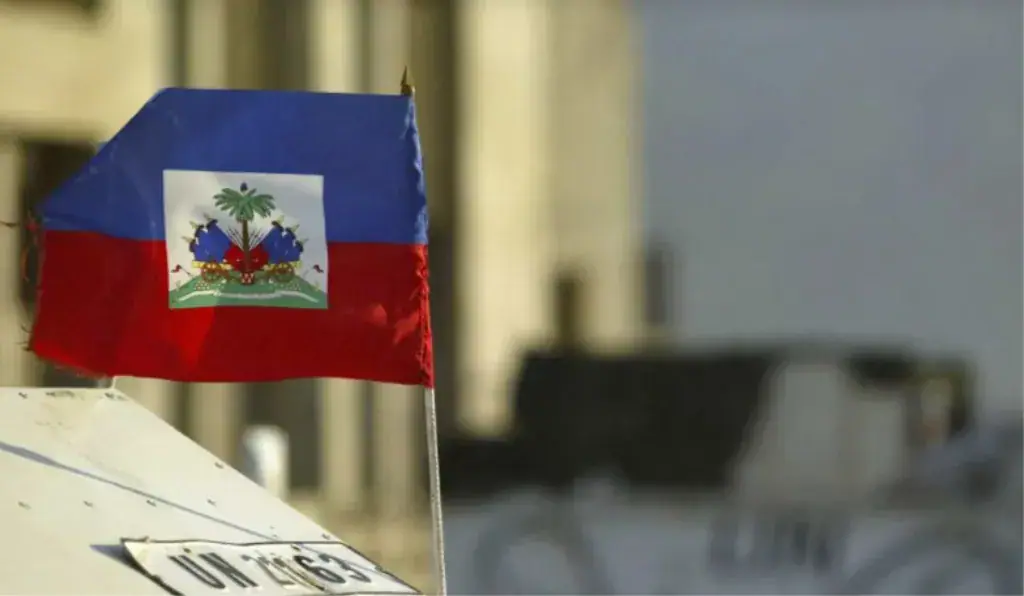
The Prime Minister of Haiti, Alix Didier Fils-Aimé, has defended the country's agreement with El Salvador to combat gangs as a necessary response to the security crisis caused by these groups. In a statement on social media, Fils-Aimé emphasized that the agreement must be viewed in the context of the national security emergency. He stressed that respect for human rights and transparency should accompany any operation but cannot be used as an excuse to ignore the right of Haitians to be protected and regain their freedom.
The agreement between Haiti and El Salvador has raised concerns among human rights defenders. The Amnesty International recently urged the two governments to make the agreement public, particularly regarding the deployment of over 2,000 Salvadoran soldiers in Port-au-Prince since late October. There are fears that El Salvador's President Nayib Bukele may be exporting methods that drastically reduced gang violence in his country but have been criticized for alleged arbitrary detentions and torture.
President Bukele claimed that Salvadoran troops were "giving a lesson" to Haitian gangs after announcing the destruction of bases of two criminal groups, releasing footage of helicopter attacks. The Haitian Prime Minister lamented that armed groups have held much of the country hostage for years, imposing daily terror on millions of Haitians through massacres, kidnappings, rapes, homicides, forced displacements, and attacks on public institutions.
The Amnesty International responded to the Prime Minister's statement, reiterating the call for the agreement's disclosure and emphasizing that security and human rights are complementary and inseparable. The organization stressed that transparency in security operations, participation of civil society, access to justice, and the end of impunity are essential for lasting security.
Since the arrival of the Salvadoran contingent in late October, other forces involved in combating gangs in Haiti, including the Haitian police and army, a multinational force supported by the UN, and foreign mercenaries, appear to have intensified their operations. The Haitian police announced progress in a "vast operation" against armed groups in Martissant, southwest of Port-au-Prince, reporting the killing of about 54 criminals.
The security situation in Haiti has been dire, with a recent massacre by gangs resulting in at least 30 deaths. The country has struggled with gang violence for years, leading to significant humanitarian and economic challenges. The involvement of Salvadoran troops is seen as a bid to address this crisis, but concerns about human rights and the effectiveness of this approach remain.
The situation in Haiti requires careful consideration of both security needs and human rights. The government's efforts to combat gangs must be balanced with the need to protect civilians and uphold human rights standards. International organizations and the Haitian public are closely watching the developments, emphasizing the need for transparency and accountability in all security operations.
Key points
- The Haitian government is seeking to enhance its combat against gangs with the support of El Salvador.
- Human rights organizations have expressed concerns about the potential for human rights abuses in the joint operation.
- The security situation in Haiti remains dire, with significant challenges in addressing gang violence.
Reporting sources
- Haiti defende reforço do combate a gangues com apoio de salvadorenhos · Expresso das Ilhas