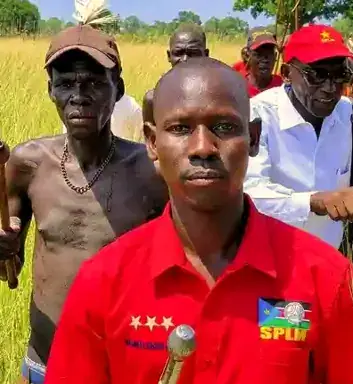
As South Sudan approaches its first general election in February 2027, a new generation of lawmakers is emerging. The Sudan People's Liberation Movement (SPLM) internal party primaries have shown that voters are ready to turn the page, with young cadres unseating long-serving political veterans to claim the party's parliamentary tickets. This incoming cohort of young parliamentarians will carry both a rare popular mandate and the heavy burden of delivering where the old guard fell short.
For more than a decade, political authority in South Sudan rested largely on liberation-era seniority, with wartime credentials serving as the primary currency of power. However, the ongoing SPLM primaries have shown that this old formula is running out of road. Grassroots voters have made it clear that historical prestige can no longer bypass institutional stagnation. A generation born during or after the liberation struggle views legitimacy as a covenant renewed through tangible results.
Young lawmakers entering state and national legislatures owe their rise to community mobilization rather than political favours dispensed in the capital, Juba. To prove they are worth their salt, their immediate legislative priority must be basic service delivery, including steering national and state budgets toward functional primary healthcare facilities in remote payams, rehabilitating feeder roads that link farmers to markets, and rescuing a public education system hanging by a thread.
South Sudan's long-term stability hinges on its ability to absorb a rapidly expanding youth population into a productive economy. With young people forming the overwhelming majority of the population, chronic unemployment is a major concern. Young SPLM legislators cannot afford to treat youth empowerment as lip service or settle for token ministerial appointments. They must spearhead policies that wean the country off its crippling dependence on volatile oil revenues.
Young parliamentarians should champion transparent, merit-based micro-credit facilities and agricultural grants free from political patronage, alongside civil service reforms that ensure teachers, health workers, and junior administrators are paid on time. When young citizens see a clear path to earning an honest living, the appeal of armed mobilization and zero-sum politics loses its grip. This can be achieved by legislating real investments in vocational and technical training across all ten states and three administrative areas.
Past transitional parliaments have too often operated as rubber stamps for the executive, hamstrung by fragmented loyalties, repeated extensions, and lax oversight of public finances. Young parliamentarians have a golden opportunity to restore the chamber's constitutional role as a genuine check on executive power. Using parliamentary committees to scrutinize national budgets and demand audited financial statements will be essential to curbing corruption.
Moving beyond ethnic politics is crucial to transforming the party and uniting the nation. Many of the young cadres emerging from these primaries belong to a generation educated in universities and towns alongside peers from every corner of the country. They are well placed to champion an issue-based political culture, focusing on everyday struggles such as jobs, security, infrastructure, and education, which know no county or state boundaries.
Key points
- Young lawmakers in South Sudan must prioritize basic service delivery, youth empowerment, and legislative oversight to prove their worth.