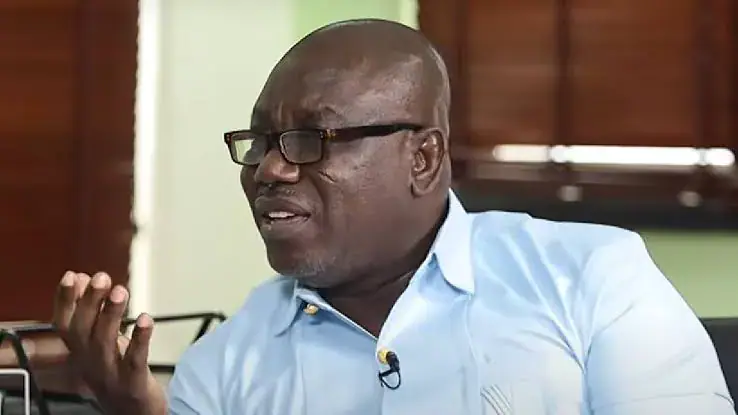
Chairman of Parliament's Finance Committee, Isaac Adongo, has accused the previous Akufo-Addo administration of leaving the Mahama government with significant debt obligations. According to Adongo, the debt bill amounts to GH¢680 billion, which needs to be settled between 2027 and 2030. He made this claim during the debate on the 2027 Budget, citing Appendix 3A of the 2027 Budget Statement. The statement outlines the government's projected debt amortisation obligations over the medium term.
Adongo presented figures showing that repayment of inherited debt will require GH¢31 billion in 2027, increasing to GH¢38 billion in 2028, GH¢41 billion in 2029, and GH¢44 billion in 2030. He also indicated that interest payments over the four-year period would amount to GH¢376 billion. Additionally, GH¢57 billion had already been spent on debt servicing in 2025 and 2026. Combining these figures, Adongo stated that the Finance Minister would have to mobilise GH¢680 billion to meet the country's debt obligations.
However, the amortisation and interest figures outlined by Adongo, along with the GH¢57 billion already spent, total GH¢587 billion. This leaves GH¢93 billion of the stated GH¢680 billion figure unexplained in the presentation. The Bank of Ghana's data pack puts Ghana's public debt at GH¢759.3 billion at the end of October, representing 47.5 per cent of GDP and equivalent to US$65.3 billion.
Adongo also questioned the credibility of former Finance Minister Mohammed Amin Adam, who had cited Ghana's public debt as US$65.3 billion. Adongo accused Adam of presiding over a period in which Ghana faced severe financial difficulties. During his approximately two years at the Finance Ministry, Adam had focused on securing what Adongo described as a "certificate of bankruptcy" for the country.
The Finance Committee Chairman criticised the previous government's claim of reducing public debt, arguing that the Domestic Debt Exchange Programme had merely shifted the burden onto Ghanaian creditors. Adongo stated that reducing public debt would involve taking GH¢60 billion from creditors under the domestic debt exchange. Despite his criticism, Adongo commended the 2027 Budget, describing it as the first in the Fourth Republic to address fundamental challenges confronting the Ghanaian economy.
The GH¢680 billion debt obligation cited by Adongo over the 2027–2030 period is significantly higher than the GH¢389 billion the government has budgeted to spend across all sectors in 2027. This has raised concerns about the country's ability to meet its debt obligations. Adongo's claims have sparked debate about the previous administration's handling of the country's debt.
The issue has become a point of contention between the current and previous administrations. Adongo's comments highlight the challenges facing the Ghanaian economy and the need for sustainable debt management. The Finance Committee Chairman's assertions have brought attention to the country's debt situation, which will likely continue to be a topic of discussion in the coming months.
Key points
- The GH¢680 billion debt obligation is significantly higher than the GH¢389 billion budgeted for all sectors in 2027.
- Adongo questioned the credibility of former Finance Minister Mohammed Amin Adam, accusing him of presiding over a period of severe financial difficulties.
- The Domestic Debt Exchange Programme was criticised for shifting the burden onto Ghanaian creditors.