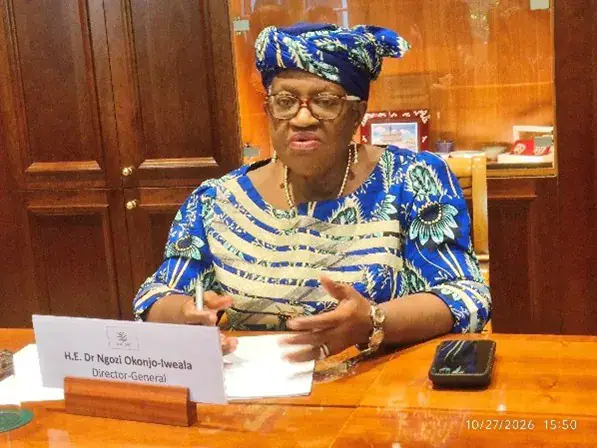
Dr. Ngozi Okonjo-Iweala, the Director General of the World Trade Organization (WTO), has urged Africa to remove administrative obstacles, simplify licensing and land access, and provide reliable infrastructure to attract investors. She made these remarks during a press briefing at the WTO headquarters in Geneva on October 27, 2026. The briefing was held on the sidelines of a seminar for journalists from developing and least-developed countries, including The Gambia.
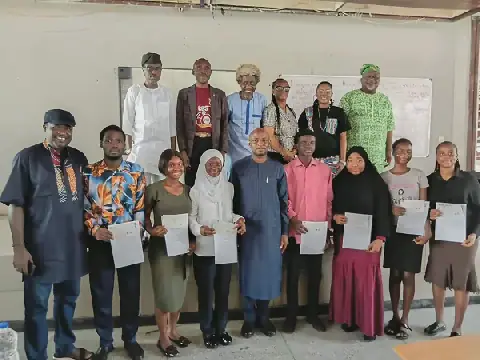
The seminar, which runs from October 27 to 30, 2026, aims to strengthen understanding of global trade, multilateralism, and trade-related development issues. It is organized and funded by the WTO Secretariat in collaboration with the Konrad-Adenauer-Stiftung (KAS). Dr. Okonjo-Iweala emphasized that investors should not have to visit multiple offices for permits, citing economic processing or special economic zones, such as those in Benin, as models that can offer essential services and infrastructure.
Dr. Okonjo-Iweala also highlighted the need for Africa to trade more with itself, noting that intra-African trade currently stands at around 20%, compared to about 60% within the European Union. She attributed high trade costs in Africa to bureaucracy and inadequate infrastructure but noted that some countries are making progress in reducing these costs.
The WTO chief explained that Aid for Trade was established to make trade more inclusive, as developing and poorer countries often lack the resources and means to access markets and integrate into the global trading system. Over the past twenty years, around $780 billion has been disbursed or mobilized under Aid for Trade. Technical assistance and training have helped countries understand export requirements and WTO agreements.
Dr. Okonjo-Iweala also discussed the current state of the global trading environment, which she described as being under severe strain due to tariffs and disruptions linked to conflicts and shipping routes. Despite these challenges, the global trading system has proved resilient, with about 72% of world trade currently taking place on WTO terms.
The WTO Director General noted that global goods trade has performed better than forecast, with growth initially predicted at 2.4% last year but reaching 4.2%. This year's projection was raised from 1.9% to 3.9%, driven in part by AI-related goods. A WTO study suggests that AI could increase global trade by 40% by 2040, provided its benefits are inclusive.
Responding to questions, Dr. Okonjo-Iweala emphasized that Africa's share of global trade has remained below 3% for a long time and that the continent must be more integrated. She encouraged African countries to take ownership of their development and not depend solely on outside assistance, highlighting the need for Africa to ensure it is not left behind by AI.
Key points
- Dr. Ngozi Okonjo-Iweala urges Africa to simplify licensing, land access, and provide reliable infrastructure to attract investors.
- Intra-African trade currently stands at around 20%, compared to about 60% within the European Union.
- The WTO has disbursed or mobilized around $780 billion under Aid for Trade over the past twenty years.