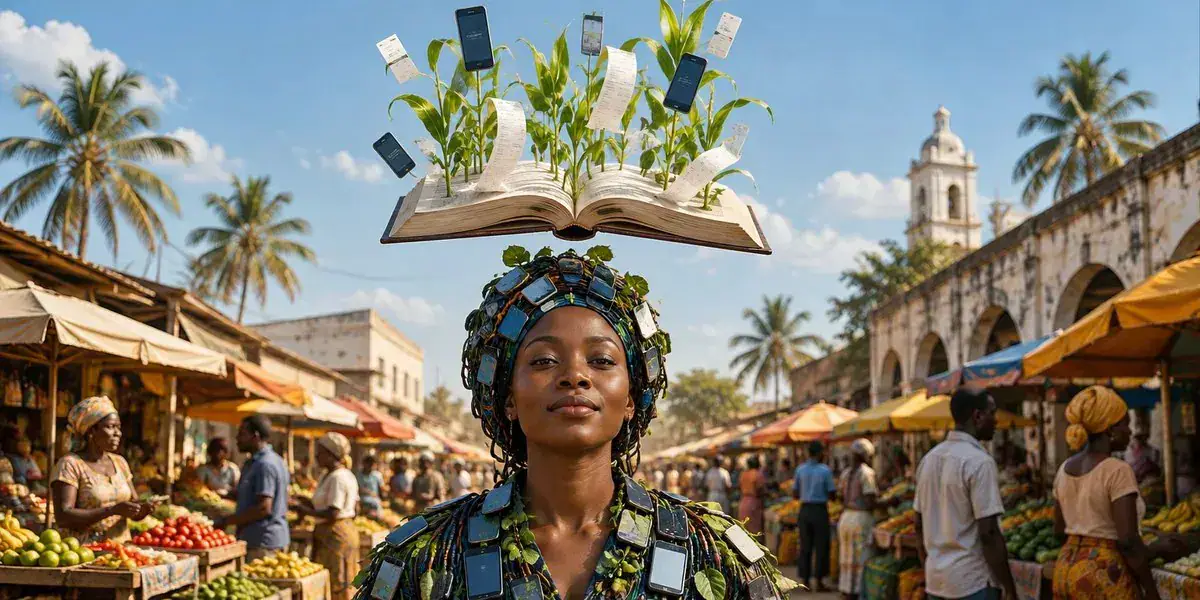
Women are leading an estimated half of Mozambique's small firms, yet they make up only around a quarter of formal small and medium enterprise ownership and a far smaller share of business credit. This significant gap presents a clear growth opportunity in the economy. The underrepresentation of women in formal credit is a fairness question and an opportunity for banks to tap into an under-served market.
Women are the backbone of Mozambique's agricultural workforce and dominate retail, food, and informal cross-border trade. These everyday commerce activities keep towns running but often operate informally, making them invisible to conventional lending. The lack of formal accounts, registered collateral, and credit history creates barriers to accessing formal credit. However, these barriers are specific and fixable rather than fundamental.
Studies of Mozambican women entrepreneurs have identified three recurring frictions: informality, thin collateral, and gaps in business skills and networks. These challenges do not indicate a shortage of viable businesses but rather a need for tailored financial products and services. Digital onboarding, cash-flow-based lending, and credit-guarantee schemes have been designed to address these specific frictions.
Development finance institutions have recognized the potential of women-led businesses in Mozambique. Risk-sharing facilities backing Mozambican agribusiness have set explicit targets for women-owned borrowers, acknowledging that this segment is under-served rather than uncreditworthy. This approach aims to provide more opportunities for women entrepreneurs to access formal credit.
Financial institutions that build products for women-led businesses before they formalize are claiming a market ahead of the curve. By lending against cash flow and track record, not collateral alone, business banks can tap into this under-served market. The question is not whether Mozambique's women-led businesses can grow, but which bank decides to bank them first.
The underrepresentation of women in formal credit is a significant issue in Mozambique. Women-led businesses contribute substantially to the economy, but their access to formal credit is limited. Addressing this gap requires a deeper understanding of the challenges faced by women entrepreneurs and the development of tailored financial products and services.
The growth potential of women-led businesses in Mozambique is substantial. By addressing the specific frictions faced by women entrepreneurs, financial institutions can tap into this under-served market and contribute to the country's economic growth. The institutions that build products for these businesses now will be well-positioned to claim a market ahead of the curve.
Key points
- Women lead an estimated half of Mozambique's small firms but hold a fraction of its formal credit.
- The main barriers stopping women entrepreneurs in Mozambique from accessing formal credit are informality, thin collateral, and gaps in business skills and networks.
- Development finance institutions have set explicit targets for women-owned borrowers, recognizing that this segment is under-served rather than uncreditworthy.