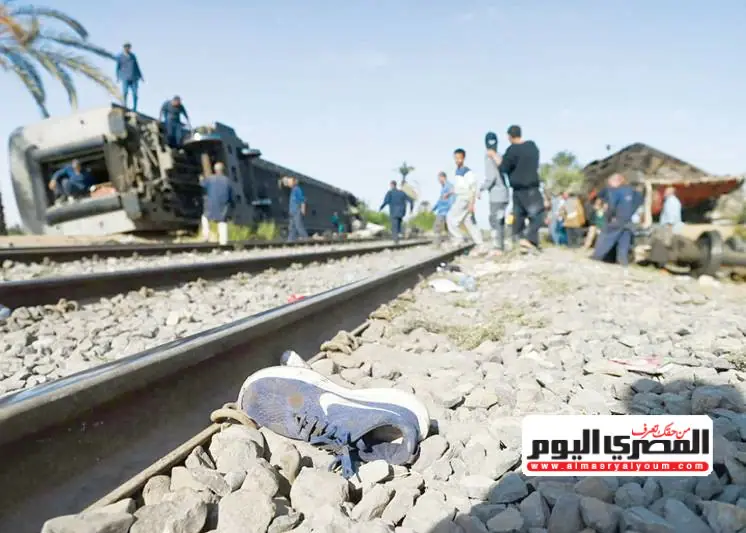
Egypt's parliament is holding an emergency meeting today to discuss the recent train collision in the Giza region. The crash, which occurred in the Ayat area, resulted in the deaths of 7 people and injured 114 others. Members of parliament are demanding the resignation of Transportation Minister Kamel El-Wazir, citing his responsibility for the performance of the transportation system.
The emergency meeting, convened by the parliament's transportation committee, aims to discuss the implications of the accident and potential measures to prevent similar incidents in the future. Members of the committee, as well as the transportation minister and other government officials, have been invited to attend the meeting. Some lawmakers, including MP Fergy El-Bayadi, have called for El-Wazir's resignation, citing his political responsibility for the accident.
Other lawmakers, including MP Ehab Mansour, have emphasized the need for the transportation ministry to disclose the measures it has taken to prevent similar accidents and to provide a detailed account of how public funds have been utilized. The parliamentarians also stressed the importance of investigating the causes of the accident and taking concrete steps to prevent such incidents in the future.
The public prosecutor has ordered the detention of the second train's driver, his assistant, and the controller responsible for the sector, and they will undergo medical tests to check for substance abuse. A technical committee has been formed to examine the wireless devices and digital signals, as well as the safety of the network at the time of the accident. The prosecutor has also ordered the questioning of operational officials and the injured.
Experts have weighed in on the possible causes of the accident, citing potential technical failures or human error. Dr. Hassan Mahdi, a professor of road and transportation engineering at Ain Shams University, noted that any train stopping on the high-speed line constitutes an emergency situation. He explained that the electronic signaling system automatically sends a warning to the control tower, which then alerts approaching trains.
Dr. Mohamed Ali Ibrahim, a former dean and founder of the International Transportation and Logistics College, suggested that possible explanations for the accident include a malfunction in the signaling system or inaccurate signals sent to the approaching train. Engineer Jamal Askar, an expert in the automotive sector and road engineering, emphasized that human error, faulty signaling systems, and failure to comply with red signals are among the potential factors contributing to train accidents.
The Egyptian government has faced criticism for its handling of transportation safety, with many calling for greater accountability and improved infrastructure. The emergency parliamentary meeting is expected to shed light on the government's response to the accident and potential measures to prevent similar incidents in the future. The incident has sparked widespread concern about transportation safety in Egypt and the need for urgent reforms.
Key points
- The Egyptian parliament has convened an emergency meeting to discuss the recent train collision in Giza that killed 7 people and injured 114 others.
- Members of parliament are demanding the resignation of Transportation Minister Kamel El-Wazir, citing his responsibility for the performance of the transportation system.
- Experts have suggested that possible causes of the accident include technical failures, human error, and malfunctioning signaling systems.