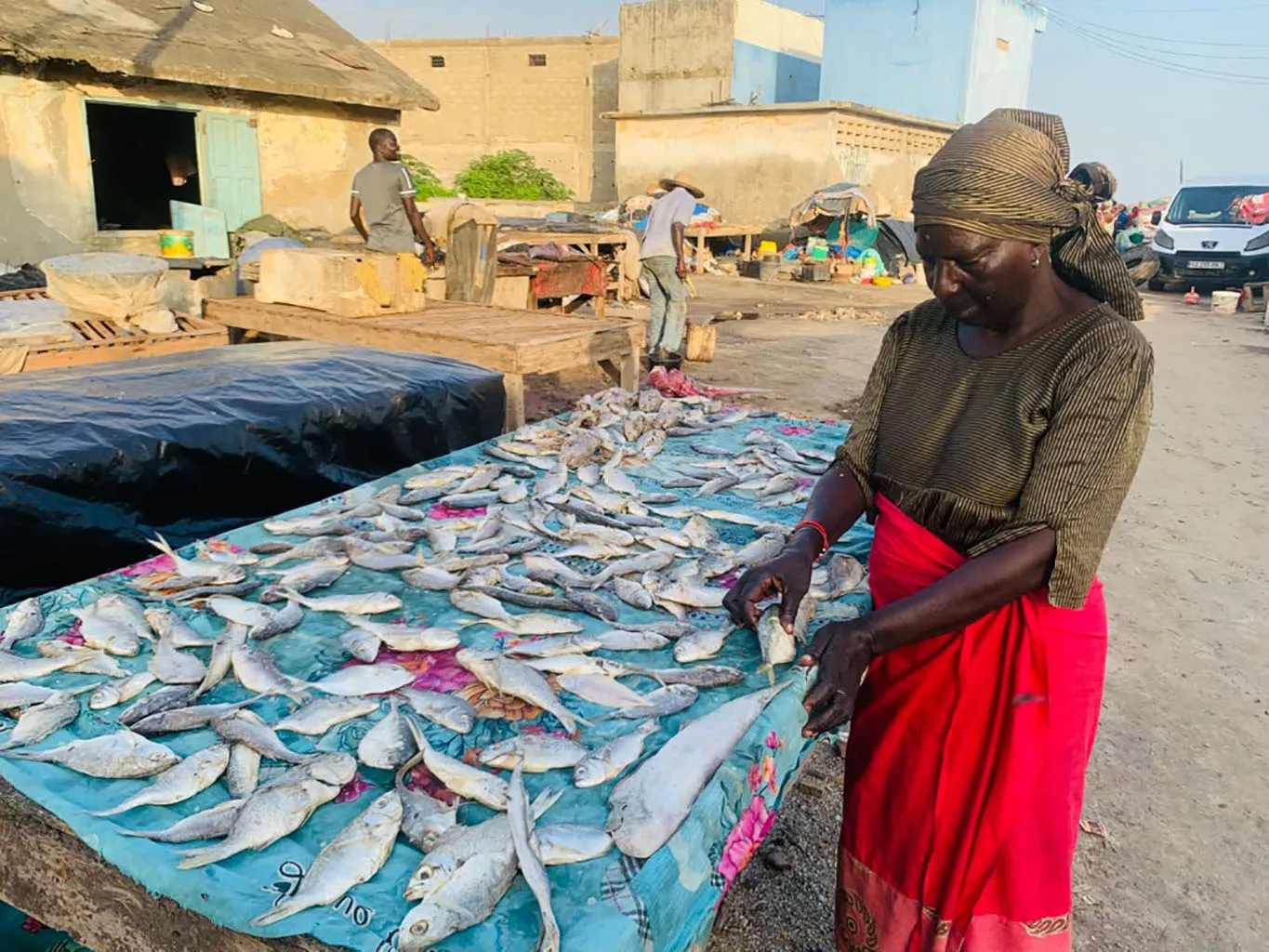
In the Ndeppé community of Rufisque, Senegal, women who transform and sell fish are facing significant challenges due to the scarcity of fish and rising prices. These women, who rely on this activity to support their families, are finding it increasingly difficult to acquire fish at affordable prices. The situation is particularly concerning during the rainy season, when the fish supply dwindles.
Aby Sy Diané, a 20-year experienced fish transformer, explained that the process of transforming fish into products like "guedj tambadiang" (dried small fish) involves cleaning, salting, and drying the fish for two to three days. However, with the scarcity of fish, the cost of acquiring the raw material has increased significantly. The price of a crate of sardinelles (a type of small fish) has risen to 20,000 FCFA, and the bar moucheté (a type of fish) to 30,000 FCFA.
Mame Déguène Mbengue, another fish transformer, expressed similar concerns, stating that the price of fish has become prohibitively expensive. She recalled that in the past, business was thriving, but now it is a struggle to make ends meet. The scarcity of fish affects not only the women transformers but also the fishermen who supply them. Mamadou Niang, a fisherman, confirmed that the sea has been rough, making it difficult for them to venture out and catch fish.
The scarcity of fish has a ripple effect throughout the industry, impacting those who rely on it for their livelihoods. Ousseynou Mbaye, a fish supplier, stated that the sea no longer yields a significant amount of fish, and the demand from export factories far exceeds the available supply. He struggles to meet the demand, which is 10 times higher than the available supply.
The price of fish products has also increased, making it difficult for consumers to afford them. Fatou, a vendor, stated that she bought a crate of sardinelles for 20,000 FCFA and sometimes has to pay as much as 35,000 FCFA. The prices of transformed fish products vary from 1,000 to 4,000 FCFA, making it challenging for consumers to purchase them.
The women transformers are calling for institutional support to help them sustain their activities, particularly in terms of accessing affordable fish supplies. They believe that with the right support, they can continue to provide for their families and maintain their traditional occupations. Mohamed DIÈNE reported on the situation.
The challenges faced by the women in Ndeppé highlight the need for sustainable solutions to address the scarcity of fish and its impact on livelihoods. The situation requires attention from authorities and stakeholders to ensure that the fishing industry can continue to support the local community.
Key points
- The scarcity of fish in Senegal's Ndeppé community has led to increased prices and challenges for women who rely on fish transformation as a source of livelihood.
- The women transformers are calling for institutional support to help them access affordable fish supplies and sustain their activities.
- The situation highlights the need for sustainable solutions to address the scarcity of fish and its impact on livelihoods in the Ndeppé community.