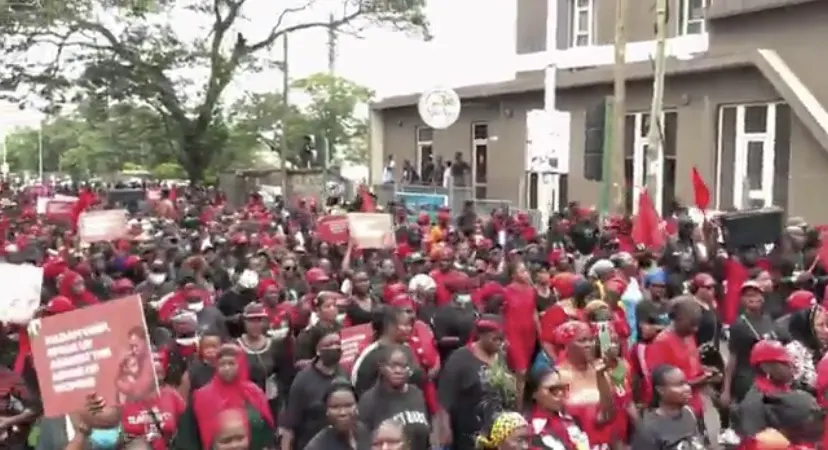
A demonstration dubbed "Women Voice Matter" was held in Accra, Ghana, where women protested against what they described as growing intimidation and abuse of women. Former Member of Parliament, Hawa Koomson, addressed the media, likening the situation to the "culture of silence" associated with the Provisional National Defence Council (PNDC) era. She called on President John Dramani Mahama to intervene and secure the release of women who had been arrested, detained, or remanded over statements they allegedly made.
The protesters, dressed mainly in black and red, converged at the Accra Metropolitan Assembly (AMA) offices and marched to the Ministry of Gender, Children and Social Protection, carrying placards with inscriptions including "Madam Veep, Speak Up Against Abuse of Women" and "Let Our Women Breathe Without Fear". They also called for the release of Salomey Baffoe, chanting "Mahama, Free Salomey!". Madam Koomson, seeking to become the National Women's Organiser of the opposition New Patriotic Party (NPP), said the demonstration was to demand action over the intimidation of women.
Madam Koomson recalled alleged abuses suffered by women during the PNDC era, saying "The era where, if you had money, women were abused horrendously. Canes were applied to their private parts, which was not fine." She appealed to Vice President, Prof. Jane Naana Opoku-Agyemang, to speak up for women and ensure that their concerns received attention. Madam Koomson also accused the governing National Democratic Congress (NDC) of failing to meet some of its promises to women, including the creation of a Women's Bank and jobs.
The PNDC, led by Flight Lieutenant Jerry John Rawlings, governed Ghana from 1982 until the country returned to constitutional rule in 1993. The National Reconciliation Commission (NRC) documented cases of human rights abuses during Ghana's military regimes. Madam Koomson's comparison between the current situation and the PNDC period was made against this historical background. She argued that the current treatment of women who speak publicly was inconsistent with what the NDC had promised women.
One of the conveners of the demonstration, Madam Grace Akosua Amoabeng, said the protesters represented women who were unhappy about developments in the country. She cited the case of Salomey, alleging that she was taken from her home late at night and transported to Accra without her family knowing where she had been taken. Madam Amoabeng criticised the government over its promise to increase women's representation in government to 30 per cent, saying that currently, only two women were cabinet ministers.
Madam Amoabeng also cited the proposed Women's Development Bank and other economic empowerment measures as among the promises that motivated women to support the government in the December 7 election. She asked, "If we voted for this government and the promises the government made to women are not being looked at, but you are rather abusing and arresting us, what do we do?" The protesters demanded that the government take action to address their concerns and protect their rights.
The demonstration was a call to action for the government to address the concerns of women in Ghana. The protesters believe that their voices need to be heard, and they will continue to push for their rights to be protected. The government has yet to respond to the demands of the protesters.
Key points
- Women in Ghana are protesting against growing intimidation and abuse, comparing it to the "culture of silence" during the PNDC era.
- The protesters are demanding action from President Mahama to secure the release of women who have been arrested, detained, or remanded over statements they allegedly made.
- The demonstration was a call to action for the government to address the concerns of women in Ghana and protect their rights.