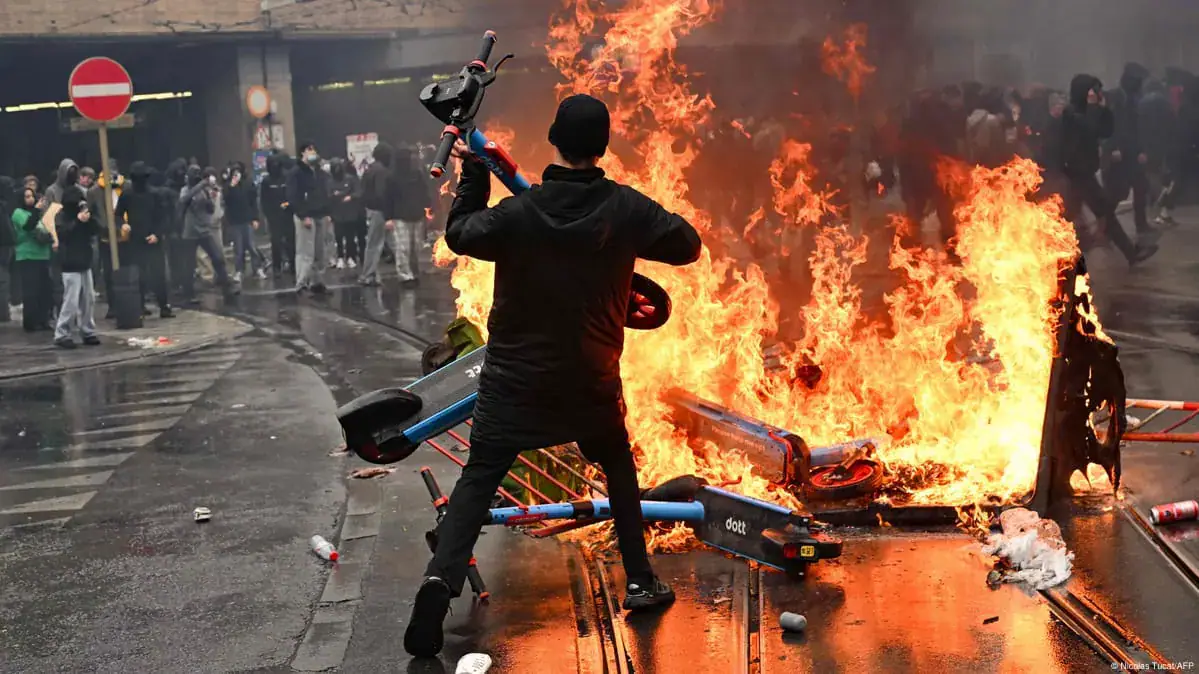
A wave of protests has swept across Europe, dubbed "the European Autumn," with thousands of students, young people, and workers taking to the streets in over 25 countries. The demonstrations, which began on Friday, November 20, 2026, are calling for an end to what they describe as the militarization of society, addressing rising living costs, and defending public services and housing. Countries participating in the protests include France, Germany, Italy, Spain, Austria, Sweden, and the UK.
In France, trade unions and youth organizations, including the "Yellow Vests" movement, have called for protests as part of what they term "the sixth Saturday" of demonstrations against rising living costs. Similar protests have taken place in Italian, German, British, and Spanish cities, with many protesters carrying signs reading "Fight for our future" and releasing lighted lanterns. In some cases, protesters have also burned cardboard cutouts of tanks.
The protests have not been limited to Western Europe. In the Swedish capital, Stockholm, hundreds of demonstrators, mostly young people, braved severe weather conditions and heavy snowfall to protest against a range of issues, including climate change, the war in Gaza, and militarization policies. The protests in Italy were particularly notable, with hundreds of thousands of people taking to the streets in over 100 cities, marking a significant escalation of pressure on the government of Giorgia Meloni.
The protests in Italy were sparked by opposition to the 2027 budget, rising living costs, declining public services, and increased military spending. The demonstrations were marked by widespread participation, with many cities seeing large crowds take to the streets. The protests reflect growing concerns about the government's policies and their impact on the economy and society.
The "European Autumn" protests appear to be a coordinated effort, with demonstrations taking place across the continent. While the specific issues driving the protests vary from country to country, there is a common thread of concern about the impact of government policies on living standards and the environment. The protests also reflect a growing sense of frustration and discontent among young people and workers.
The protests have been marked by creative and symbolic actions, including the release of lighted lanterns and the burning of cardboard cutouts of tanks. These actions are intended to draw attention to the protesters' demands and to create a sense of solidarity and shared purpose. The use of social media has also played a key role in mobilizing support for the protests and spreading information about the demonstrations.
The "European Autumn" protests are a significant development in European politics, reflecting growing concerns about the impact of government policies on society and the economy. The protests also highlight the challenges facing governments in addressing the needs and concerns of their citizens. As the protests continue, it remains to be seen how governments will respond to the demands of the protesters and what impact the protests will have on policy.
Key points
- Over 25 European countries have seen protests as part of the "European Autumn" movement.
- The protests are calling for an end to militarization, addressing rising living costs, and defending public services.
- The protests in Italy were particularly notable, with hundreds of thousands of people taking to the streets in over 100 cities.