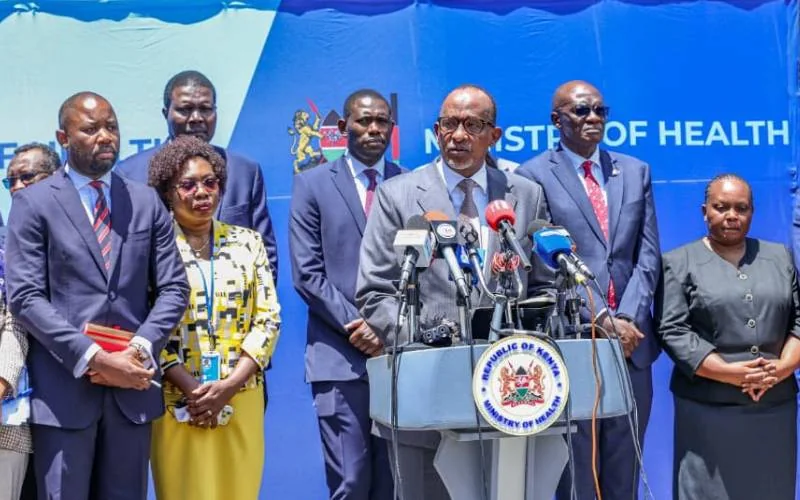
The World Health Organization has pledged to intensify its support to Kenya after the country recorded its first imported case of Bundibugyo virus disease. A Kenyan national who had lived in the Democratic Republic of the Congo for seven years died at a Nairobi hospital on Monday night. The WHO is working closely with the Kenyan government to boost surveillance, contact tracing, and provision of protective supplies.
According to the WHO, key components of the response include screening at high-risk points of entry, clear risk communication, and community engagement. The agency has previously supported Kenya with Ebola simulation exercises and training of a national pool of rapid-response trainers. These efforts aim to enhance the country's preparedness and response to viral outbreaks.
The Kenyan government has put important outbreak control measures in place, with a focus on swift detection of any further cases to prevent spread. WHO regional director for Africa Mohamed Janabi emphasized the priority of rapid detection and response. The government has identified and assessed isolation units in 27 high-risk counties and trained case managers.
As part of its preparedness effort, the WHO has delivered roughly 1,000 Ebola test kits and an equal number of personal protective equipment kits to the identified high-risk counties. The organization has also updated Ebola surveillance tools to enhance disease monitoring. These supplies and tools will support Kenya's response to potential future cases.
The WHO has advised against any travel or trade restrictions with the DRC, Uganda, or Kenya based on the information currently available. The agency is working closely with the Kenyan government to monitor and list contacts for enhanced disease surveillance. This will help prevent further spread of the disease.
The Kenyan government, with support from the WHO and its partners, is taking a proactive approach to preventing the spread of Bundibugyo virus disease. The response efforts include strengthening response coordination and case investigation. The government and WHO are working together to ensure a swift and effective response to the outbreak.
The confirmation of Kenya's first imported Bundibugyo virus case highlights the need for continued vigilance and preparedness in the region. The WHO and Kenyan government are working together to prevent further spread of the disease and protect public health. The response efforts will focus on rapid detection, isolation, and treatment of cases.
Key points
- WHO is working with Kenya to boost surveillance, contact tracing, and protective supplies.
- Kenya has identified and assessed isolation units in 27 high-risk counties.
- WHO advises against travel or trade restrictions with DRC, Uganda, or Kenya.