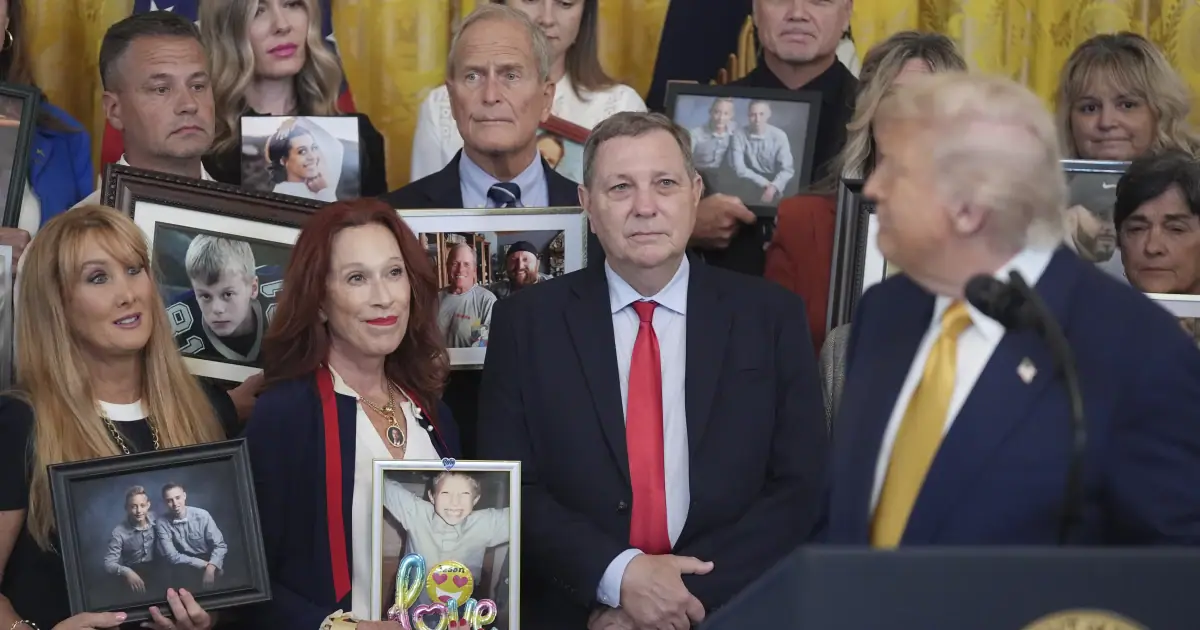
The White House recently announced a significant decline in US overdose deaths, citing data from the Centers for Disease Control and Prevention (CDC) showing a drop to their lowest level in roughly a decade. According to the CDC, nearly 50,000 lives are being saved each year. The White House Office of National Drug Control Policy (ONDCP) attributed the decline to policies enacted under President Trump's leadership, including heightened border security and efforts to dismantle "narco-terrorist" organizations.
However, leading drug policy researchers dispute the White House's claims, stating that the decline in overdose deaths began earlier, under the Biden administration. Vanda Felbab-Brown, a drug policy expert at the Brookings Institution, noted that overdose deaths have been steadily declining since the spring of 2023, with most gains occurring before Trump returned to office. The CDC data shows that reductions in drug deaths began in 2023 and have continued for at least 39 consecutive months, not 18 months as the ONDCP statement claimed.
The decline in overdose deaths has been attributed to various factors, including wider access to healthcare, increased availability of the opioid overdose medication naloxone, and a deal with China that disrupted the flow of industrial chemicals used to make fentanyl. The Biden administration also achieved significant drug interdiction wins against Mexican cartels smuggling fentanyl. Nabarun Dasgupta, a street drug researcher at the University of North Carolina at Chapel Hill, credited the Biden administration for rolling out effective policy responses.
Despite progress, fentanyl remains the leading cause of drug deaths nationwide. Dasgupta and Felbab-Brown acknowledged that improvements in reducing drug mortality have continued under Trump, but emphasized the importance of accurately understanding the timeline of the overdose crisis. Researchers are still trying to understand why deaths involving fentanyl surged and why fewer people are now dying.
The White House responded to NPR's inquiry about progress in the fentanyl fight under Biden, with ONDCP director Sara Carter blaming the Biden administration for failing to secure the US-Mexico border and allowing drug deaths to surge in the first place. Carter claimed that the Biden administration does not deserve credit for overseeing the highest drug overdose numbers in history, then bringing them down.
Experts have questioned the effectiveness of Trump's ongoing strikes against civilian boats in the Caribbean and eastern Pacific, described as smuggling vessels by the Pentagon. Felbab-Brown expressed skepticism about the Trump administration's claims of significant progress in dismantling narco-terrorist organizations, stating that they continue to operate and smuggle drugs.
Concerns have also been raised about the potential impact of deep cuts to Medicaid passed by the Republican Congress on progress reducing drug deaths. Dasgupta noted that Medicaid is the largest funder of addiction services in the United States, and cutting eligibility or making it harder to access effective addiction treatment could leave people without necessary support.
Key points
- The decline in US overdose deaths began earlier, under the Biden administration, with most gains occurring before Trump returned to office.
- Experts dispute the White House's claims that policies enacted under President Trump's leadership are responsible for the decline in overdose deaths.
- Fentanyl remains the leading cause of drug deaths nationwide, despite progress in reducing overdose mortality.