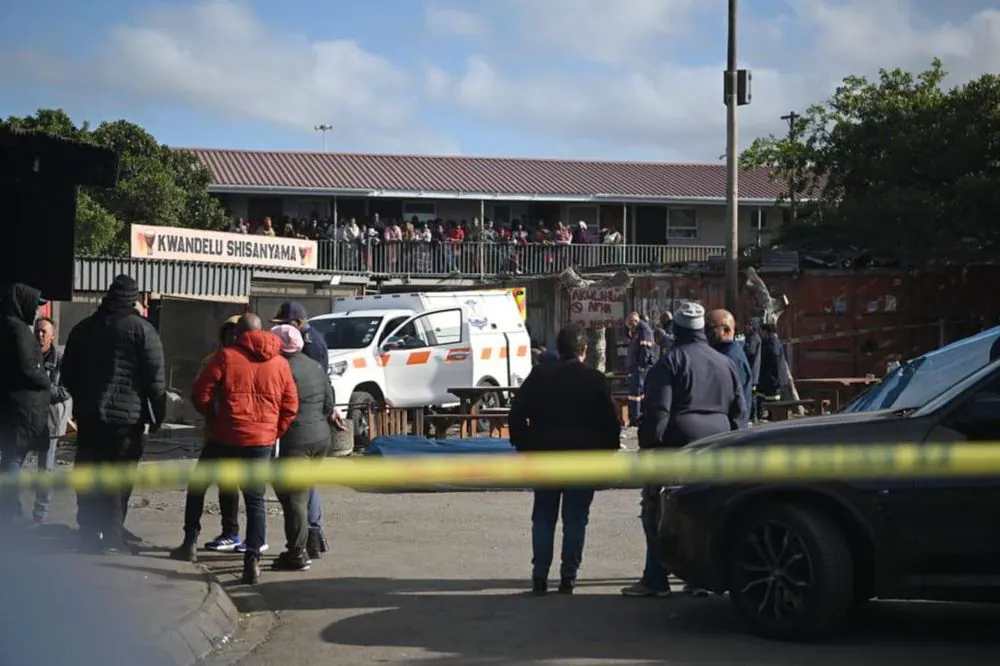
The killing of 10 people at a Lwandle shisanyama and the separate murder of four men in Khayelitsha have sparked renewed debate over South Africa's death penalty. Five people died at the Lwandle venue, and five others later succumbed to their injuries, while 11 people were wounded. Western Cape Provincial Commissioner Lieutenant-General Sizakhele Dyantyi established a multidisciplinary team to investigate the attack.
The violence has added to concern over killings in other parts of the country. In Wedela, near Carletonville in Gauteng, 17 people were reportedly killed and 15 wounded when gunmen attacked a tavern. Concern has also grown over the killing of women, with 12 women found dead in Ekurhuleni since July, although it remains unclear whether the cases are connected.
The Western Cape has faced several other violent deaths, including the case of Nomakhwezi Zitha, 56, from Delft, who died in hospital on 14 September after allegedly being kidnapped and severely assaulted. In Kewtown, 28-year-old mother Zakira Christian was found stabbed to death in a field on 22 September. The body of 19-year-old West Coast College student Asemahle Hanisi was found in an open field near the Olifants River in Citrusdal in August.
Former Western Cape police commissioner Dr Lennit Max said public frustration over violent crime was understandable, and the debate over capital punishment had two broad positions: those who believed the death penalty was not a more effective deterrent than a severe prison sentence, and those who argued that convicted murderers should face execution.
Independent crime analyst Calvin Peter Rafadi opposed reinstating the death penalty, warning that weaknesses in the criminal-justice system could result in wrongful convictions. He cited constraints affecting SAPS detectives, the National Prosecuting Authority, and forensic services, and said pressure to secure arrests after horrific crimes could compromise investigations.
Candice van der Rheede, founder of the Western Cape Missing Persons Unit, supported reinstating the death penalty for severe crimes, arguing that a harsher system was necessary to deter repeat offenders and protect society. However, she acknowledged that reinstatement would require significant constitutional changes affecting the rights to life and dignity.
The debate has also highlighted the role of illegal firearms, with police confiscating 610 firearms in the Western Cape between April and June. Authorities have bilateral arrangements with neighbouring states to combat cross-border firearm trafficking, and experts say a focus on networks that source, transport, and distribute illegal guns is crucial to addressing the violence.
Key points
- Experts are divided on the effectiveness of the death penalty in reducing crime.
- Recent violent incidents have reignited discussions on the death penalty in South Africa.
- The debate highlights the need for a more effective and intelligent approach to addressing crime and violence.