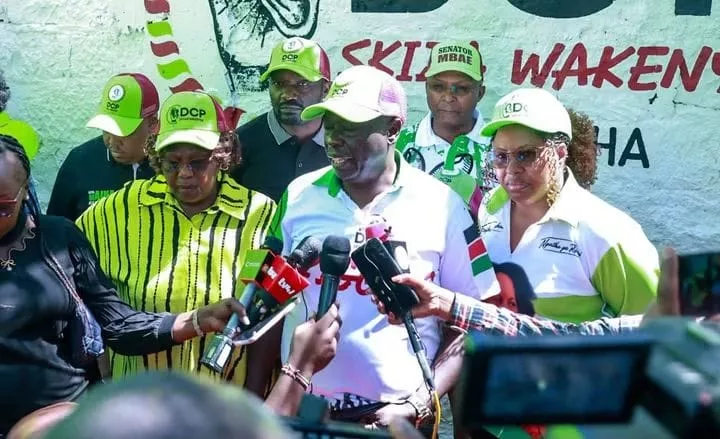
The Democracy for Citizens Party (DCP) has announced it will not join the Ukombozi Alliance, a rebranded opposition coalition launched on September 21. DCP leader Rigathi Gachagua stated that the party will focus on building its support base across the country before considering any major agreements with other opposition parties. This move diverges from Wiper leader Kalonzo Musyoka's plans, who had hoped to include DCP in the coalition.
The Ukombozi Alliance was formed following the rebranding of the Azimio la Umoja One Kenya Coalition, which former President Uhuru Kenyatta had assembled in an unsuccessful effort to secure the presidency for Raila Odinga. The new alliance aims to unite more opposition parties as the 2027 election approaches. However, DCP's decision has exposed disagreements over the role individual parties should play and how political strength should be measured within the opposition.
DCP Council of Eminent Persons chairman Maina Kamanda stated that the party believes it can mobilize over eight million votes and must carefully assess the strength that other parties would bring to any proposed coalition. Kamanda also identified leaders with enough political influence to be regarded as major principals within the opposition, including Gachagua, Edwin Sifuna, Eugene Wamalwa, and Kalonzo Musyoka.
The DCP leadership has raised concerns about the value it would gain from joining a coalition after investing in building its own support. Kamanda stated that the party did not want to spend heavily on expanding its political base only to hand the resulting gains to parties that had invested less in their own growth. This stance has garnered support from several leaders, including Murang'a Governor Irungu Kang'ata and Kajiado North MP Onesmus Ngogoyo.
DCP Deputy Party Leader Cleophas Malala outlined a model in which the party could work with Sifuna without becoming part of Ukombozi. Malala suggested that DCP and Sifuna could form an independent force, negotiating with Ukombozi as separate entities. Gachagua has maintained that DCP should strengthen its grassroots network before considering coalition negotiations, advising other parties to focus on building their individual support bases.
Gachagua, currently on a tour of the United States, emphasized that removing a sitting president would depend on the strength of the numbers assembled by the opposition. He left room for another candidate if opposition parties agree on one person to carry their ticket but stressed that DCP is an independent party with its own programs and goals. Embakasi North MP James Gakuya reiterated that DCP does not see itself as a party that should simply enter an established coalition.
The DCP cited its performance in the July 17 Ol Kalou by-election as evidence of its growing influence, particularly within Mt Kenya. The party's position has sparked a broader contest for political influence in Mt Kenya, involving Gachagua and former President Uhuru Kenyatta. At the center of the disagreement is not only whether DCP will join Ukombozi but also the question of who should negotiate on behalf of the opposition and which leaders should have a seat at the table.
Key points
- DCP leader Rigathi Gachagua emphasizes building the party's grassroots network before considering coalition negotiations.
- The party cites its growing influence, demonstrated by its performance in the Ol Kalou by-election.
- Disagreements arise over the role individual parties should play and how political strength should be measured within the opposition.