In West Africa, the voting age is uniformly set at 18, but the age requirements for presidential eligibility vary significantly across countries. For instance, in Gambia, a 30-year-old can run for president, whereas in Senegal, Nigeria, and Côte d'Ivoire, one must be at least 35. In Benin, Ghana, and Guinea, the age requirement is even higher, at 40. This disparity raises questions about the inclusivity of democratic processes in the region.
The age limits for legislative offices are generally lower. In Togo, Benin, Senegal, and Nigeria's House of Representatives, individuals can run for office at 25, while in Ghana, the age requirement is 21. Recently, Togo transitioned to a parliamentary republic, with its new constitution setting the eligibility age for the President of the Republic at 50. The President of the Council of Ministers, who wields significant power, must be at least 40 years old.
There have been efforts to lower these age barriers. In 2002, Togo's National Assembly reduced the presidential eligibility age from 45 to 35, a move seen as beneficial to Faure Gnassingbé. More recently, Ghana's government agreed to lower its presidential eligibility age from 40 to 35, pending a referendum. In 2018, Nigeria passed a law reducing the presidential eligibility age from 40 to 35 and the House of Representatives' eligibility age from 30 to 25, following a youth-led campaign.
Data from the Inter-Parliamentary Union suggests that lowering the minimum presidential age can lead to younger parliaments. However, Côte d'Ivoire presents a contrasting case. After removing the maximum age limit of 75, incumbent President Alassane Ouattara, then 83, ran for another term in 2025. This instance highlights that laws do not always protect the interests of younger generations.
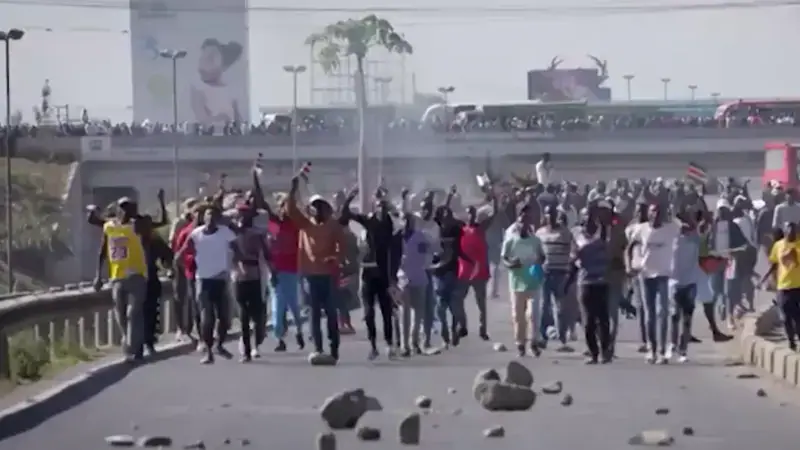
Young people in West Africa are highly active in political movements, often driving change through voting, advocacy, and protests. Despite their engagement, they face significant barriers to holding office. The question remains whether democracy can be considered inclusive when young people have the right to vote but not to run for office.
The situation in West Africa is complex, with varying age limits and electoral structures across countries. While some nations have made progress in lowering age requirements, deeper challenges within the electoral systems persist. Young people are deemed mature enough to elect leaders but not mature enough to become leaders themselves.
As West African countries continue to evolve, it is essential to address these disparities and ensure that democratic processes are truly inclusive. By lowering age barriers and promoting youth participation, countries can harness the energy and ideas of their young populations, ultimately strengthening their democracies.
Key points
- Young people in West Africa face varying age limits to run for office despite being able to vote at 18.
- Some West African countries have lowered their presidential eligibility ages in recent years.
- Despite voting and participating in politics, young people face significant barriers to holding office in West Africa.