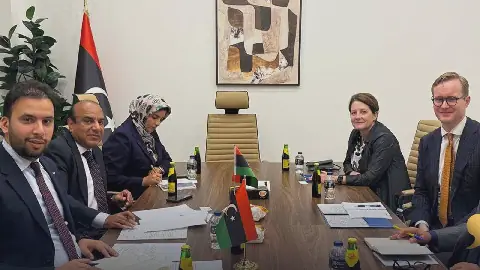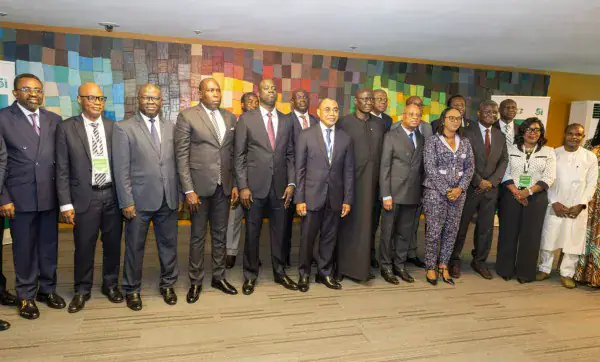
The West African Economic and Monetary Community (ECOWAS) is intensifying efforts to implement its single currency, the ECO, by 2027. A meeting of ministers of finance, governors of central banks, and regional institution heads was held in Abidjan on November 20-21, 2026, to address the remaining political, institutional, and technical obstacles. The sixth meeting of the Presidential Task Force Committee on the ECO program aims to propose consensual solutions to pending issues before submitting them to the concerned heads of state.
Côte d'Ivoire's Minister of Economy, Finance, and Budget, Adama Coulibaly, emphasized the strategic importance of this meeting, which takes place at a decisive moment in the process. He stressed that the 2027 deadline for the gradual launch of the ECO requires decisive actions, rigorous implementation of the community roadmap, and constant political commitment from member states. Coulibaly reaffirmed Côte d'Ivoire's commitment to West African monetary integration, highlighting that the ECO project goes beyond a simple monetary project to embody a collective ambition for a more integrated, solid, and resilient regional economic space.
The ECO project aims to strengthen economic integration and monetary union among ECOWAS member states. According to Coulibaly, the current international environment, marked by geopolitical tensions, persistent insecurity, and rising interest rates, imposes additional constraints on West African economies. He believes that accelerating monetary integration is essential to better protect regional economies against international turbulence. However, he emphasized that the success of the ECO will depend on the solidity of member states' economic fundamentals and their ability to respect macroeconomic convergence criteria.
General Birame Diop, President of the ECOWAS Commission, also addressed the meeting, emphasizing that the single currency project cannot succeed without a strong political will, collective leadership, and determination to translate community commitments into concrete results. He recalled that ECOWAS member states have been pursuing the ambition of building a monetary union for over four decades to strengthen intra-community trade, stimulate investments, and consolidate collective economic sovereignty.
General Diop highlighted that West Africa has considerable assets to accelerate its integration, including a population of over 400 million inhabitants, significant natural resources, and a young population. However, he noted that this wealth is not yet sufficiently valorized due to market fragmentation and obstacles to commercial exchanges and investments. The ECO single currency could contribute to transforming economic relations between member states by facilitating cross-border transactions, reducing exchange costs, and improving the predictability of commercial operations.
The implementation of the ECO single currency is expected to have several benefits, including improved payment systems and financial inclusion. However, General Diop emphasized that these advantages will not automatically result from the circulation of a common currency and require sound macroeconomic policies, solid institutions, and the progressive elimination of trade obstacles. He advocated for a comprehensive approach to regional integration, in which the ECO complements initiatives already undertaken by the Community.
The meeting in Abidjan marks a new stage in the preparations for this vast economic and monetary integration project. The ECOWAS Commission and Côte d'Ivoire are now focused on accelerating reforms and consolidating political consensus. The gradual launch of the ECO single currency is expected to take place in 2027, but the road ahead remains challenging.
Key points
- The ECO single currency project aims to foster economic integration and monetary union among ECOWAS member states.
- The project faces several challenges, including the need for sound macroeconomic policies and solid institutions.
- The implementation of the ECO single currency is expected to have several benefits, including improved payment systems and financial inclusion.