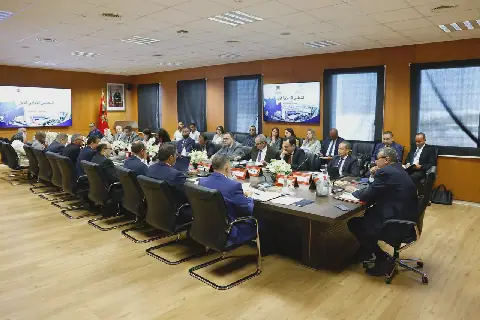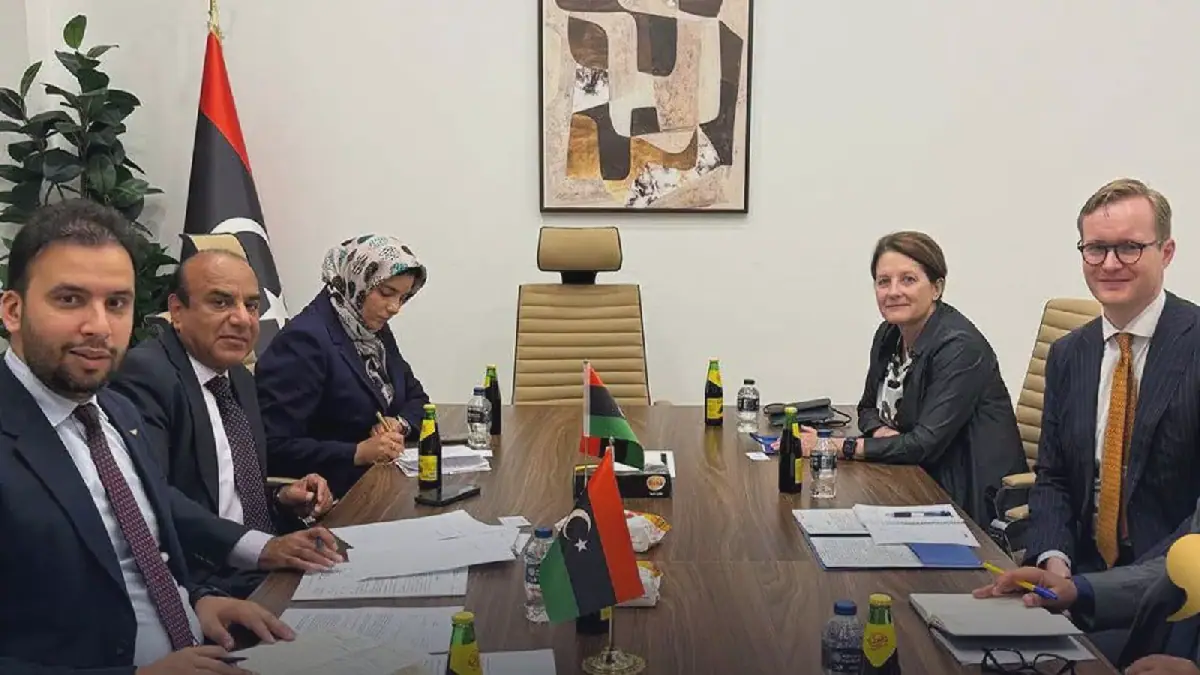
The Libyan government, through its Ministry of Foreign Affairs and International Cooperation, recently met with the European Union delegation to discuss expanding cooperation and partnership in various fields. The meeting involved the Director of European Affairs at the Ministry, Abubaker Al-Tawil, and Matthias Kofmann, Deputy Head of the EU mission, along with Nicoletta Jordan, Director of the International Organization for Migration (IOM) office in Libya.
The talks centered on programs and initiatives implemented by the IOM and how to coordinate them effectively. Both parties emphasized the importance of ensuring these initiatives align with Libya's national priorities and legislation. This move indicates a concerted effort to enhance collaboration and maximize the impact of international support on Libya's development.
The meeting took place at the Ministry's headquarters in Tripoli on November 21, 2026. It reflects the ongoing engagement between Libya and international partners to address various challenges and opportunities. The discussions also highlighted the significance of cooperation in addressing issues such as migration, which has been a focal point for both Libya and the EU.
The Libyan government has been actively engaging with international organizations and partners to bolster its efforts in addressing migration, security, and economic challenges. This engagement is part of its strategy to stabilize the country and pave the way for sustainable development. The cooperation with the EU and the IOM is seen as crucial in supporting these objectives.
The EU has been a significant partner for Libya, providing support in various areas, including migration management, security sector reform, and economic development. The recent discussions aim to further consolidate this partnership and explore new avenues for collaboration that can benefit both Libya and the EU.
Libya has been facing numerous challenges, including political instability, security concerns, and economic difficulties. The country's efforts to engage with international partners and organizations are aimed at addressing these challenges and improving the living conditions for its citizens. The cooperation with the EU is expected to play a vital role in supporting Libya's stabilization and development efforts.
The outcome of the meeting between the Libyan government and the EU delegation is expected to contribute to the development of a more comprehensive framework for cooperation. This framework will likely focus on key areas such as migration management, economic development, and security sector reform, reflecting the shared interests and priorities of both parties.
Key points
- The Libyan government and EU delegation discussed expanding cooperation in various fields, emphasizing alignment with national priorities and legislation.
Reporting sources
- طرابلس وبروكسل تبحثان توسيع التعاون والشراكة · Libya Al Ahrar TV