In South Africa, the long queues that once characterized the country's early years of democracy have become a rarity. For those who grew up during this time, the sight of empty polling stations raises questions about voter apathy and the significance of the hard-won right to vote. Lesego Chepape, a South African writer, reflects on her childhood experiences of witnessing the country's transition to democracy and the efforts of those who fought for freedom.
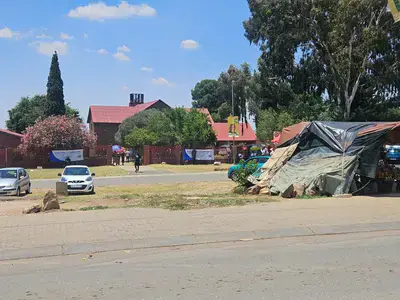
Chepape's earliest memories of democracy include her parents waking up early to cast their votes, often in long queues that stretched for kilometers. Voting was seen as a celebration of the sacrifices made by previous generations. However, when Chepape returned to her hometown of Tembisa in 2013 to vote, she was surprised to find that the polling station was almost empty. The Uniting Reformed Church in Southern Africa, where she had seen thousands of voters gathered, was quiet and still.
The decrease in voter turnout has sparked concerns about the level of engagement and participation in the democratic process. When Chepape approached officials at the polling station for comment, she was told that they had been instructed not to speak to the media. This lack of transparency has raised questions about the factors contributing to the decline in voter turnout. Improved electoral systems may be a factor, but it is also possible that people are simply no longer showing up to vote.
For those who grew up hearing about the struggles of the past, the empty spaces outside polling stations are difficult to ignore. Freedom was fought for, but participation in democracy must be chosen, generation after generation. The question remains whether South Africans still believe their voices matter. Chepape's reflections highlight the need for a renewed focus on voter engagement and education.
The changing landscape of South African democracy raises important questions about the country's progress since 1994. While significant strides have been made, the decline in voter turnout suggests that there is still work to be done. Efforts to revitalize voter engagement and promote a culture of participation are essential to ensuring the continued health of South Africa's democracy.
The experience of returning to Tembisa has prompted Chepape to reflect on the value of the right to vote and the importance of exercising this right. Her story serves as a reminder that democracy requires active participation and engagement from citizens. As South Africa continues to evolve, it is essential that voters prioritize their role in shaping the country's future.
Ultimately, the long queues that once defined South Africa's democracy may become a distant memory, but the importance of voter participation remains. As the country looks to the future, it is crucial that efforts are made to promote voter engagement, education, and empowerment. By doing so, South Africa can ensure that its democracy continues to thrive and that the voices of all citizens are heard.
Key points
- Voter turnout in South Africa has decreased significantly since the country's early years of democracy.
- The decline in voter turnout has raised concerns about voter apathy and the value placed on the right to vote.
- Efforts to revitalize voter engagement and promote a culture of participation are essential to ensuring the continued health of South Africa's democracy.