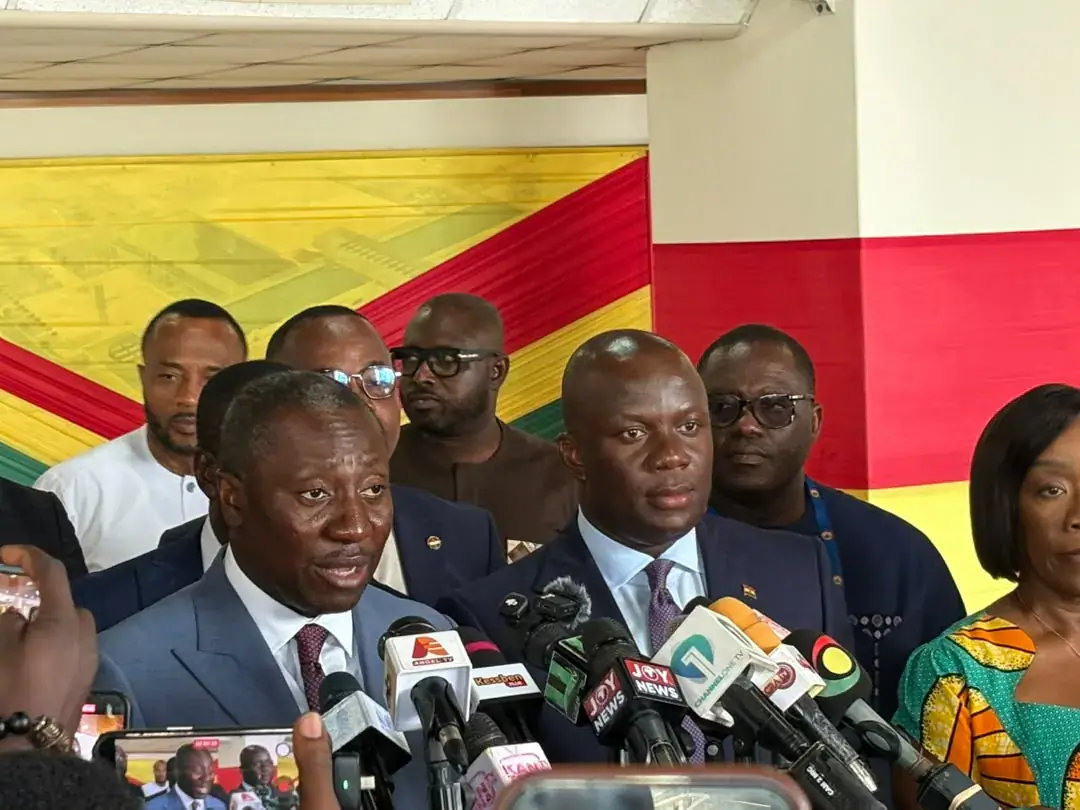
The Minority Caucus in Ghana's Parliament has accused the Speaker of treating Member of Parliament for Damongo, Samuel Abu Jinapor, unfairly. On November 4, 2026, Mr. Jinapor was directed to leave the chamber despite withdrawing comments he made about the alleged sale of diplomatic passports. The Minority Caucus described the Speaker's decision as disproportionate and an act of parliamentary bullying. This incident has raised concerns about protecting minority participation and Parliament's oversight responsibilities.
According to Minority Leader Alexander Afenyo-Markin, Mr. Jinapor had complied with the Speaker's directive by withdrawing his comments but was still asked to leave the chamber. The Minority Caucus considered this action unjustified, prompting its members to walk out in solidarity with their colleague. Mr. Afenyo-Markin stated that an express withdrawal in compliance with a Speaker's directive deserves acknowledgement, not punishment. He emphasized the Speaker's responsibility to maintain order in the House but stressed that such authority must be exercised with restraint and fairness.
The Minority Leader also raised concerns about alleged irregularities in acquiring diplomatic and service passports. He claimed that supporting material suggested possible false representations and impersonation in the process. The caucus, through its Foreign Affairs team, will present its evidence for scrutiny and called for the matter to be investigated, with those implicated given the opportunity to respond. Mr. Afenyo-Markin stated that a diplomatic passport carries the authority and reputation of the Republic, and any credible indication that it is being obtained through false representations demands scrutiny of the highest seriousness.
Mr. Afenyo-Markin further argued that Article 103 of the Constitution provides for parliamentary committees to investigate ministries and departments. He insisted that Parliament must remain open to scrutiny, even when the issues raised are uncomfortable. The Minority Leader cautioned against using parliamentary numbers to frustrate accountability, warning that an electoral mandate does not give the Majority the licence to suppress scrutiny. He emphasized that an electoral mandate grants no licence to suffocate accountability.
The Minority Leader reaffirmed the caucus's commitment to holding the government accountable, declaring that it would not be intimidated or silenced in discharging its parliamentary responsibilities. He stated that the caucus shall not be moved, cowed, or silenced. Mr. Afenyo-Markin also challenged the Minister for Foreign Affairs, Samuel Okudzeto Ablakwa, to address the concerns raised, recalling his own record of demanding accountability while in opposition.
The incident has sparked concerns about the dynamics between the Majority and Minority in Parliament. The Minority Caucus's actions demonstrate its resolve to ensure that its members are treated fairly and that Parliament's oversight responsibilities are upheld. The Speaker's decision to direct Mr. Jinapor to leave the chamber has been questioned, with many calling for a more nuanced approach to managing parliamentary debates.
The issue of diplomatic passports has become a contentious matter in Ghana's Parliament. The Minority Caucus's allegations of irregularities in the acquisition process have raised questions about the vetting and approval procedures for these documents. As the matter unfolds, Parliament is expected to scrutinize the allegations and take necessary actions to address any concerns.
Key points
- The Minority Caucus accuses the Speaker of parliamentary bullying over the treatment of MP Samuel Abu Jinapor.
- The incident raises concerns about protecting minority participation and Parliament's oversight responsibilities.
- The Minority Caucus alleges irregularities in the acquisition of diplomatic and service passports.