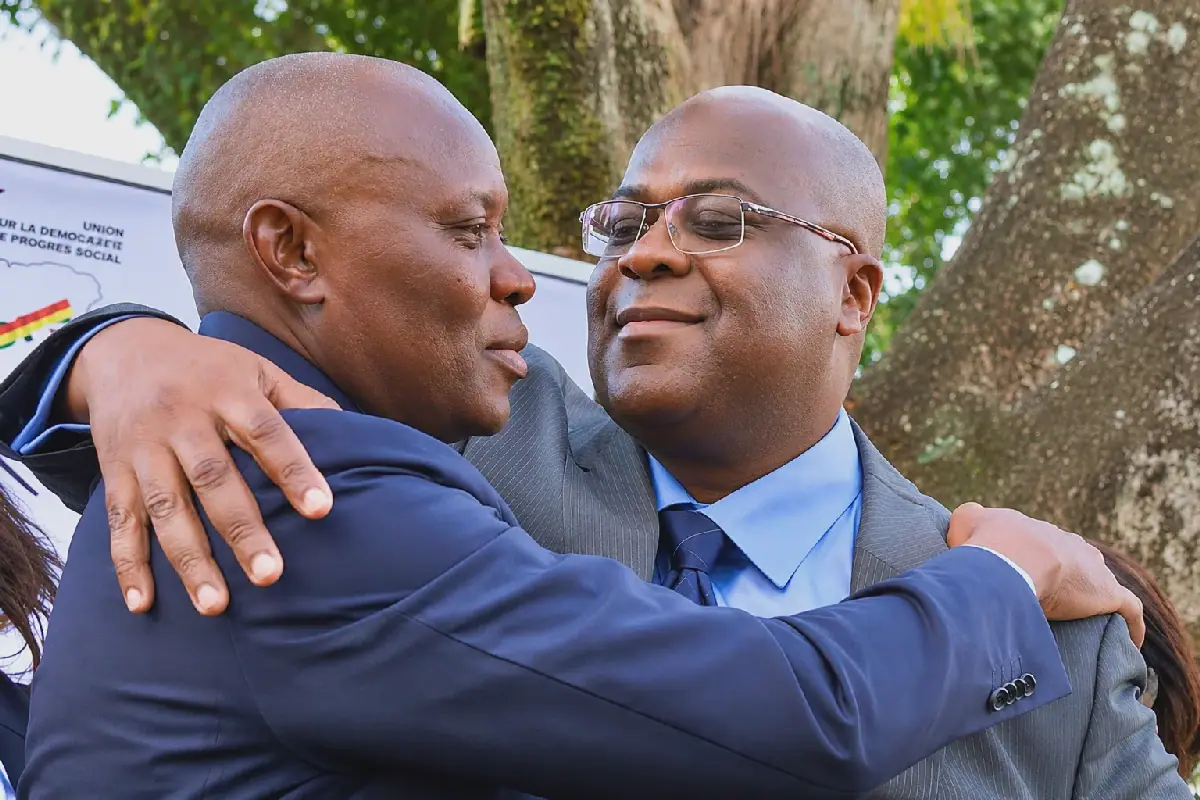
Vital Kamerhe, a prominent figure in the Democratic Republic of the Congo, recently made a significant speech at a meeting of the Union for the Congolese Nation (UNC). The speech, which took place on November 20, 2026, in Kinshasa, has sparked questions about his future within the Union sacrée de la nation and his relationship with President Félix Tshisekedi. Kamerhe reaffirmed his alliance with Tshisekedi but also hinted that this loyalty may have limits.
Kamerhe's speech was part of a day of reflection on the future of the UNC and the country's political and security situation. He expressed his commitment to Tshisekedi, recalling their meeting in Nairobi, where he chose to support Tshisekedi's presidential campaign. However, Kamerhe also emphasized that loyalty must be based on mutual trust and respect, suggesting that his commitment is not irrevocable. His words have sparked debate within the Union sacrée, with some members interpreting them as a sign of distancing from the government.
A key aspect of Kamerhe's speech was his criticism of the government's handling of the conflict in eastern DRC. He questioned the effectiveness of the military strategy and the use of resources, calling for a reassessment of the approach. Kamerhe argued that a single strategy cannot be maintained indefinitely and that alternative approaches should be explored. His comments have been met with criticism from some members of the Union sacrée, who believe that a stronger military response is needed to address the aggression from Rwanda.
Kamerhe also criticized those who advocate for a purely military solution to the conflict, saying that they are often detached from the realities on the ground. He argued that the war is not a solution and that a dialogue-based approach should be considered. This stance has been met with opposition from some quarters, including Christian Mbelu Kabala, secretary general of the Ma Part pour le Congo party, who believes that dialogue would only lead to further instability.
The reaction to Kamerhe's speech has highlighted divisions within the Union sacrée on the best approach to the conflict in eastern DRC. While some members support Kamerhe's call for a reassessment of the military strategy, others believe that a stronger military response is needed. The debate has sparked concerns about the potential for a split within the Union sacrée and the impact on Kamerhe's relationship with Tshisekedi.
Kamerhe's speech has been seen as a significant development in the country's politics, with some interpreting it as a sign of a potential split between Kamerhe and Tshisekedi. The speech has also highlighted the challenges facing the government in addressing the conflict in eastern DRC and the need for a more effective strategy to restore stability to the region.
The implications of Kamerhe's speech are still unfolding, but it is clear that it has sparked a significant debate within the Union sacrée and the wider political establishment. As the country continues to grapple with the challenges of conflict and instability, Kamerhe's words have highlighted the need for a more nuanced and effective approach to addressing these issues.
Key points
- Kamerhe's speech has sparked questions about his loyalty to Félix Tshisekedi and his future within the Union sacrée de la nation.
- Kamerhe has called for a reassessment of the military strategy in eastern DRC, citing concerns about the effectiveness of the current approach.
- The reaction to Kamerhe's speech has highlighted divisions within the Union sacrée on the best approach to the conflict in eastern DRC.