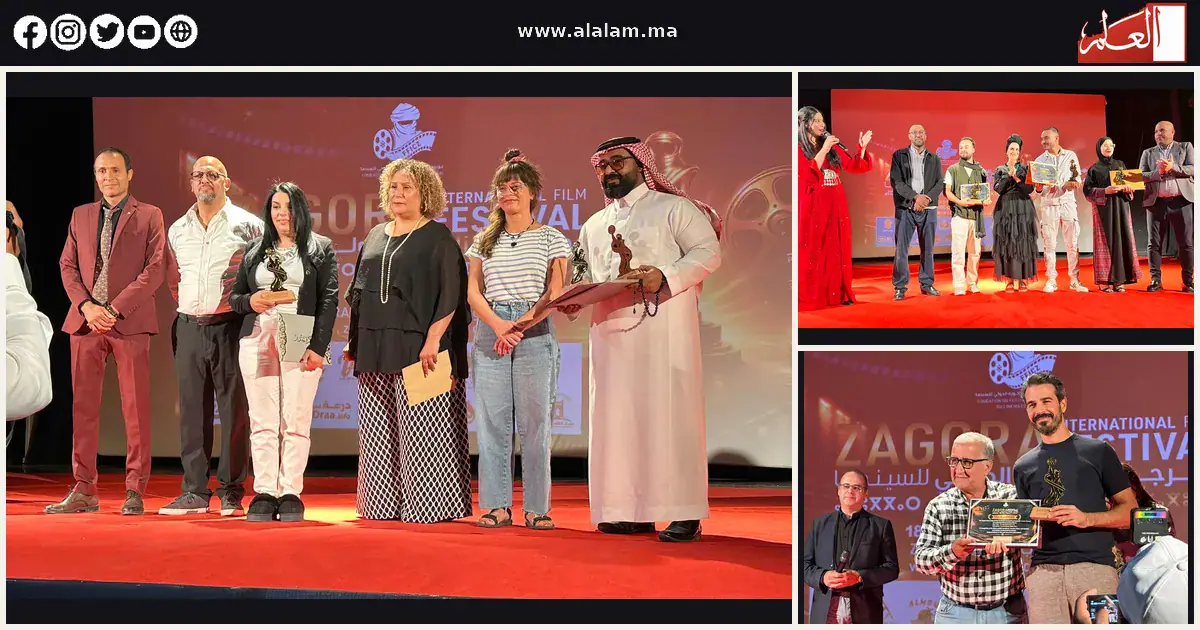
The Zakoura International Film Festival concluded its second edition on November 21, 2026, with a grand closing ceremony that honored the winning films in the documentary, short film, and school cinema categories. The festival, which ran from November 18 to 21, 2026, showcased a diverse range of cinematic experiences and brought together filmmakers, industry professionals, and audiences from across Morocco. The event was marked by a strong sense of community and a celebration of creativity.
The festival's director, Hicham Bahafid, emphasized in his closing speech that the event aimed to promote cultural exchange and creativity, and to establish Zakoura as a hub for cinema and cultural dialogue. He expressed his gratitude to the organizers, partners, and supporters of the festival, including the Ministry of Youth, Culture, and Communication, and the Zakoura provincial authorities. Bahafid also highlighted the importance of cinema as a bridge between cultures and civilizations.
The documentary category saw "Errods Touogoland" by Jurgen Ellinghaus win the Golden Traveler award, while "El Matar No Nos Deja Volar" by Ignacio Marin and Rubén Dietrich secured the Silver Traveler award. The Bronze Traveler award went to "Kseb El Aych" by Lea Lukoblel. In the short film category, "Aïcha" by Sanaa El Alaoui took home the Golden Traveler award, while "Aita" by Ibon Landa won the Silver Traveler award.
The school cinema category saw "Glabba El Arous" by Amin Merzouki win the Golden Traveler award, while "El Kwan" by Mohamed Anenane secured the Silver Traveler award. The festival also awarded a special prize to "Zajarat" by Yassine El Idrissi. The event's focus on emerging talent and school cinema underscored its commitment to nurturing the next generation of filmmakers.
The festival's popular award, voted by the audience, went to Saudi filmmaker Marwan Al-Bakhit for his film "Zakoura, Gateway to Timbuktu". The award ceremony also celebrated the achievements of Moroccan actress Hind Zaafir, who starred in two award-winning films, "Aïcha" and "Zajarat". Zaafir's presence at the festival highlighted her growing reputation as a talented young actress.
The festival's success was also due in part to the efforts of its organizing committee, led by Iman Majid and Khalid El Maghraoui. The event's cultural program featured a performance by the Seven Colors Gnawa group, which added a vibrant musical dimension to the ceremony. The festival's closing ceremony was a fitting tribute to the power of cinema to bring people together and celebrate creativity.
The second edition of the Zakoura International Film Festival has come to a close, but its impact will be felt for a long time to come. The event has established itself as a major cultural event in Morocco, and its focus on emerging talent and cultural exchange will continue to inspire filmmakers and audiences alike. As the festival looks to the future, it is clear that it will continue to play an important role in promoting Moroccan cinema and culture.
Key points
- The festival's focus on emerging talent and school cinema underscored its commitment to nurturing the next generation of filmmakers.
- The event's cultural program featured a performance by the Seven Colors Gnawa group, which added a vibrant musical dimension to the ceremony.
- The festival's popular award, voted by the audience, went to Saudi filmmaker Marwan Al-Bakhit for his film "Zakoura, Gateway to Timbuktu".