In a significant development, Venezuela has released 39 political prisoners following a second round of talks between the country's interim government and the opposition. The talks, backed by Washington, took place on Friday and led to the release of prisoners from various jails, including eight women accused of "narco-terrorism" in 2021 and six people accused of working with the United States in a 2020 attempt to overthrow former President Nicolas Maduro.
The released prisoners were freed between Friday and Saturday, according to human rights group Justicia, Encuentro y Perdon (JEP). The group expressed relief at the release but emphasized that they will remain vigilant and continue to demand full freedom for all those still waiting. JEP made the statement on X, a social media platform. This development comes after a first round of talks in August that focused on retrieving Venezuelan funds frozen overseas.
The first round of talks aimed to help the country's recovery from June's earthquakes, which resulted in over 6,300 deaths, and to reform the judiciary. Interim President Delcy Rodriguez, who was Maduro's former vice president, enacted an amnesty law in February under US pressure. However, the pace of releases has been slow, with Foro Penal, a rights group, reporting that 344 people remained classified as political prisoners as of September 18.
According to Foro Penal, the number of political prisoners has decreased from 391 on August 10, when the government said it had freed 131 people under a separate "alternative measures" programme. US Secretary of State Marco Rubio welcomed the release of over 1,000 Venezuelans since Maduro's removal, calling it "a crucial step" for the country's reconciliation. The US has been involved in the talks, with Washington's military removal of Maduro in January.
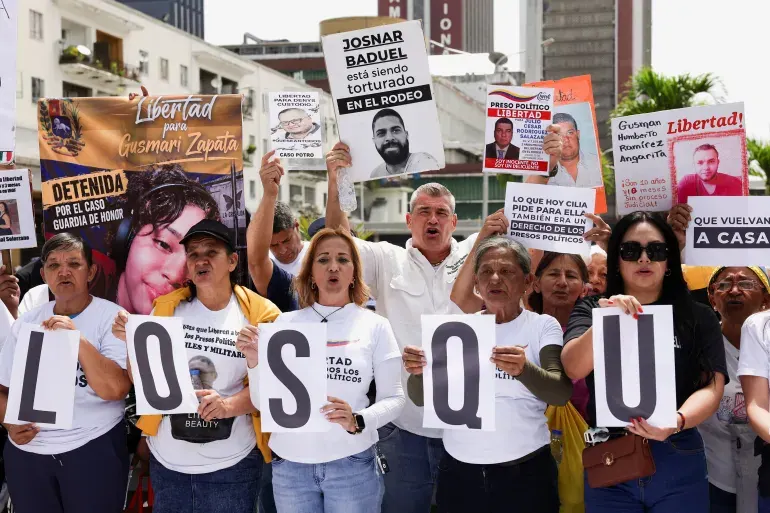
Families of political prisoners have been staging ongoing protests outside the US embassy in Caracas and the El Rodeo I prison, which rights groups consider a torture centre. The releases have been seen as a positive step towards reconciliation, but concerns remain about the remaining political prisoners. The Venezuelan government and opposition will likely continue to face pressure to address the issue of political prisoners.
The talks between the Venezuelan government and opposition are ongoing, with US approval. The involvement of the US has been seen as a significant factor in the release of the political prisoners. The Venezuelan government has been working to address the country's crisis, including the aftermath of the earthquakes and the issue of political prisoners.
The release of the 39 political prisoners is a welcome development for human rights groups and families of the prisoners. However, the focus will now shift to ensuring that the remaining prisoners are also released. The Venezuelan government and opposition will need to continue working together to address the country's challenges and promote reconciliation.
Key points
- 39 political prisoners released in Venezuela following talks between interim government and opposition
- Releases followed a second round of negotiations between government and opposition, held with US approval
- 344 people remain classified as political prisoners in Venezuela as of September 18