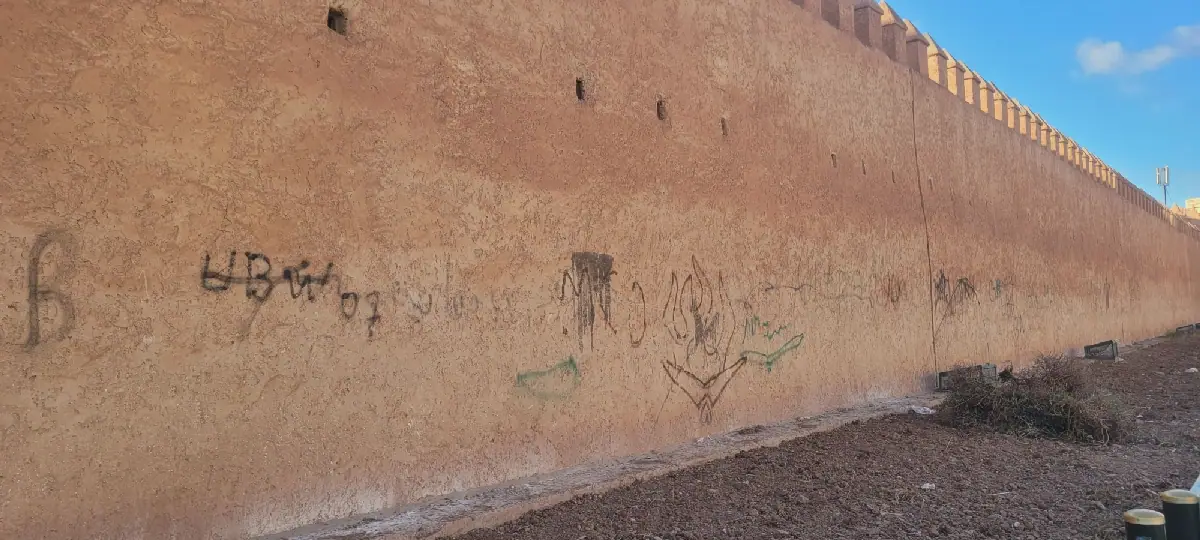
A historic wall in Oujda's Sidi Abd Wahab square has been vandalized with random writings, sparking concerns about the protection of Morocco's cultural heritage. The defacement was discovered recently, with images showing the wall covered in phrases and drawings that do not align with its historical significance or aesthetic value. This incident highlights the need for increased awareness and collective action to preserve the country's cultural landmarks.
The vandalism has raised questions about the effectiveness of current measures to protect Morocco's historical sites. The incident has sparked a reaction from local authorities, with the municipal council, local authorities, and the regional cultural directorate expected to intervene to address the damage. This includes removing the graffiti using suitable technical means to preserve the wall's integrity and taking preventive measures to prevent similar incidents.
The preservation of historical sites in Oujda is not only an administrative responsibility but also a collective duty that requires the involvement of institutions, civil society, and citizens. Oujda, with its rich history and cultural heritage, deserves attention that matches its status. Efforts should be made to ensure that its landmarks remain a testament to its history, rather than being damaged by actions that harm its past and present.
Experts stress the importance of adopting a sustainable approach that includes regular maintenance, enhanced monitoring, and awareness campaigns targeting various segments of society, particularly youth. This approach aims to instill a culture of respect for public property and appreciation for local heritage. By working together, it is possible to protect and preserve Morocco's cultural heritage for future generations.
The incident has sparked a wider debate about the importance of protecting cultural heritage sites in Morocco. The country's rich history and cultural landmarks are an essential part of its identity and play a significant role in promoting tourism and economic development. As such, it is crucial that authorities take concrete steps to prevent similar incidents and ensure the preservation of these sites.
In Oujda, the Sidi Abd Wahab square is an important cultural and historical site that attracts visitors from across the region. The vandalism has not only damaged the wall but also undermined the city's efforts to promote its cultural heritage. Local residents and authorities are calling for increased measures to protect the site and prevent similar incidents in the future.
The Moroccan government has taken steps to protect the country's cultural heritage, including the establishment of laws and regulations to prevent the destruction of historical sites. However, more needs to be done to raise awareness about the importance of preserving cultural heritage and to engage local communities in the preservation effort. By working together, it is possible to protect Morocco's rich cultural heritage for future generations.
Key points
- The vandalism highlights the need for increased awareness and collective action to preserve Morocco's cultural landmarks.
Reporting sources
- وجدة: كتابات عشوائية تشوّه جدارا تاريخيا بساحة سيدي عبد الوهاب وتثير تساؤلات حول حماية التراث · Al Ittihad Al Ichtiraki