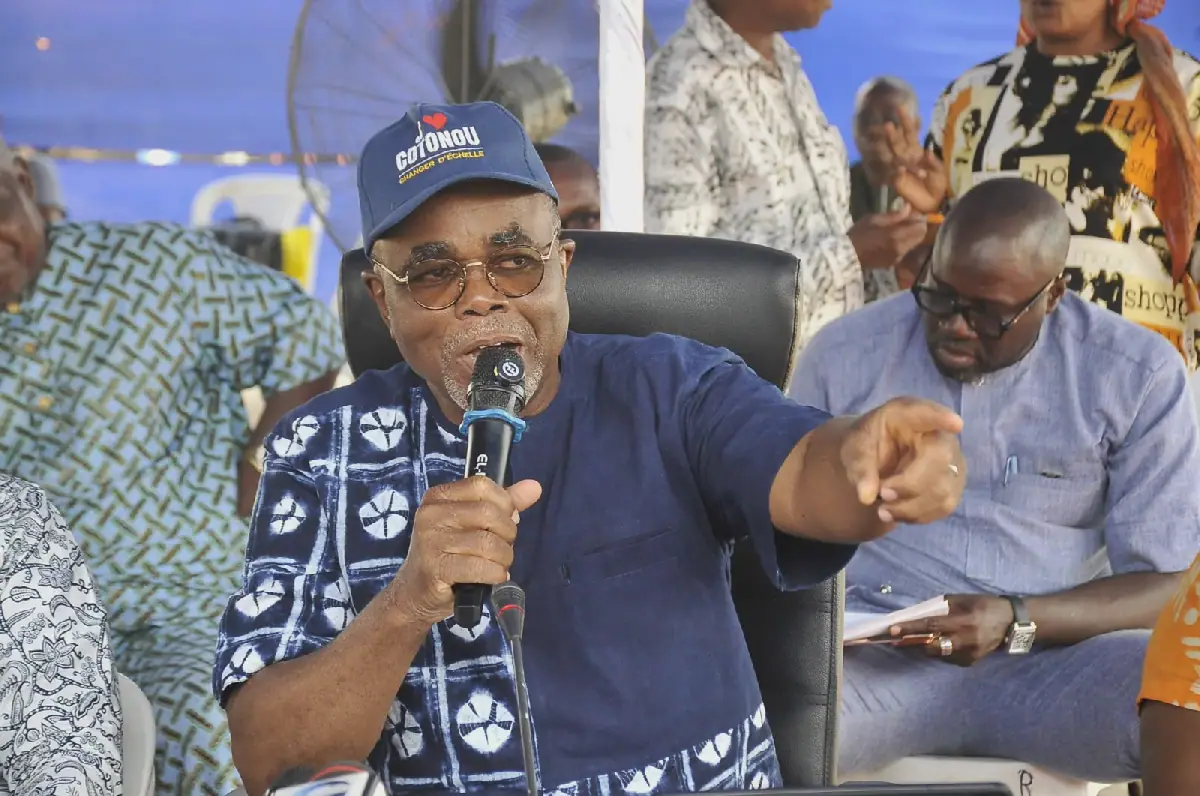
The Cotonou municipality recently held its second public accountability hearing for 2026, focusing on improving school environments. Mayor Luc Gnacadja highlighted the need for collective responsibility in maintaining school infrastructure and promoting innovation in education. The hearing, attended by school directors and community members, aimed to address concerns and outline future plans for the education sector. The municipality's goal is to create a better learning environment for students.
Mayor Gnacadja stressed the importance of proper maintenance of school furniture and equipment. He noted that many schools lack sufficient resources and urged school administrators to prioritize the rehabilitation of existing equipment rather than requesting new investments. The mayor also encouraged students to take an active role in maintaining their schools' cleanliness and hygiene. This approach is seen as a way to instill a sense of responsibility and civism in students.
The Cotonou AI Academy is a key initiative in the municipality's education strategy. The program, which has already trained 60 young participants, aims to equip students with skills in artificial intelligence and emerging technologies. Mayor Gnacadja expressed his admiration for the participants' achievements and emphasized the importance of preparing students for the changing job market. The academy is part of a four-year plan to develop AI talent in the region.
The municipality plans to establish digital media centers in local colleges, providing students with access to digital resources and AI tools. Mayor Gnacadja sees this as a crucial step in preparing students for the future and enabling them to compete in a rapidly changing world. The initiative is also expected to promote innovation and entrepreneurship in the region.
To ensure the effective implementation of its education plans, the municipality will establish a monitoring and evaluation system. This system, modeled after one used to address flood control issues, will track progress, identify areas for improvement, and mobilize stakeholders around defined objectives. The mayor emphasized the importance of collective responsibility and encouraged citizens to take an active role in shaping the future of education in Cotonou.
The accountability hearing provided a platform for citizens to express their concerns and provide feedback on the municipality's education plans. Mayor Gnacadja assured participants that their concerns would be taken into account and used to inform future decision-making. The municipality's commitment to transparency and accountability is seen as a positive step towards building trust with citizens.
The Cotonou municipality's focus on education and civism reflects its commitment to creating a better future for its citizens. By prioritizing collective responsibility, innovation, and community engagement, the municipality aims to make a positive impact on the lives of its residents. The success of these initiatives will depend on the continued involvement and support of citizens, school administrators, and other stakeholders.
Key points
- The Cotonou municipality's education strategy emphasizes collective responsibility, innovation, and community engagement.