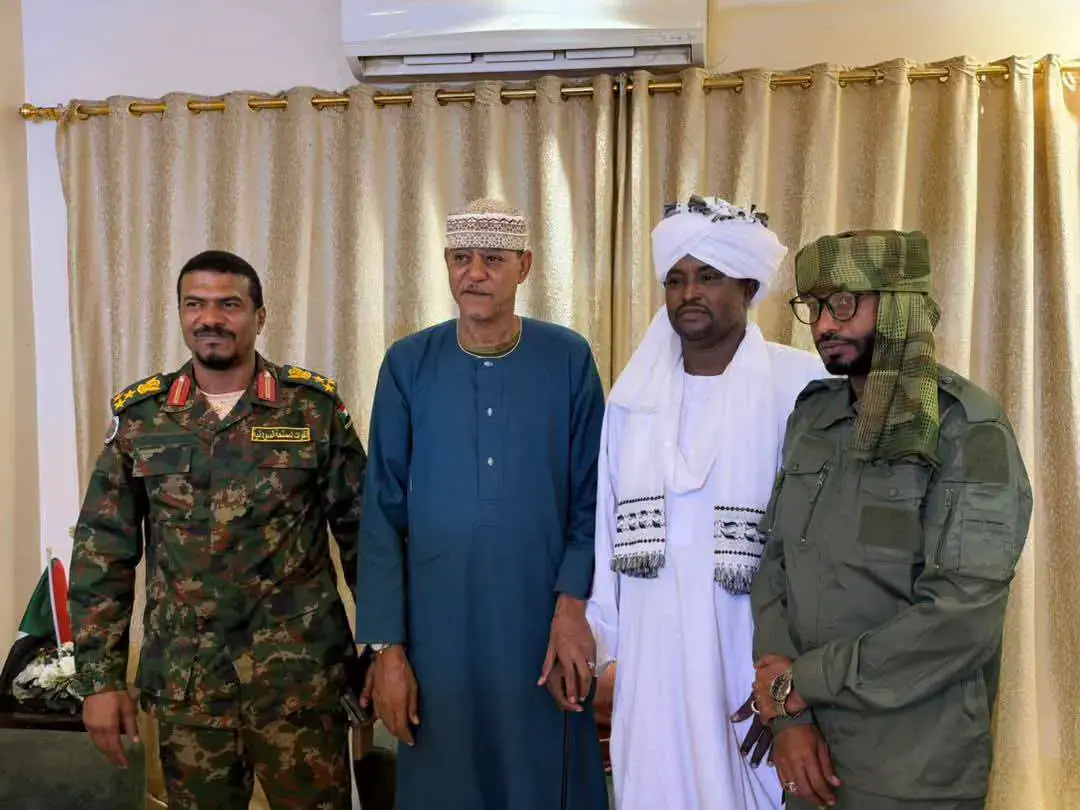
On November 28, 2026, Sudanese rebel leader Musa Hilal met with Amir Omar Osman Jabura, a leader of the Masiriya tribe in Central Darfur, and Hamdan Bashir Jabeer, commander of the Third Front "Tamazuj", at his residence in Khartoum. Both Jabura and Jabeer had recently announced their defection from the Rapid Support Forces (RSF). Hilal's meeting with the defectors was attended by Colonel Ali Mohammed Razq Allah, according to the Sudanese Revolutionary Council's media.
Jabura and Jabeer stated that their decision to defect was based on their conviction that the RSF does not represent a national project and has become a tool for foreign agendas that threaten Sudan's security, stability, and national unity. They expressed their belief that the Sudanese Armed Forces (SAF) are the only institution that can protect Sudan and its national institutions. The defectors praised Hilal's national stance and his early alignment with the SAF and national institutions since the start of the war.
The defectors also acknowledged the efforts of Hilal and the Revolutionary Council in coordinating with military and security agencies, which they said created conditions for several defections and returns to the national fold. They noted that their presence in Khartoum, enjoying full freedom and will, was a result of Hilal's efforts and positions. Hilal welcomed the defectors, appreciating their decision and considering their alignment with the nation and return to the SAF as a responsible stance.
Hilal emphasized that the nation's doors are open to those who review their position and choose to align with the state and its national institutions, away from war and destruction. He invited those still fighting with the RSF to make a courageous decision to defect and join the SAF, return to the nation, and participate in restoring security and stability. Hilal's message was clear: the nation needs their return to ensure its unity and stability.
The Sudanese Revolutionary Council's media reported that Hilal's meeting with Jabura and Jabeer was a significant development in the conflict. The council has been working to bring together various factions and promote national reconciliation. The defection of Jabura and Jabeer is seen as a major blow to the RSF, which has been accused of human rights abuses and atrocities.
The RSF has been involved in intense fighting with the SAF in Darfur and other parts of Sudan. The conflict has resulted in thousands of deaths, displacement of civilians, and destruction of infrastructure. The defection of senior leaders like Jabura and Jabeer may weaken the RSF's capabilities and create opportunities for peace talks.
The Sudanese government and international community have been working to find a peaceful solution to the conflict. The African Union and other regional organizations have launched initiatives to promote dialogue and national reconciliation. The defection of Jabura and Jabeer may create momentum for these efforts and provide a chance for Sudan to move towards peace and stability.
Key points
- Musa Hilal, a Sudanese rebel leader, welcomed defectors from the Rapid Support Forces, including Amir Omar Osman Jabura and Hamdan Bashir Jabeer.
- The defectors cited their conviction that the RSF does not represent a national project and has become a tool for foreign agendas.
- Hilal invited those still fighting with the RSF to defect and join the Sudanese Armed Forces, promoting national reconciliation and stability.