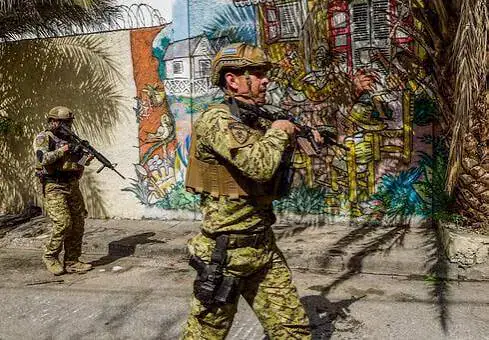
Haitians have expressed approval of El Salvador's rapid military intervention, hoping it will address the gang warfare that has claimed over 20,000 lives in four years. President Nayib Bukele deployed roughly 2,000 Salvadoran soldiers to Haiti, a move that has been met with mixed reactions from security experts and locals alike. The deployment aims to combat the escalating violence and gang warfare that has plagued Haiti.
A month after the deployment, security analysts note that the Salvadoran force has not secured any clear territorial gains. Robert Muggah, a UN adviser on Haiti, described the operation as having a "theatrical component" that creates shock value but has not yet resulted in holding territory. This has raised concerns among experts that the approach may not be effective in the long term.
Prior to the surge, about 120 Salvadoran personnel were part of a UN-backed security mission. However, four of those personnel went missing on October 18, prompting Bukele to send the larger force outside the UN mandate. The exact circumstances surrounding their disappearance remain unclear, and both governments have declined to comment on the details of their bilateral security agreement.
Since the deployment, the Armed Conflict Location & Event Data Project (ACLED) recorded a sharp rise in lethal clashes, tallying 317 deaths between October 18 and November 20, more than double the previous month's figure. At least 26 of those killed were civilians, and ACLED estimates that another ten civilians were slain in mid-November in the Croix-des-Bouquets area where the missing Salvadorans were last known to be.
Security experts say the heightened operations have provoked gangs to attack residents and search phones for evidence of support for Bukele, further endangering civilians. The increased violence has raised concerns about the safety of locals and the effectiveness of the Salvadoran military's strategy. The situation on the ground remains volatile, with many calling for a more nuanced approach to addressing the root causes of the violence.
The Salvadoran army reported its first casualties in Haiti last week, confirming three soldiers killed during the surge. This development has highlighted the risks faced by the military personnel and the challenges they face in securing the territory. The incident has also raised questions about the sustainability of the operation and the potential for further escalation.
Both governments stress that dismantling gangs is essential for civilian protection, but the way forward remains unclear. As the situation in Haiti continues to deteriorate, it remains to be seen whether the Salvadoran troop surge will achieve its intended objectives or exacerbate the existing crisis. The international community is watching closely, with many urging a more comprehensive approach to addressing the root causes of the violence.
Key points
- The deployment of Salvadoran troops to Haiti has not resulted in clear territorial gains, despite the government's claims of progress in combating gang warfare.
Reporting sources
- Haiti Welcomes El Salvador’s Troop Surge Amid Rising Violence · kenya-today.com