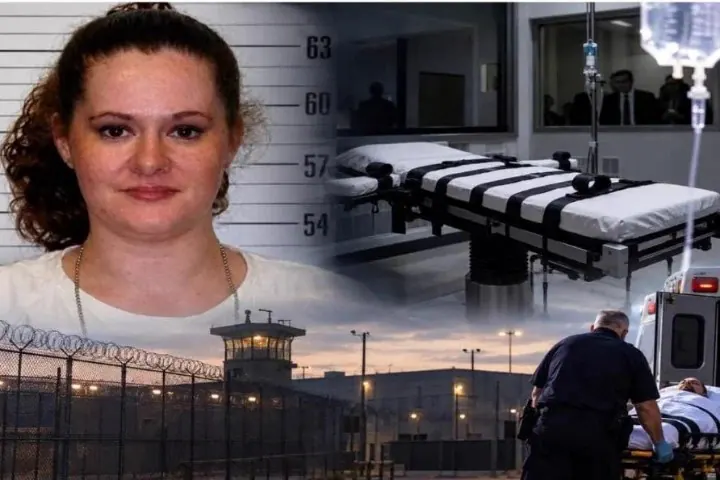
Krista Pike, an American woman, was taken to the hospital on Thursday after a failed execution attempt in Tennessee. Her lawyers reported that the execution, which was carried out using two lethal injections, did not proceed as planned. Witnesses claimed that Pike was still breathing and snoring after the injections were administered. The execution was initially scheduled to take place at 10 am local time at the Riverbend Maximum Security Institution.
The US Supreme Court had previously allowed the execution to proceed, despite objections from Pike's lawyers. The court ruling permitted the state of Tennessee to carry out the execution, making Pike the first woman to be executed in the state in over 200 years. The lethal injection used a combination of pentobarbital, a barbiturate that acts as a central nervous system depressant.
According to witnesses, including journalists who attended the execution, the process did not go as planned. A news reporter described the scene, stating that "things did not go as planned" and that Pike was likely still alive when they left the execution site. An ambulance was seen leaving the scene, but it was unclear if Pike was inside.
Pike's lawyers had argued that her execution should be delayed due to concerns over her mental health and physical well-being. They claimed that she suffered from severe mental illness and had been a victim of childhood trauma. The United Nations human rights experts had also urged the state to halt the execution, citing concerns over Pike's physical and psychological suffering.
The failed execution attempt has sparked renewed debate over the use of capital punishment in the United States. Tennessee Governor Bill Lee announced that the state would suspend another scheduled execution pending a review of the incident. The governor also called for an independent review of the execution process to understand what went wrong.
Pike was convicted of murdering 19-year-old Colin Slimey during a vocational training program in 1995. She was 18 years old at the time of the crime and had a troubled past, including a history of mental health issues. Her lawyers argued that her youth and mental health problems should be taken into account when considering her sentence.
The incident has raised concerns over the use of lethal injections as a method of execution. Pike's case is one of many that have highlighted the complexities and challenges of capital punishment in the United States. According to the Death Penalty Information Center, only 18 women have been executed in the US since 1976.
Key points
- The botched execution attempt has sparked renewed debate over the use of capital punishment in the United States.
- Krista Pike's case highlights concerns over the mental health and well-being of prisoners on death row.
- The incident has raised questions over the effectiveness and humanity of lethal injections as a method of execution.