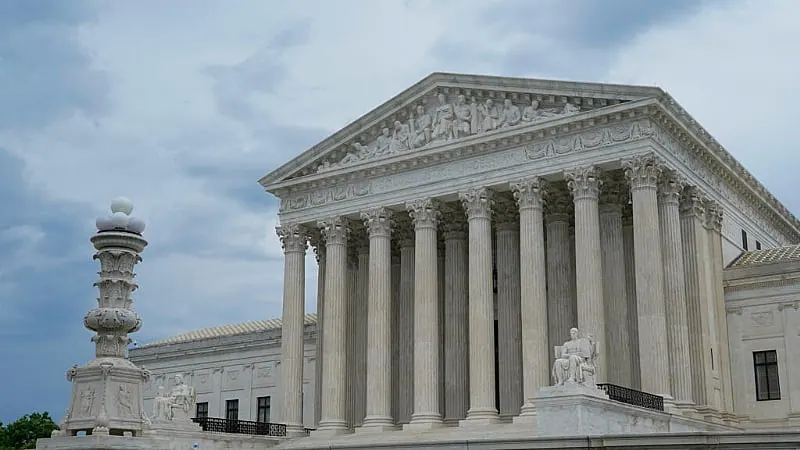
The US Supreme Court has lifted restrictions on the deportations of immigrants to countries that are not their own. This decision allows the Trump administration to proceed with third-country removals while the court hears the issue on its merits in December. The conservative-dominated high court granted an emergency request by the Trump administration to suspend a lower court ruling that restricted these deportations.
The lower court had ruled that people targeted with deportation must be given effective notice ahead of time about where they are being sent. This allowed them to raise concerns about potential persecution. However, the Supreme Court's decision enables the administration to deport individuals without this notice. The three liberal justices on the nine-member panel expressed disagreement with the decision.
US President Donald Trump has campaigned on promises to expel millions of undocumented migrants from the United States. Since his return to the White House in 2025, he has taken actions aimed at speeding up deportations. The Trump administration defends third-country deportations as necessary, citing cases where home nations refuse to accept deportees.
The administration's solicitor general, John Sauer, argued that rapid deportation to third countries is an essential tool for removing certain aliens, including criminal aliens. Opponents of lifting the restrictions counter that the lower court ruling did not block all third-country deportations but required them to be done lawfully.
An investigation by AFP found that the US has offered multimillion-dollar deals and threatened visa restrictions to encourage third countries, especially in Africa, to accept deportees. Once in these countries, deportees have faced abuse by local guards, indefinite detention, or quick re-deportation to their home countries.
US law prohibits deporting people to countries where their lives would be in danger or they could be subject to torture. Despite this, the US has pursued third-country deportations, citing logistical problems created by the lower court ruling. The Supreme Court's decision will have significant implications for immigrants facing deportation.
The issue will be heard on its merits in December, which may lead to a more definitive ruling on third-country deportations. For now, the Supreme Court's emergency decision enables the Trump administration to proceed with these deportations. The move has sparked concerns about human rights and the treatment of deportees in third countries.
Key points
- The US Supreme Court lifted restrictions on third-country deportations.
- The decision allows the Trump administration to deport immigrants to countries that are not their own.
- The issue will be heard on its merits in December.