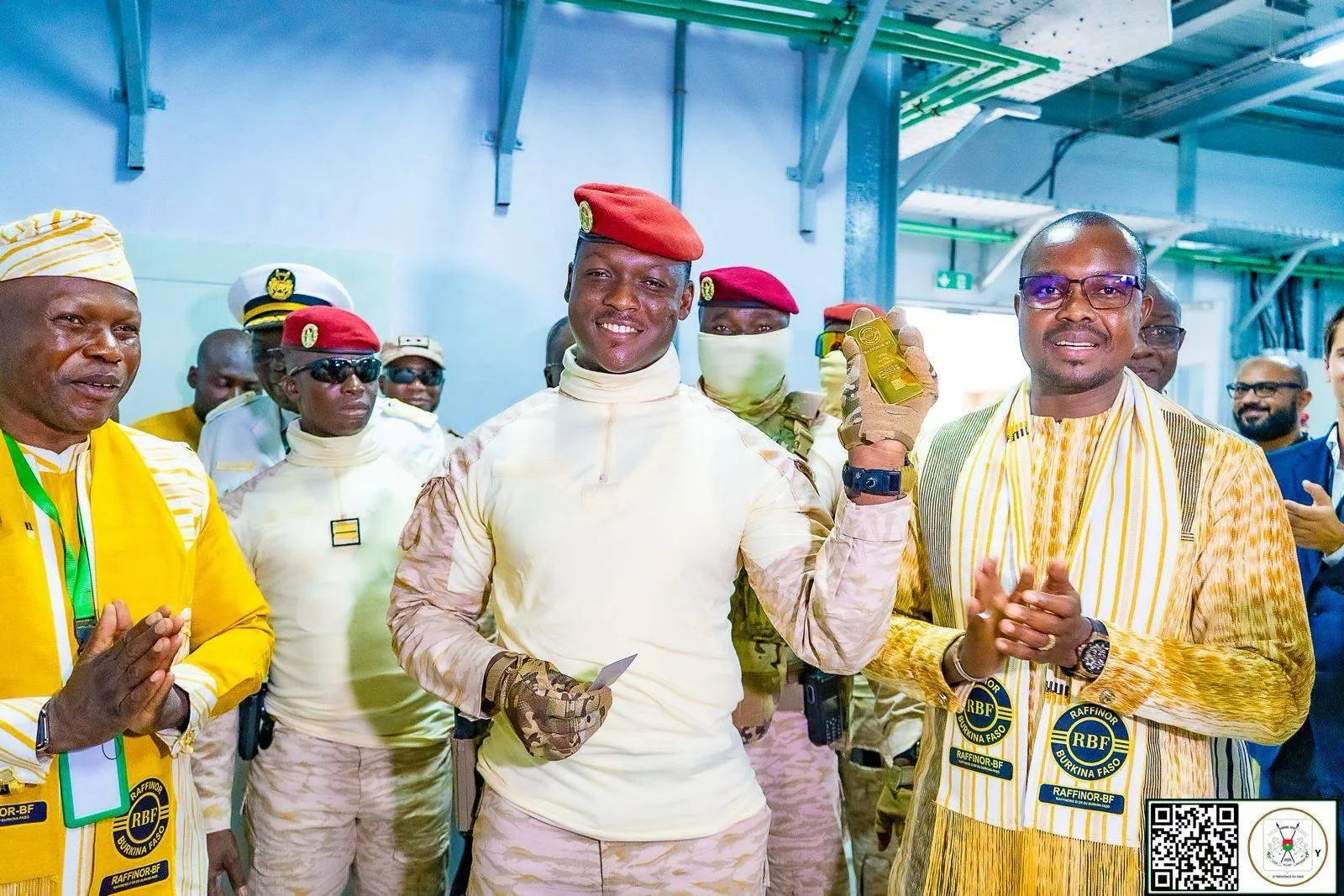
Burkina Faso has officially launched its first gold refinery, Raffinor-BF, in the capital city of Ouagadougou. The facility, constructed on a five-hectare site, was inaugurated by President Ibrahim Traoré. This development marks a significant milestone in the country's efforts to boost its economic sovereignty. The refinery has an initial capacity to process up to 164 tonnes of gold per year. Plans are in place to expand this capacity to 515 tonnes in the future.
The construction of the refinery cost over $19 million, which is approximately Sh2.5 billion. The project was financed by the state-owned National Precious Metals Company (SONASP) and private investors. This investment is expected to play a crucial role in the country's mining sector. Burkina Faso produced around 94 tonnes of gold in the previous year. The refinery's initial capacity already surpasses the country's current domestic output.
President Traoré emphasized that the refinery will enable Burkina Faso to control the entire process of gold extraction, processing, certification, and valuation within its borders. This move is part of a broader strategy by the military-led government to assert greater economic independence. The country has been working to reduce its dependence on Western partners since the 2022 coup.
The launch of the refinery comes years after disruptions to mining caused by attacks from armed groups linked to Al-Qaida and the Islamic State. These groups have also prompted the junta to curb illegal gold trading. The refinery is a key component of the government's efforts to regain control over its natural resources and enhance economic stability.
Burkina Faso's initiative is part of a regional trend toward local processing of gold. Neighboring countries, such as Guinea, have restricted raw-gold exports and are developing their own refineries. Mali has partnered with Russia's Yadran Group on a similar project. Ghana has tightened export rules, and Ivory Coast plans to open a refinery next year. This trend underscores a West African drive to retain more value from mineral resources.
The refinery's impact on Burkina Faso's economy and mining sector is expected to be significant. By processing gold locally, the country aims to reduce its reliance on raw-gold exports and increase its economic sovereignty. The government believes that this move will help to create jobs, stimulate economic growth, and increase revenue.
The successful operation of the refinery will depend on various factors, including the availability of gold for processing and the effectiveness of the facility's management. The government has expressed confidence in the project's potential to drive economic growth and development. The refinery is expected to play a crucial role in Burkina Faso's efforts to achieve sustainable economic development and reduce its dependence on external partners.
Key points
- The refinery has an initial capacity to process up to 164 tonnes of gold per year.
- The project was financed by the state-owned National Precious Metals Company (SONASP) and private investors.
- The refinery is part of a broader strategy by the military-led government to assert greater economic independence.