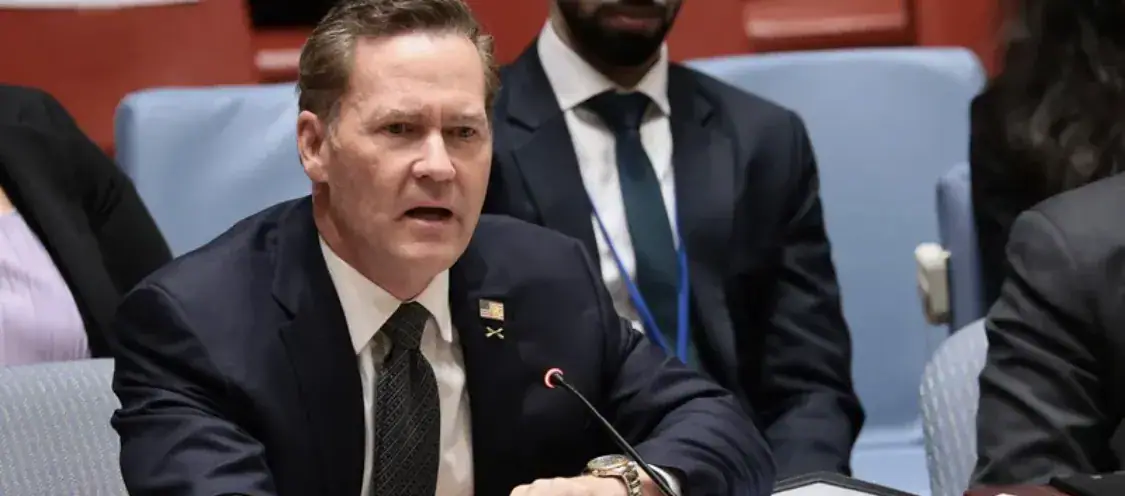
US Ambassador to the UN Mike Waltz has expressed disappointment over the ongoing stalemate in the Western Sahara conflict, stating that renewing the MINURSO mandate annually is no longer sufficient to resolve the issue. He emphasized the need for a realistic and actionable political solution, with the Moroccan autonomy initiative as a foundation for negotiations. Waltz made these remarks during a speech at the UN General Assembly on November 10, 2026.
Waltz highlighted the importance of moving beyond the current impasse, citing UN Resolution 2797 as a crucial step towards a more practical approach to resolving the conflict. He noted that the Trump administration had worked to activate this approach by launching direct talks between parties, facilitated by UN Special Envoy Staffan de Mistura. These efforts led to three high-level meetings between foreign ministers in Madrid and Washington.
The US envoy revealed that these talks brought together parties for the first time in nearly a decade, with observers from Algeria and Mauritania in attendance. He considered these meetings a significant development in the search for a political solution. The US draft resolution aimed to build on this momentum by extending the MINURSO mandate for 12 months while emphasizing the Moroccan autonomy initiative as a basis for negotiations.
Waltz criticized Russia's use of veto power against the US draft resolution, which had garnered 11 votes in favor. He also expressed disappointment with the Russian alternative proposal, arguing that it undermined the path established by Resolution 2797 by omitting references to the Moroccan autonomy initiative. Waltz stressed that insistence on a referendum, which he described as unorganizable, would not contribute to a resolution.
The US envoy advocated for a pragmatic approach that considers various forms of self-determination. He emphasized that Russia's veto would not deter the US from continuing diplomatic efforts to end the conflict. Waltz announced that the US would maintain coordination with parties, the UN, and Special Envoy de Mistura to achieve a lasting solution.
Waltz's comments reflect a renewed US commitment to finding a resolution to the Western Sahara conflict. The Moroccan autonomy plan has long been a point of contention, with some parties viewing it as a viable solution. The US stance is seen as a significant development in the international efforts to resolve the conflict, which has persisted for nearly five decades.
The US and Moroccan positions align on the need for a political solution, with Morocco maintaining that its autonomy initiative is the most feasible path forward. The international community continues to seek a peaceful resolution, with the UN playing a crucial role in facilitating negotiations. The conflict's outcome remains uncertain, but the US renewed support for the Moroccan autonomy plan may help revitalize stalled talks.
Key points
- US envoy Mike Waltz emphasizes need for realistic and actionable political solution in Western Sahara conflict.