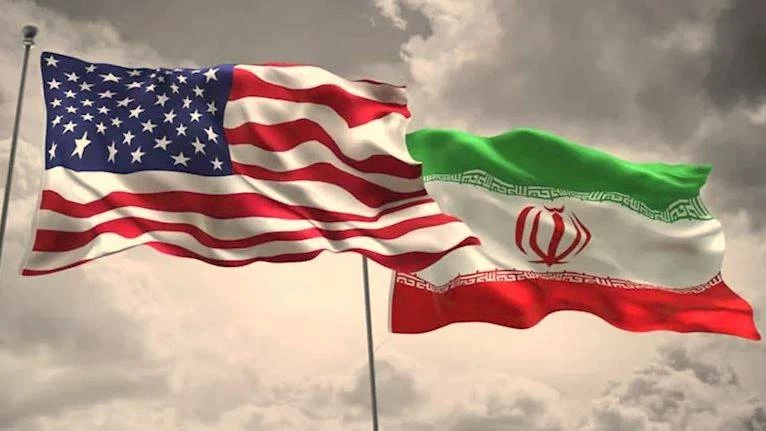
US President Donald Trump announced on Tuesday that high-ranking officials from his administration held a three-hour meeting with Iranian officials, describing the talks as "very good." The meeting, which took place on the sidelines of the United Nations General Assembly in New York, was attended by US envoy Steve Wittkoff and Jared Kushner, Trump's senior adviser and son-in-law. Trump expressed optimism about the relationship between the US and Iran, stating that it is "evolving" and that he believes a settlement can be reached.
According to Trump, the meeting was a positive step towards improving relations between the two countries, which have been strained in recent years. The US president has been seeking to negotiate a new agreement with Iran, which would address issues such as Tehran's nuclear program and ballistic missile development. Trump's comments come amid reports of intense diplomatic efforts by Arab countries to facilitate a meeting between US and Iranian leaders and reduce tensions between the two nations.
However, despite Trump's upbeat assessment of the meeting, a prominent analyst has expressed skepticism about the prospects for a significant breakthrough. Nigar Mortazawi, a senior researcher at the Center for International Policy in Washington, said that there is a "wide gap" between the US and Iran on both style and substance. Mortazawi noted that Trump is eager to meet with Iranian leaders, but Tehran is unlikely to agree to a meeting without specific conditions and arrangements.
Mortazawi highlighted the significant differences between the US and Iran, including the Iranian government's concerns about the US approach to negotiations. She noted that Tehran is seeking tangible benefits from any potential agreement, including the lifting of economic sanctions and a resolution to the conflict in Yemen. The Iranian government has also emphasized the need for a comprehensive and mutually beneficial agreement, rather than a piecemeal approach.
Despite these challenges, Mortazawi noted that the Iranian delegation's presence at the UN General Assembly sends a message that Tehran is open to diplomacy. She added that Iran has expressed a willingness to return to previous agreements and work towards a mutually beneficial solution, but only if its demands are met. These demands include an end to the conflict in Yemen and the release of frozen Iranian assets.
The Iranian government's position was echoed by Mortazawi, who emphasized that Tehran is seeking a negotiated settlement that addresses its concerns and provides tangible benefits. She noted that Iran is aware of the risks and costs associated with negotiations with the US, but is willing to engage in talks to find a peaceful solution to the conflict. Mortazawi also highlighted the importance of a comprehensive agreement that addresses the root causes of the conflict.
In conclusion, while Trump's comments suggest that the US and Iran are making progress towards improving relations, significant challenges remain. The two countries have fundamentally different approaches to negotiations, and Tehran is seeking tangible benefits from any potential agreement. Nevertheless, the fact that the two sides are engaging in diplomatic efforts suggests that there is still room for optimism about the possibility of a negotiated settlement.
Key points
- The US and Iran have held a three-hour meeting on the sidelines of the UN General Assembly, with Trump describing the talks as "very good."
- Despite Trump's optimism, a prominent analyst has expressed skepticism about the prospects for a significant breakthrough, citing significant differences between the two countries.
- The Iranian government has emphasized the need for a comprehensive and mutually beneficial agreement, and has expressed a willingness to engage in talks to find a peaceful solution to the conflict.