On September 29, 2026, US President Donald Trump announced that leaders of artificial intelligence companies had signed a voluntary accord aimed at addressing Americans' fears about the technology. The accord, which Trump posted on his social media site Truth Social, includes four voluntary steps for the companies to take, focusing on internal and external reviews. Trump praised the business executives for developing a technology that he said would produce "unbelievable growth."
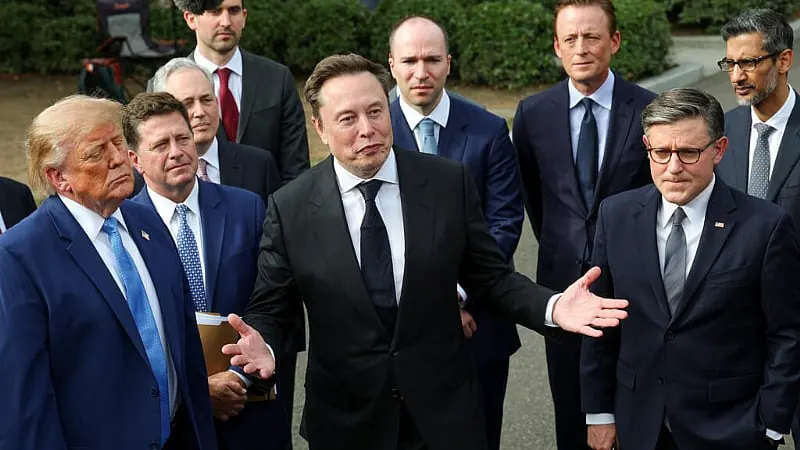
The accord was signed by top tech firms' CEOs, including Google's Sundar Pichai, Meta's Mark Zuckerberg, and OpenAI President Greg Brockman. The agreement opens the door to future regulation but does not include legally binding commitments. Instead, it encourages companies to implement "robust internal controls" and partner with an "independent external auditor" to assess the effectiveness of these controls.
Trump met with leading executives from top tech firms at the White House, including those who have called for a slowdown in AI development due to safety concerns. Anthropic CEO Dario Amodei, one of the most outspoken voices on AI risks, noted that the technology has "very real risks" and that addressing these risks is still under discussion. The meeting aimed to address bipartisan opposition to data centers cropping up in local communities.
The voluntary accord includes the establishment of a committee among each company's board of directors to evaluate reports from internal and external auditors. Trump suggested that a committee of around 10 people would be formed to "watch over the whole enterprise" and described the accord as "morally binding." He also plans to name someone to oversee the agreement in the coming days.
Earlier on September 29, Trump promised that the US government would not limit AI development or support calls for "guardrails" or restrictions. He unveiled an AI chatbot, America.gov, intended to help Americans navigate government services, and celebrated a "Golden Age" fueled by what he calls "super intelligence." Secretary of State Marco Rubio highlighted the potential for the chatbot to streamline services like passport applications.
The development of AI has sparked significant investment in data centers and computer equipment, boosting the economy and stock market. However, this growth has also raised concerns about the technology's impact on local communities and its potential risks. OpenAI CEO Sam Altman emphasized his company's focus on safety, citing the halted rollout of a new model over safety concerns.
Trump framed the AI development race as a global competition between the US and China, with the US currently in the lead. The two countries agreed to establish a channel for handling AI-related incidents during Chinese President Xi Jinping's visit to Washington. Trump emphasized that he would not cooperate too much with China, stating, "I didn't want to do anything, because we're leading. Why would I want to do anything?"
Key points
- The voluntary accord signed by AI companies includes internal and external reviews to address safety concerns.
- The agreement does not include legally binding commitments but encourages companies to implement robust internal controls.
- The development of AI has sparked significant investment in data centers and computer equipment, boosting the economy and stock market.